
Weekend in Rome: How to Plan Friday to Sunday Without Rushing
A weekend in Rome works best when you accept one limitation from the start: you cannot see the whole city in two and a half days. The winning strategy is to protect the icons that matter most to you, keep each day geographically compact and use the evenings for atmosphere rather than squeezing in another ticketed attraction. A Friday-to-Sunday trip can still include Ancient Rome, the historic center, the Vatican and one strong neighborhood experience if you plan the order well.
This guide assumes arrival on Friday and departure on Sunday evening. If your schedule is different, use the same logic rather than following the hours literally. Travelers with a full third day should also compare our 3-day Rome itinerary; those with only one full sightseeing day may find the Rome in one day guide more realistic.
| Time | Best focus | Why it works |
|---|---|---|
| Friday afternoon/evening | Historic center | Flexible, walkable and atmospheric after arrival |
| Saturday morning | Colosseum area | Use energy early for Ancient Rome |
| Saturday afternoon | Monti / Capitoline / Trastevere | Easy to adjust after archaeology |
| Sunday morning | Vatican | Reserve early and avoid cross-city detours |
| Sunday afternoon | Prati / Castel Sant’Angelo / final walk | Simple route before departure |
Choose your airport and station strategy before your sightseeing plan
A short trip gives transport mistakes disproportionate power. Before deciding where to eat on Friday night, know how you will enter and leave the city. Fiumicino has direct rail connections to Termini through the Leonardo Express, while Ciampino relies more heavily on bus and bus-plus-metro combinations. Our Rome airports guide and Rome train stations guide explain the main options.
If your return flight is early, a hotel that looks slightly less romantic but offers simpler transport can be the better weekend choice. Conversely, if you arrive by high-speed train at Termini on Friday afternoon, a central base can let you drop your bag and begin walking almost immediately. Do not book a distant apartment simply because its nightly rate is lower without adding the time and cost of repeated transfers.
Friday: start with the historic center
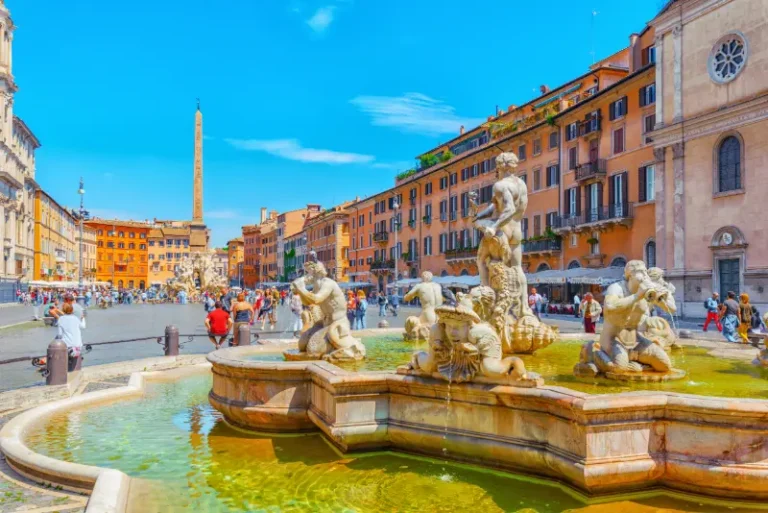
After check-in, resist the temptation to go straight to the Colosseum unless you have a specific evening ticket. The historic center is better for an arrival day because it has no single starting time. A classic first walk can include the Spanish Steps, Trevi Fountain, Pantheon and Piazza Navona, but you should not treat all four as compulsory interiors.
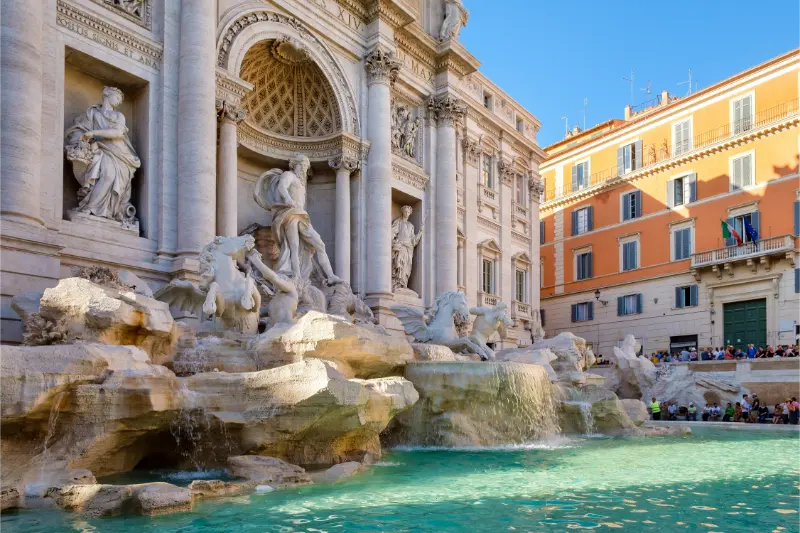
Use Friday to absorb Rome’s scale. Stop for coffee or aperitivo, notice how quickly major sights connect by side streets and save energy for Saturday. If you arrive late, cut the route in half and finish around the Pantheon or Piazza Navona. Our Rome at night guide has ideas for an evening walk that does not depend on museum opening hours.
Choose one end point for the first evening instead of trying to fit every fountain into a single loop. If you are staying near Termini, the walk toward the Trevi Fountain and Pantheon works differently from a first evening based in Prati or Trastevere. Save the pins that matter most on an offline map, then check the route from your actual hotel door. Arriving late with luggage is not the moment to discover that a shortcut includes a long staircase or a street that feels uncomfortable after dark. A relaxed meal near the final stop is a better finish than another cross-city transfer.
Saturday morning: Ancient Rome
Saturday should carry the heaviest sightseeing block. Reserve the Colosseum archaeological area in advance and allow enough time for the Roman Forum and Palatine Hill. The area is much larger than it looks on a map, and heat, security checks and uneven surfaces slow the pace. Our Colosseum guide explains ticket choices and the practical sequence.
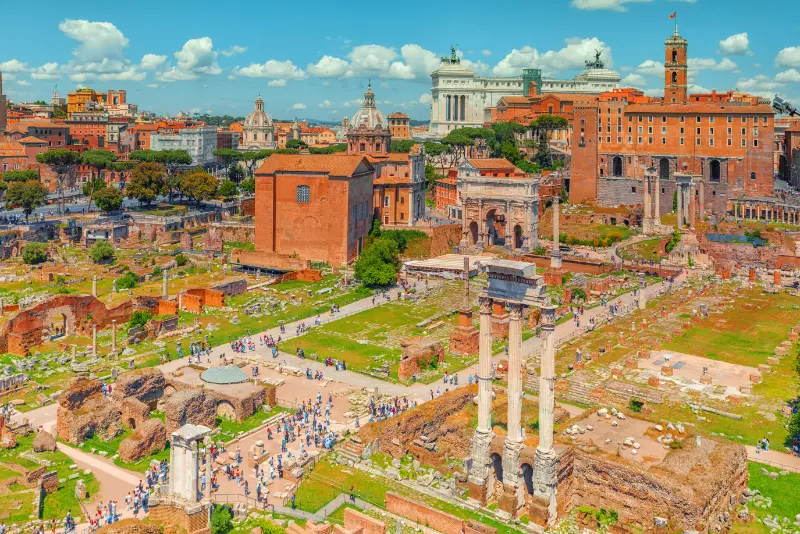
Start with a proper breakfast and carry water. If your Colosseum slot is later in the morning, use the earlier period for nearby exterior views rather than crossing the city. The aim is to avoid spending your most valuable hours on public transport between attractions that could have been grouped together.
Treat your Colosseum reservation as the fixed point around which the entire Saturday turns. Tickets and access rules vary by experience, and entry to the different archaeological areas does not always work like a single open-ended museum visit. Read the precise inclusions before paying, keep the confirmation available offline and leave time for security checks. Wear shoes that can handle cobbles and uneven ground; a route that looks short on the map can take surprisingly long once you include the Forum’s slopes and viewpoints. If you want to visit a particular interior area, verify that your ticket actually covers it.
Saturday afternoon: Monti, Capitoline Hill or Trastevere
After Ancient Rome, choose one direction based on energy. Monti is the easiest: it is close, atmospheric and suitable for lunch. The Capitoline area keeps you in the historical core and adds elevated views over the Forum. Trastevere requires more walking but gives the day a strong contrast, especially if you stay into dinner.
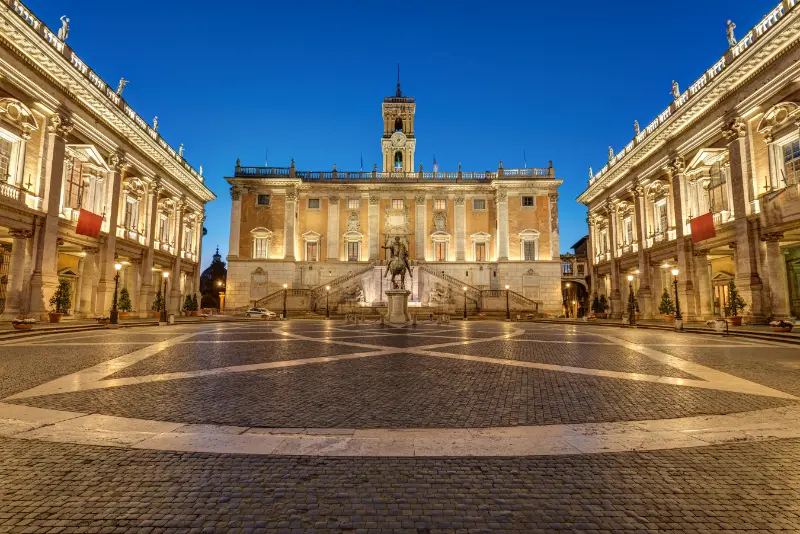
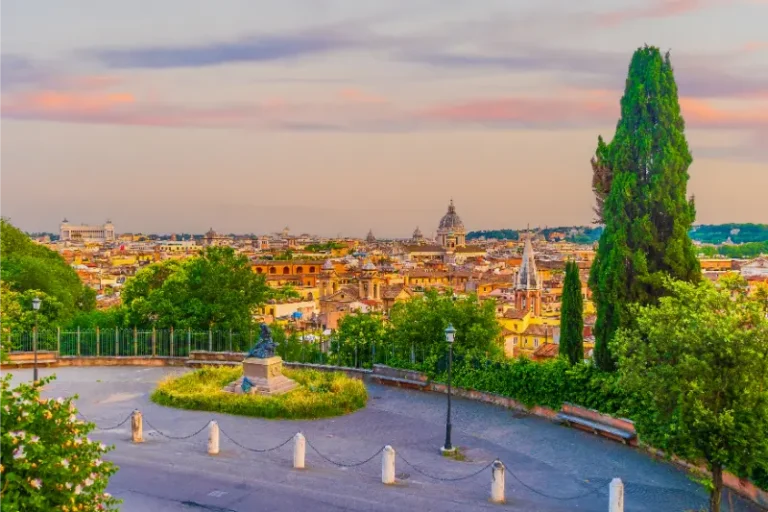
Do not plan a second major museum automatically. Archaeology can be tiring, and the best Saturday afternoon may be the one with fewer tickets. If you want a neighborhood plan, see our Monti guide or Trastevere guide. For a sunset finish, the Orange Garden or Janiculum can work if the weather is clear.
Saturday night: enjoy Rome rather than commuting across it
Choose dinner near the area where you finish the afternoon. Weekend evenings can be busy in Trastevere, Monti and around the central piazzas, so a little flexibility helps. If you care about a specific restaurant, reserve it; otherwise, avoid spending an hour walking toward a famous address that does not fit your route.
A short trip is also a good time to understand Roman meal rhythm. Aperitivo can bridge the gap between sightseeing and a later dinner, while a gelato walk gives you a reason to revisit the center after dark. Our Rome gelato guide and Rome coffee guide are useful if food is part of the weekend experience.
Sunday morning: St. Peter’s Basilica and the Vatican area
If the Vatican is essential, make Sunday morning the main block, but check the actual calendar for your dates because museum access and religious events vary. The Vatican Museums are not simply a quick stop before St. Peter’s Basilica; they deserve their own time. See our Vatican Museums guide before booking.
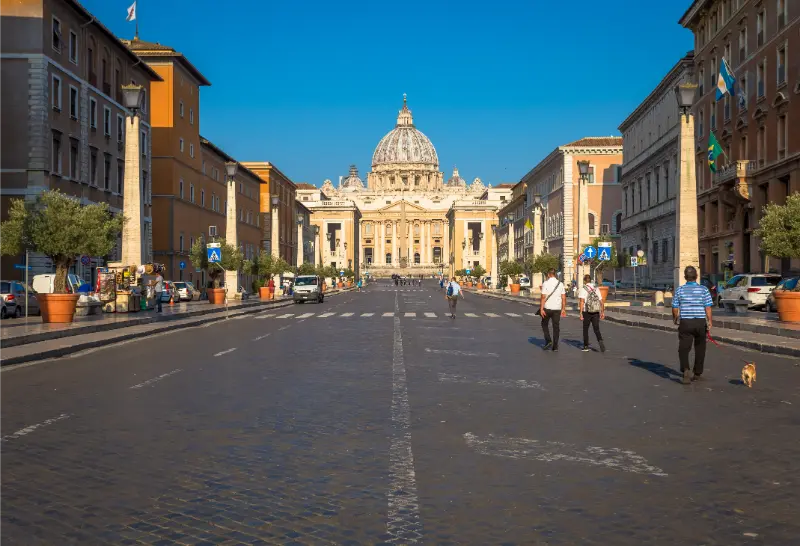
If museums are less important to you, a simpler Sunday can focus on St. Peter’s Basilica, the square and a walk through Prati. This creates more breathing room before departure. Remember that security and crowd conditions can change quickly around major papal events, so leave a margin rather than planning a train or airport transfer immediately after the visit.
There is one Sunday detail worth building the whole weekend around: the Vatican Museums are ordinarily closed on Sundays, apart from their limited opening on the last Sunday of the month when the calendar allows it. Do not plan a normal Sunday museum visit without confirming the official schedule. St. Peter’s Basilica has different arrangements, and Masses or major ceremonies may limit tourist access at certain times. For most Friday-to-Sunday trips, a better balance is to place the Vatican Museums on Friday or Saturday if they are essential, and use Sunday for the basilica, the square or a quieter neighborhood walk.
Sunday afternoon: a flexible finish
After the Vatican, walk toward Castel Sant’Angelo, cross the river and choose a final section of the center you missed on Friday. This is a better departure-day strategy than adding a distant attraction. If your bags are stored near Termini, allow time to retrieve them without turning the last two hours into a sprint.
Travelers with a later departure can add a long lunch in Prati or a final viewpoint. Those leaving from Fiumicino should check rail service before the final walk, especially if there are engineering works or disruptions. Our Leonardo Express guide explains the standard Termini-to-airport option.
Where to stay for a Rome weekend
For a weekend, centrality usually deserves a higher priority than apartment size. The historic center gives maximum walking convenience; Monti works well for the Colosseum and Termini; Prati is excellent if the Vatican dominates your plan; Trastevere offers atmosphere but can add transfer time to Termini or the airports.
Think about the final morning as much as the first evening. A beautiful stay is less enjoyable if you must drag luggage across cobbles and change buses under time pressure. Use our where to stay in Rome guide to compare neighborhoods, then check the exact property location rather than relying only on the area name.
A weekend hotel should save time, not merely offer a lower nightly rate. Staying around the Pantheon or Piazza Navona makes the Friday walk easy but may mean negotiating restricted streets and a longer transfer with bags. Monti offers useful access to Ancient Rome; Prati can work well for the Vatican; Termini provides straightforward rail and airport connections. Compare the total journey to your first and last stop, especially if one day begins early. A slightly smaller room close to the right route can be more valuable than a larger one that costs you an extra hour of travel each day.
What to skip on a weekend
The hardest part of a short Rome trip is saying no. A day trip, distant beach, multiple archaeological complexes or three major museums can all be excellent on a longer stay but may weaken a weekend. Keep the Appian Way, Ostia Antica or Tivoli for another visit unless one of them is the main reason for your trip.
Likewise, do not spend hours in line for an attraction you only mildly care about. Choose the Colosseum, Vatican, Borghese Gallery or another major site because you genuinely want it, not because every generic checklist says you must. Rome offers enough open-air beauty to build a memorable weekend around fewer reservations.
A realistic weekend packing strategy
- Comfortable shoes with grip for cobbles and archaeological surfaces.
- A compact layer for churches and cooler evenings.
- A refillable bottle, especially from late spring through early autumn.
- A small bag that is easy to manage at security checks.
- Digital copies of timed-entry confirmations and transport details.
- Enough empty space in the schedule for delays, coffee and an unplanned stop.
Frequently asked questions
Can I see Rome in a weekend?
You can see the main character of the city and several essential sights, but not everything. A successful weekend is selective: historic center, Ancient Rome, Vatican and one or two neighborhoods is already a substantial trip.
Is two nights enough?
Two nights can work if arrival is early and departure is late, but three nights is more comfortable because it protects two full sightseeing days from transport disruption.
Should I buy a city pass for a weekend?
It depends on the attractions and transport you will actually use. Compare the included admissions with your final itinerary rather than buying automatically. Our Rome city passes comparison explains the trade-offs.
If your weekend falls during a major religious event, public holiday, football match or citywide celebration, leave even more flexibility. Transport, security zones and attraction access can change, and a short trip has less room to absorb disruption than a week-long stay.
Final advice
The strongest Rome weekend has a simple shape: walk the historic center on arrival, dedicate the full day to Ancient Rome and a neighborhood, then use the final morning for the Vatican. Keep transfers short, reserve only the attractions that need it and accept that leaving something for next time is part of good planning.