Rome in 6 Days: The Best Itinerary for a Complete First Visit
Six days in Rome is long enough to see the essential monuments without turning the trip into a race. You can give the Colosseum and Vatican proper time, explore several neighborhoods, add smaller museums and still leave room for a slower evening or a half-day outside the historic center. The main advantage over a three- or four-day visit is flexibility: if one attraction is crowded, hot or affected by a closure, you have enough space to move it rather than forcing everything into a fixed sequence.
This itinerary is designed for a first visit and builds on our 5-day Rome itinerary and one-week Rome itinerary. The goal is not to collect attractions. It is to group sights geographically, protect the most important timed-entry reservations and alternate demanding archaeological days with easier walks, churches, food stops and panoramic views.
| Day | Main area | Best for |
|---|---|---|
| 1 | Historic center | Pantheon, Trevi, Spanish Steps, Piazza Navona |
| 2 | Ancient Rome | Colosseum, Forum, Palatine, Monti |
| 3 | Vatican and Prati | Vatican Museums, St. Peter’s, Castel Sant’Angelo |
| 4 | Trastevere and Aventine | Neighborhood atmosphere, churches, viewpoints |
| 5 | Borghese and central Rome | Galleria Borghese, park, shopping, sunset |
| 6 | Appian Way or day trip | A different side of Rome before departure |
Before you book: protect the three hardest reservations
Start with the attractions that can determine the shape of the week: the Colosseum archaeological area, the Vatican Museums and Galleria Borghese. Exact ticket systems and release calendars can change, so check official booking channels before fixing restaurant reservations or long-distance day trips. Our Colosseum guide and Vatican Museums guide explain how to plan those visits.
A good rule is to reserve one major timed-entry attraction per day. Two can work on paper, but transport delays, security lines, heat and simple sightseeing fatigue often turn a theoretically efficient day into an exhausting one. Six days gives you enough room to avoid that mistake. If your dates include a Sunday or Monday, also check museum opening patterns before assigning the days.
Day 1: historic center without overplanning
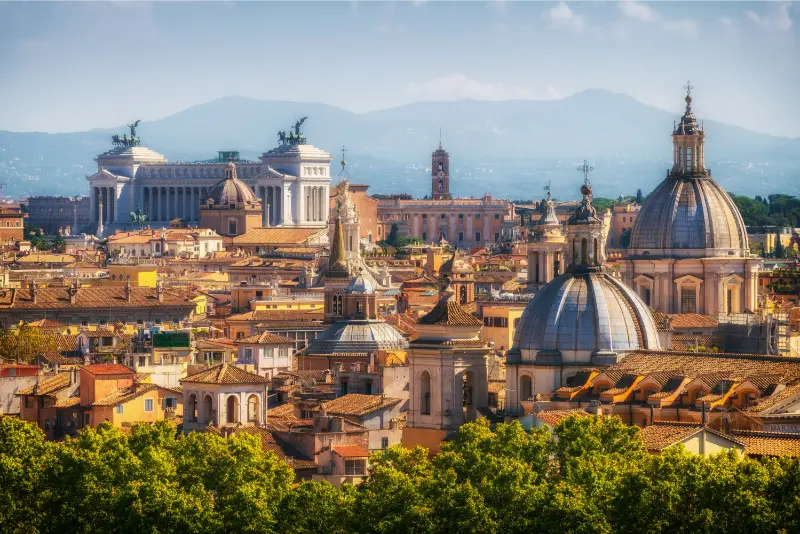
Begin with the classic center while your energy is high but your schedule is still flexible. A natural route links Piazza di Spagna, the Trevi Fountain, the Pantheon and Piazza Navona. Each stop is close enough to reach on foot, and you can add side streets rather than following the fastest route. The first day is also a good moment to learn Rome’s walking rhythm: uneven paving, sudden traffic, short church visits and long coffee pauses.
Do not turn day one into a checklist. Choose one or two interiors and let the rest remain open-air. If the Pantheon has a timed-entry requirement on your date, place it near the middle of the route. In the evening, continue toward Campo de’ Fiori or the river, or use our Rome at night guide for a relaxed first evening.
Day 2: Colosseum, Roman Forum, Palatine and Monti
Give Ancient Rome most of a day. The Colosseum is the obvious headline, but the Roman Forum and Palatine Hill need more time than many first-time visitors expect. Start early in warm months, carry water and wear shoes with grip. The archaeological surfaces can be uneven, and exposed areas feel much hotter than nearby shaded streets.

After the archaeological area, walk into Monti instead of crossing the city for another major museum. The neighborhood works well for a late lunch, coffee and a slower evening. If you still have energy, add San Pietro in Vincoli or a view of the Forum from the Capitoline area. Our Monti guide is useful for filling the afternoon without unnecessary transport.
Day 3: Vatican Museums, St. Peter’s Basilica and the river
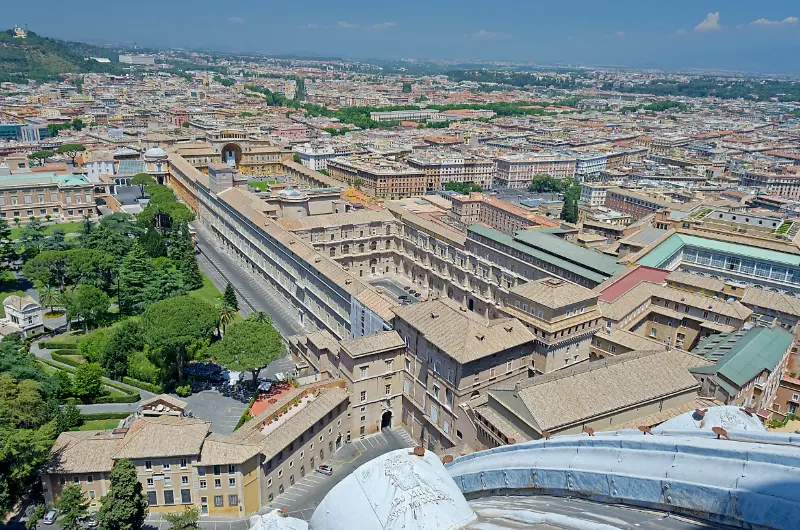
Keep the Vatican day focused. The museums can take several hours even before you consider security, cloakroom rules and the distance walked inside the complex. If St. Peter’s Basilica is also important to you, do not add another major museum elsewhere in Rome. The basilica is free to enter, but queues and religious events can affect access, while the dome requires extra time and physical effort.
After the Vatican, move into Prati for lunch or cross toward Castel Sant’Angelo and the historic center. The river gives you an easy visual line back toward central Rome. Our Prati neighborhood guide and Castel Sant’Angelo guide can help you decide whether to stay in the area into the evening.
Day 4: Trastevere, Aventine and a slower Rome
Use day four to reduce the museum pace. Start in Trastevere before the busiest lunch period, visiting Santa Maria in Trastevere and the smaller streets around the neighborhood. Then cross toward the Aventine Hill, where the Orange Garden and the area around Santa Sabina provide a different kind of sightseeing: less about ticketed attractions and more about urban landscape.
This combination works particularly well after two intensive days because it can be shortened or expanded easily. If you want more history, add the Jewish Ghetto between the two areas; if you want a green break, extend the walk toward the Circus Maximus. See our Trastevere guide and Aventine Hill guide for details.
Day 5: Galleria Borghese, Villa Borghese and a sunset viewpoint
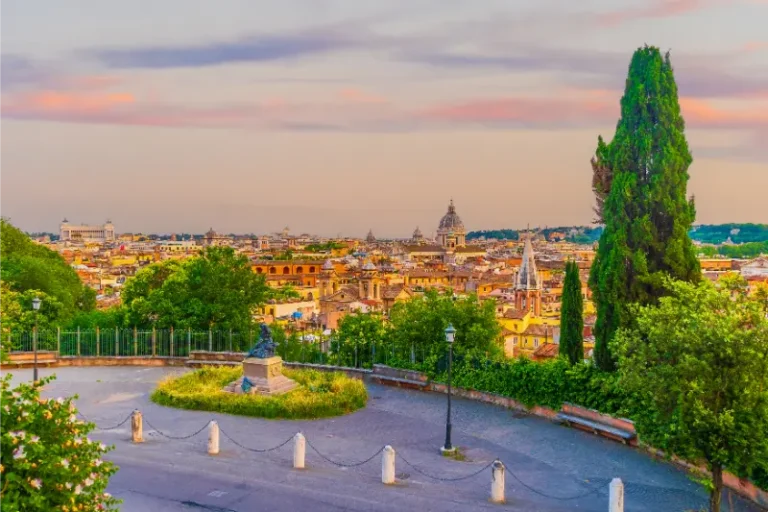
Reserve Galleria Borghese for a morning or early-afternoon slot, then let the park shape the rest of the day. This is a useful contrast with the Vatican: the collection is smaller, the visit is more controlled and the surrounding gardens make it easy to decompress afterwards. From Villa Borghese you can walk toward the Pincio terrace and Piazza del Popolo.
Late afternoon is ideal for a panoramic stop. The Pincio is the simplest if you are already in the park, while the Janiculum and Orange Garden require a different route. Our best views in Rome guide compares several viewpoints. If shopping matters to you, this is also the easiest day to add Via del Corso or streets around the Spanish Steps.
Day 6: Appian Way, Ostia Antica or a true day trip
Use the final full day for something that changes the visual rhythm of the trip. The Appian Way combines archaeology, countryside and catacombs without leaving Rome. Ostia Antica gives you a large ancient city with a very different atmosphere from the Forum. If you prefer a town outside Rome, Tivoli or Orvieto can work well, but they need more transport planning.
For a first trip, the Appian Way is often the easiest choice because it keeps you close to the city and can be shortened if you have packing or an early departure the next morning. Compare options in our Appian Way guide, Ostia Antica guide and day trips from Rome guide.
Where to stay for a six-day trip
For six days, location matters differently than on a one-night stop. You do not need to sleep beside every monument, but you do need a base that makes repeated returns easy. The historic center minimizes sightseeing transport but can be expensive and noisy. Monti is useful for Ancient Rome and restaurants; Prati is organized and convenient for the Vatican; Trastevere gives atmosphere but can involve more walking and evening noise.
If you expect several train-based day trips, proximity to Termini or another useful rail station can matter more. Before booking, compare the neighborhood rather than just the hotel rating. Our where to stay in Rome guide explains the trade-offs by area, and our hotel guides cover budget, family, romantic and luxury options.
How much should you schedule each day?
A six-day trip becomes worse, not better, if every hour is assigned. Build each day around one fixed reservation, one flexible secondary sight and one neighborhood or evening plan. Churches, viewpoints, food markets and short walks are ideal flexible elements because you can move them if the weather or your energy changes.
Leave at least one half-day with no prepaid attraction. That space can absorb a delayed visit, a rainy morning, a museum you discover after arriving or simply the need to slow down. Rome rewards repetition: crossing the same piazza at a different time of day can be more memorable than adding another minor museum because it appeared on a list.
Common six-day itinerary mistakes
- Booking the Vatican and Colosseum on the same day simply because both are famous.
- Crossing the city repeatedly instead of grouping sights by neighborhood.
- Using every evening for nightlife after long walking days.
- Leaving no flexible block for weather, closures or tiredness.
- Treating a day trip as a mandatory achievement rather than an optional change of pace.
- Choosing accommodation only by price without checking transport and walking distance.
Frequently asked questions
Is six days too long for Rome?
No. Six days is an excellent length for a first visit because it allows the major sights, several neighborhoods and one less-central experience without rushing. Travelers interested in archaeology, art or food could easily stay longer.

Should I take a day trip during a six-day visit?
It is optional. If this is your first trip and you prefer depth, use day six for the Appian Way, Ostia Antica or another outer-Rome area. If you enjoy variety, Tivoli, Orvieto or another well-connected destination can be a good addition.
Do I need public transport every day?
Not necessarily. The historic center is highly walkable, but metro, buses and trams become useful for the Vatican, Appian Way, outer neighborhoods and tired evenings. See our getting around Rome guide before the trip.
Final advice
The best six-day Rome itinerary has a clear backbone but enough empty space to adapt. Reserve the few sights that truly require planning, group each day geographically and let food, views and neighborhoods fill the gaps. With six days, the advantage is not seeing everything; it is having enough time to enjoy the city without constantly watching the clock.