
Rome for Digital Nomads: Wi-Fi, Neighborhoods, Workdays and Long-Stay Tips
Rome can be rewarding for digital nomads, but it is not a city where remote work automatically blends into sightseeing. The historic center is distracting, apartments vary widely, café culture is often designed for quick coffee rather than all-day laptop sessions, and summer heat can complicate routines. The solution is to treat work and tourism as separate blocks instead of trying to do both continuously.
A good long-stay plan starts with reliable accommodation, mobile backup data and a neighborhood that supports everyday life. Our SIM and eSIM guide covers connectivity basics; this article focuses on building a sustainable routine around workdays, errands, transport and exploration.
Why Rome works so well for digital nomads
Rome offers excellent off-hours rewards. A remote worker can visit major sights early, work through midday, then use long evenings for neighborhoods and dinner. This pattern is often better than a traditional tourist schedule.
Staying longer also changes the economics of location. Being directly beside Trevi matters less if you have two or three weeks, while access to supermarkets, gyms, parks and transport becomes more important.
The main challenge is workspace fit. Traditional bars may not welcome someone occupying a table with a laptop for hours. Plan around your accommodation, a proper coworking environment or libraries rather than assuming every attractive café is an office.
| Planning question | Best approach |
|---|---|
| Top priority | Reliable accommodation Wi-Fi plus mobile backup |
| Best base style | Residential but connected neighborhood |
| Best work rhythm | Early sightseeing, focused work block, evening neighborhood time |
| Best everyday assets | Supermarket, transport, park and simple food nearby |
| Biggest mistake | Booking a photogenic apartment without verifying work essentials |
Useful Rome experiences for remote workers
Prati
Prati offers organized streets, metro access, supermarkets and restaurants while staying close to the Vatican and river. It can suit remote workers who want a central feel without the constant tourist intensity of the Pantheon area. For deeper planning, see our prati guide.
Nomentano
Nomentano is more residential and connects well with Villa Torlonia, local services and transport. It can make sense for longer stays where daily routine matters more than walking to Trevi every morning. For deeper planning, see our nomentano guide.
Ostiense
Ostiense combines rail connections, contemporary city life, food and cultural spaces. It is useful for remote workers who prefer an urban, less postcard-like base and want access to Testaccio and southern districts. For deeper planning, see our ostiense guide.
Monteverde
Monteverde appeals to travelers who value parks and quieter evenings. Villa Doria Pamphilj is a major advantage for walking or exercise, though the exact street and transport connection matter more here than in the compact center. For deeper planning, see our monteverde guide.
Rome travel apps
A longer stay makes transport apps, rail tools and map organization more useful. Save home, coworking or meeting locations offline and learn two alternative routes for important appointments instead of relying on a single bus. For deeper planning, see our rome travel apps guide.
Supermarkets and daily shopping
Understanding local supermarkets, opening patterns and neighborhood shops makes a long stay easier and cheaper. Stock breakfast, fruit and workday lunch ingredients so you do not need restaurant decisions every few hours. For deeper planning, see our supermarkets and daily shopping guide.
Parks and reset time
Remote work can make a city feel like a backdrop unless you deliberately step away from screens. Parks, riverside walks and viewpoints provide simple daily resets without turning every break into major sightseeing. For deeper planning, see our parks and reset time guide.
Evening Rome
Remote workers can experience Rome at its best after the workday. Illuminated monuments, aperitivo and neighborhood walks let you enjoy the city without sacrificing focused daytime hours. For deeper planning, see our evening rome guide.
How to build a satisfying day
Separate work from exploration. A two-hour sightseeing break in the middle of a deadline often becomes neither good work nor good tourism. Block mornings or evenings for Rome and protect a serious uninterrupted work period.
Use one or two “full tourist” days per week if staying long enough. That lets you book the Vatican or Colosseum without attempting to squeeze a major timed-entry attraction around calls.
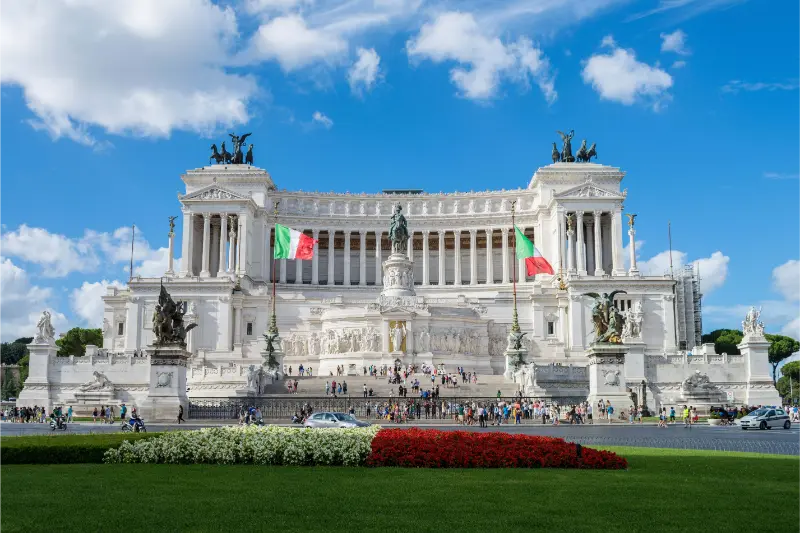
Build ordinary routines quickly: grocery store, coffee bar, walking route, laundry and transport stop. Long stays become enjoyable when daily logistics stop consuming attention.
Best neighborhoods to use as a base
Prati, Nomentano, Monteverde, Ostiense and parts of San Giovanni can all work depending on budget and routine. The historic center is spectacular but often expensive, noisy and less convenient for everyday errands.
When comparing accommodation, check desk/chair setup, natural light, noise, air conditioning, heating, elevator access and recent Wi-Fi comments. “Free Wi-Fi” says nothing about whether video calls are reliable.
Food, coffee and breaks
Rome’s bar culture is built around quick service, so do not assume you can work for half a day after buying one espresso. If you need a desk, choose a coworking environment or accommodation designed for it.
Long stays are a chance to eat better, not just cheaper. Use supermarkets for workday basics, then reserve evenings for neighborhood trattorias and markets when you can pay attention to the meal.
Transport, walking and pacing
Live near a useful metro, tram or frequent bus corridor rather than selecting a neighborhood by distance from one tourist attraction. Remote workers make repeated everyday journeys, so reliability and alternatives matter.
Keep mobile data active enough to manage delays, navigation and emergency tethering. If work is mission-critical, do not rely on public Wi-Fi as your only backup.
Budget and reservations
The biggest cost lever is accommodation. Weekly or monthly rates, apartment utilities and cleaning fees can change the real price significantly. Compare the full stay cost rather than the headline nightly rate.
Coworking, mobile data and occasional taxis should be treated as work expenses in the trip budget. Saving on them can be false economy if connectivity or punctuality affects income.
Best time of year for this kind of trip
Spring and autumn are excellent for combining remote work with evening exploration, but accommodation demand can be high. Winter often suits longer work stays because museums and indoor routines fit shorter days.
Summer requires reliable air conditioning and a heat-aware schedule. Early sightseeing, indoor work during the hottest hours and late dinners can work well if your job allows time-zone flexibility.
Setting up a reliable work base before you unpack
On arrival, test the Wi-Fi from the exact place where you plan to work, not only beside the router. Run a video call, check upload speed if your work depends on large files, and confirm how mobile reception behaves indoors. Identify the nearest quiet backup location and keep tethering ready before the first important meeting. If the apartment has a beautiful dining table but an uncomfortable chair, solve that problem immediately rather than tolerating it for several weeks.
Long stays also benefit from boundaries with tourism. Decide which evenings are genuinely free, which mornings can start early and which days are too meeting-heavy for serious sightseeing. Save the Vatican, Colosseum and long day trips for periods with no critical calls. On ordinary workdays, use nearby parks, markets, churches and neighborhood dinners as your Rome experience. This keeps the city enjoyable instead of turning every free hour into another productivity task.
A sample work-week rhythm
- Monday–Thursday: one short early walk or coffee outing, focused work block, simple lunch, evening neighborhood exploration.
- Friday: lighter work if possible, then a museum or sunset route.
- Saturday: full sightseeing day with the major timed-entry attraction you reserved in advance.
- Sunday: park, market, laundry, planning and a slower meal rather than another exhausting checklist day.
Common mistakes to avoid
- Assuming café culture automatically means laptop-friendly spaces.
- Booking accommodation without checking desk, noise and cooling/heating.
- Relying on one Wi-Fi connection with no mobile backup.
- Living in the most touristy street simply for the view.
- Trying to sightsee during every work break.
- Ignoring time-zone differences when booking museums or day trips.
Remote work changes what “good location” means. A slightly less central apartment with reliable internet, a supermarket and good transit can produce a much better month than a beautiful room where every call is stressful.
Frequently asked questions
Is Rome good for digital nomads?
It can be, especially for travelers who value culture and evening life, but accommodation quality and workspace planning matter more than in cities built around laptop cafés.
Which Rome neighborhood is best for remote work?
There is no single answer. Prati, Nomentano, Ostiense, Monteverde and San Giovanni all have advantages depending on budget and transport needs.
Can I work from cafés in Rome?
Sometimes, but many traditional bars are designed for short visits. For long sessions, use a proper coworking space, library or accommodation workspace.
Do I need an Italian SIM?
Not necessarily if your eSIM or roaming plan is strong, but reliable mobile data is an important backup for navigation and tethering.
Final advice
Digital-nomad Rome works when you stop trying to live like a tourist every hour. Build a reliable work base, learn the neighborhood, protect focused time and use mornings, evenings and weekends to let the city unfold gradually.