Rome for Architecture Lovers: Ancient, Renaissance, Baroque and Modern Rome
Rome is an architectural archive built at full urban scale. Ancient concrete domes, medieval campanili, Renaissance palaces, Baroque churches, nineteenth-century monuments, Rationalist districts and contemporary museums coexist within one metropolitan landscape. For architecture lovers, the city is most rewarding when you compare how different periods solved the same problems: procession, light, structure, urban spectacle and the display of power.
The ideal trip alternates famous monuments with streets and districts where architecture works as an ensemble. Use our historic center walking route for orientation, but slow down enough to study facades, axes, courtyards and transitions between interior and exterior space.
Why Rome works so well for architecture lovers
Architecture in Rome is unusually legible because so many buildings remained in use or were adapted rather than erased. The Pantheon became a church, ancient columns were reused, and medieval or Renaissance buildings often sit on Roman foundations. The result makes continuity visible in walls rather than only in textbooks.
Urban design matters as much as individual buildings. Piazza del Popolo, Piazza Navona, the Spanish Steps and the approach to St Peter’s reveal how architecture organizes movement and views. A good architecture trip therefore includes time to stand at the edge of spaces and understand how people enter them.
Modern Rome is essential too. EUR, MAXXI and Flaminio prevent the city from becoming an architectural theme park. Including twentieth- and twenty-first-century projects creates sharper comparisons with the historic center and shows how Rome continued to negotiate monumentality.
| Planning question | Best approach |
|---|---|
| Best ancient structure | Pantheon |
| Best Baroque spatial sequence | St Peter’s and central Rome churches |
| Best district for early 20th-century experimentation | Coppedè |
| Best Rationalist district | EUR |
| Best contemporary landmark | MAXXI |
Essential architecture stops
Pantheon
The Pantheon is the essential lesson in Roman structure, proportion and controlled light. Study the relationship between porch and rotunda, then move inside and let your eyes adjust to the oculus as the primary light source. The apparent simplicity hides sophisticated geometry and construction choices that influenced architects for centuries. For deeper planning, see our pantheon guide.
St Peter’s Basilica and Square
The approach to St Peter’s is a study in scale, sequence and theatrical urban design. Bernini’s colonnades frame a space that must work for both individuals and enormous crowds, while the basilica layers major architectural decisions from multiple designers. Walk the square slowly before entering so the exterior geometry does not disappear behind the interior spectacle. For deeper planning, see our st peter’s basilica and square guide.
Sant’Ivo and Baroque Rome
Baroque architecture in Rome is about movement as much as ornament. Around Sant’Ivo, Borromini’s geometry and nearby palace courtyards show how inventive forms could be inserted into dense historic fabric. Pair this with Galleria Spada and churches by Bernini to compare different approaches to illusion, structure and theatricality. For deeper planning, see our sant’ivo and baroque rome guide.
Quartiere Coppedè
Coppedè is small but visually dense, mixing Art Nouveau, medieval references, classical fragments and theatrical decoration. It is most interesting when treated as a designed urban composition rather than as a single Instagram stop. Look at entrances, arches, balconies and the way motifs repeat across multiple buildings. For deeper planning, see our quartiere coppedè guide.
EUR
EUR offers a completely different model of Rome: broad axes, monumental stone surfaces and Rationalist planning shaped by the politics of the Fascist period. The district’s scale can feel severe after the historic center, which is exactly why it belongs on an architecture itinerary. Walk around the lake and major civic buildings to understand the ensemble. For deeper planning, see our eur guide.
MAXXI
MAXXI is valuable both as a museum and as a contemporary architectural experience. Circulation, ramps, intersecting lines and controlled light create a building that asks visitors to move continuously rather than follow a simple sequence of rectangular rooms. Pair it with Flaminio to see how contemporary cultural architecture sits within an established neighborhood. For deeper planning, see our maxxi guide.
Villa Farnesina
Villa Farnesina shows how Renaissance domestic architecture integrated gardens, frescoes and social display. Its scale is intimate enough to study relationships between rooms and painted surfaces without the overwhelming size of a papal complex. Approaching from Trastevere also helps explain its original suburban character. For deeper planning, see our villa farnesina guide.
Vittoriano
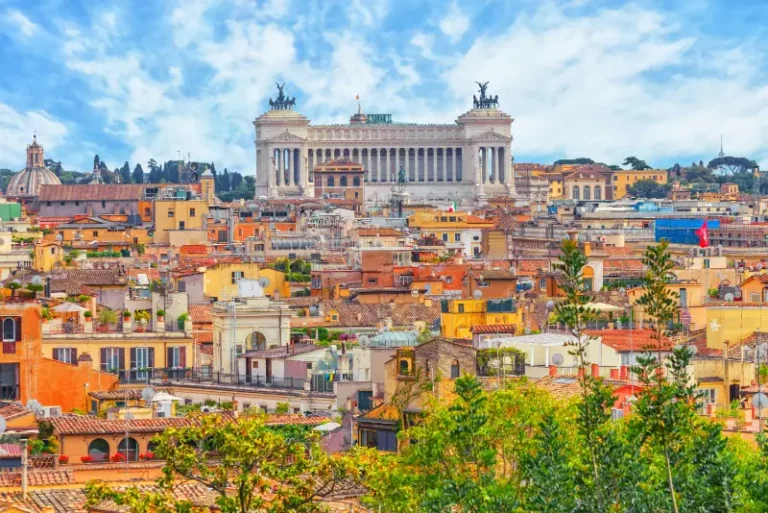
The Vittoriano is useful precisely because opinions about it are divided. Its monumentality, white stone, stair systems and occupation of the Capitoline edge reveal how a modern national monument can transform an older urban setting. Study it from Piazza Venezia, then from higher terraces, and consider what was sacrificed to create its scale. For deeper planning, see our vittoriano guide.
How to build a satisfying day
Architecture days should include time outside buildings. Start with one interior that rewards concentrated study, then walk a route where street alignments, facades and piazzas become the subject. Architecture is harder to understand when every stop begins at a ticket desk.
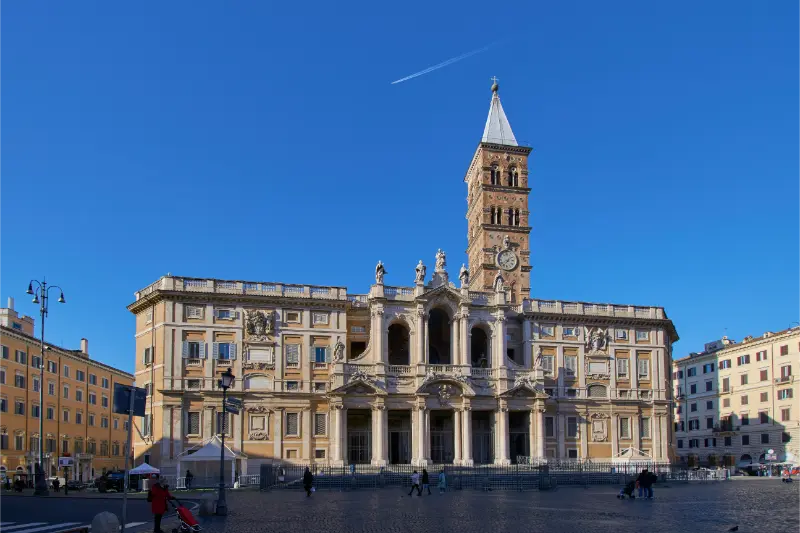
Photograph details, but also step back. Rome’s dense center often hides full elevations, so change position and look at how a building meets adjoining streets. In churches, compare the facade, nave, crossing and side chapels rather than focusing only on decorative highlights.
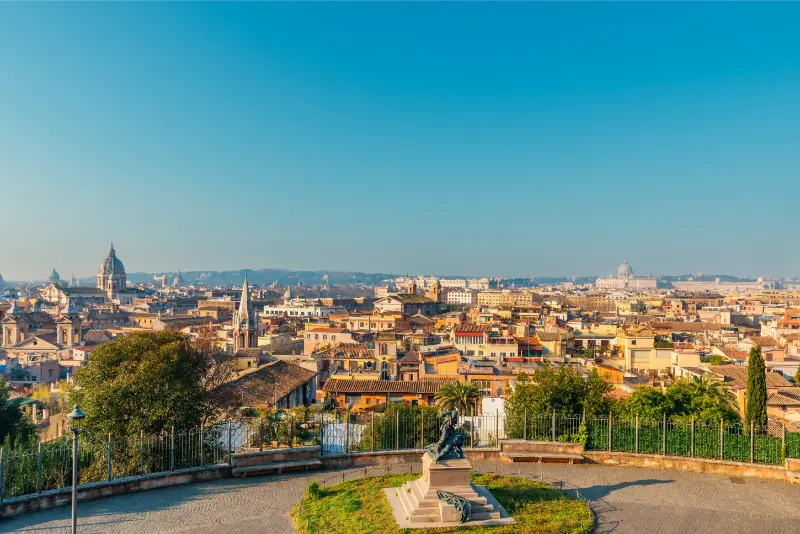
Use hills and terraces as analytical viewpoints. From the Capitoline, Janiculum or Vittoriano you can read domes, street axes and topography. These views help explain why certain buildings dominate the skyline and why Rome feels visually different from a gridded city.
Best neighborhoods to use as a base
The historic center is the best first base because ancient, Renaissance and Baroque architecture overlap within walking distance. Monti is useful for ancient structures and later urban fabric; Flaminio gives easier access to MAXXI; EUR requires a dedicated transfer but rewards anyone interested in twentieth-century planning.
For a quieter architectural trip, consider Aventine or Prati. Both have strong urban character without the same tourist density as the Pantheon area. The neighborhood itself should contribute to the experience rather than simply minimize commute time.
Food, coffee and breaks
Architecture-focused travelers often walk farther than expected because the route is the attraction. Plan lunch near the middle of the district rather than at a famous restaurant on the opposite side of Rome. A long sit-down break can be useful after several hours of looking upward and walking on hard surfaces.
Coffee stops are also good moments to study everyday interiors. Historic bars, modern cafés and neighborhood bakeries reveal a smaller-scale design culture that contrasts with monumental Rome.
Transport, walking and pacing
Use public transport to reach outlying districts, then explore them on foot. EUR is easier by metro; Flaminio and Coppedè may involve tram, bus or a walk depending on your base. Inside the historic core, walking is almost always the better architectural method.
Bring comfortable shoes and expect elevation changes. Architectural routes often include terraces, church steps and hills. If mobility is limited, prioritize street-level viewpoints and buildings with lifts rather than assuming every panoramic route is necessary.
Budget and reservations
Many of Rome’s strongest architecture experiences are free from the outside: piazzas, facades, bridges, fountains and entire neighborhoods. Spend money selectively on interiors where structure, fresco or spatial sequence cannot be understood from the street.
Check current opening information for villas, museums and churches. Some architectural sites have narrow visiting windows, and a closed interior can change the logic of your day. Keep a nearby exterior route as backup.
Best time of year for this kind of trip
Spring and autumn are ideal for architecture because you can spend long periods outdoors without extreme heat. Winter offers softer crowds and good conditions for interiors, although daylight is shorter. Summer works if you start early, use shaded streets at midday and reserve modern museums or churches for hot hours.
For photography, light direction matters more than season alone. East-facing facades reward morning; broad piazzas can become harsh at midday. Returning to the same building at a different hour can reveal proportions and textures you missed earlier.
A three-day architecture itinerary
- Day 1 – Ancient to Baroque center: Pantheon, Piazza Navona, Sant’Ivo area, Trevi and Spanish Steps.
- Day 2 – Monumentality and sacred space: St Peter’s, Castel Sant’Angelo axis, Piazza del Popolo and a major Baroque church.
- Day 3 – Modern Rome: Coppedè in the morning, MAXXI/Flaminio in the afternoon, then EUR toward late day if energy allows.
Common mistakes to avoid
- Looking only at famous interiors and ignoring the approach to the building.
- Photographing facades from too close to understand their proportions.
- Skipping twentieth-century Rome because it feels less “authentic.”
- Scheduling outlying districts without allowing transport time.
- Treating Baroque decoration as separate from spatial design.
- Forgetting to look at courtyards, staircases and transitions between rooms.
Architecture rewards repeated looking. A building can feel completely different from across the piazza, from a side street or from above. Build extra minutes into each stop so you can change viewpoints rather than moving immediately to the next address.
Frequently asked questions
What is the single most important building for architecture lovers?
The Pantheon is the clearest starting point because its geometry, structure and light influenced architecture far beyond Rome.
Is EUR worth visiting on a first trip?
Yes for travelers with a serious interest in twentieth-century architecture, but on a very short first visit it may be secondary to the historic center and Vatican.
Where should I go for contemporary architecture?
MAXXI and the wider Flaminio area are the strongest easy addition, while Auditorium Parco della Musica can extend the route.
Can I do an architecture trip mostly for free?
Absolutely. Exterior routes, piazzas, streets and many churches create a strong itinerary even with only a few paid interiors.
Final advice
Rome’s architecture becomes meaningful when you read it as a sequence of decisions rather than a collection of beautiful facades. Compare periods, watch how streets frame buildings, and include modern districts so the city remains a living architectural argument rather than a frozen historic center.