

Where to Stay in Rome: Best Neighborhoods for Every Traveler
Choosing where to stay in Rome can change the entire trip. A hotel that looks only two kilometers from the sights may involve steep streets, awkward bus changes or long walks on cobblestones. A slightly more expensive room in the right neighborhood can save hours over a three- or four-day visit.
This guide to where to stay in Rome compares the best neighborhoods for first-time visitors, couples, families, nightlife, food, budget trips and Vatican sightseeing. There is no single ‘best area’ for everyone; the goal is to match the neighborhood to the way you actually travel.
Quick answer: best Rome neighborhoods by traveler
| Traveler type | Best areas to consider | Why |
|---|---|---|
| First visit | Pantheon / Navona / Trevi | Maximum walkability to major central sights |
| Couples | Historic center, Trastevere, Monti | Atmosphere, evening walks, restaurants |
| Families | Prati, Villa Borghese area, central Rome | Transport, calmer streets, parks and services |
| Food lovers | Testaccio, Trastevere | Markets, trattorias, Roman food culture |
| Nightlife | Trastevere, Monti | Bars, restaurants, lively evenings |
| Budget / rail trips | Termini edges, San Lorenzo, Ostiense | More accommodation choice and strong transport links |
| Vatican focus | Prati | Walkable to St. Peter’s and Vatican Museums |
1. Pantheon and Piazza Navona: best for a first visit
If your priority is seeing Rome’s classic historic center on foot, the area around the Pantheon and Piazza Navona is difficult to beat. Trevi Fountain, Campo de’ Fiori, the Jewish Ghetto and many churches are within a relatively compact walking radius. You can return to your hotel for a break without losing half a day.
The disadvantages are price, tourist density and limited direct metro access. Taxis and buses fill the gap, but much of the appeal is simply walking. Rooms in historic buildings can also be small, and lifts are not guaranteed. Ask about stairs before booking if mobility matters.
Best for: first-time visitors, short stays, couples, travelers who want to walk everywhere.
2. Trevi and Spanish Steps: central and polished
The Trevi–Spagna area is central, elegant and close to shopping, but it is one of the busiest parts of Rome. Staying here makes early-morning visits to Trevi Fountain easy and puts you near Metro Line A at Spagna or Barberini. Accommodation ranges from luxury hotels to small guesthouses in old buildings.
The area works especially well for travelers who value location more than neighborhood authenticity. Restaurant choices immediately around the most famous sights can be touristy, so plan to walk a few streets for dinner.
Best for: luxury stays, shopping, first-time visitors, travelers who want Metro Line A access.
3. Monti: best balance of atmosphere and Ancient Rome
Monti sits close to the Colosseum, Roman Forum and Termini but has a distinct neighborhood identity. Narrow streets, small boutiques, wine bars and Piazza della Madonna dei Monti make it lively without feeling as monumental as the historic center.
Monti is excellent if the Colosseum is high on your list and you like having restaurants near the hotel at night. Parts of the neighborhood are hilly, and room prices can rise significantly around the most attractive streets.
Best for: couples, Ancient Rome sightseeing, independent travelers, evening atmosphere.
4. Prati: best for Vatican access and calmer evenings
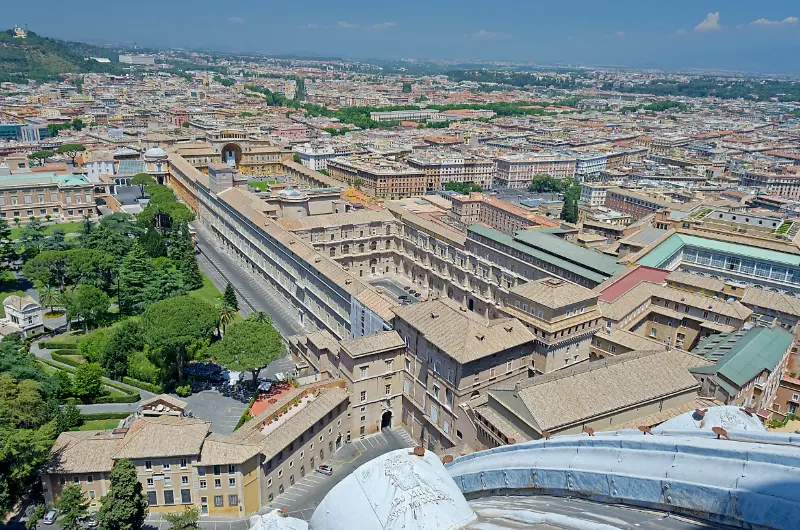
Prati lies north of the Vatican and is characterized by broad streets, shops, cafés and apartment buildings. It is less visually medieval than Trastevere but often more practical. The Vatican Museums, St. Peter’s Square and Metro Line A are nearby, and the district generally feels organized and residential.
This is a strong family base because streets can feel calmer at night and there are plenty of everyday services. The trade-off is that walking to the Colosseum or some parts of the historic center takes longer.
Best for: families, Vatican-focused trips, travelers who prefer quieter nights, longer stays.
5. Trastevere: best for atmosphere and nightlife
Trastevere is one of Rome’s most famous neighborhoods for good reason. Its lanes, old façades, piazzas and church of Santa Maria in Trastevere create a strong sense of place. At night, restaurants and bars fill quickly and the district becomes a social destination for both visitors and Romans.
That same popularity creates the main downside: noise. A charming room above a lively lane may not be charming at 1 a.m. if you are trying to sleep. Read recent reviews specifically for street noise and window insulation. Transport is bus- and tram-oriented rather than metro-based.
Best for: couples, nightlife, repeat visitors, travelers who want lively evenings outside the hotel door.
6. Testaccio: best for food and a more local rhythm
Testaccio is south of the historic center and is associated with Roman culinary traditions. The market, trattorias and history of the former slaughterhouse district make it a favorite for food-focused travelers. It also places you close to the Aventine and not far from Ostiense transport connections.
You will use transit more often for central sightseeing, so Testaccio is better for travelers comfortable with buses and metro rather than those who want every landmark outside the door.
Best for: food lovers, repeat visitors, longer stays, travelers who value local atmosphere over postcard views.

7. Termini and Esquilino: best for transport and value
The area around Roma Termini has the city’s strongest transport connections: national trains, airport services, metro lines and numerous buses. It can be practical for an early train or a short stopover, and there is a wide range of hotels at different prices.
The neighborhood changes block by block. Some streets are busy, commercial and less atmospheric late at night. That does not mean you should automatically avoid Termini, but check the exact address, recent reviews and walking route rather than judging only by distance from the station. The Esquilino side toward Santa Maria Maggiore can be particularly convenient.
Best for: rail travelers, airport connections, budget-conscious visitors, very short stays.
8. Jewish Ghetto and Campo de’ Fiori: central with character
The Jewish Ghetto sits beside the Tiber between Piazza Venezia and Trastevere. It is small, atmospheric and excellent for walkers. Campo de’ Fiori is nearby, as are Largo di Torre Argentina and Piazza Navona. The area combines archaeology, food and central location.
Campo de’ Fiori itself becomes lively at night, so choose side streets if sleep matters. Around the Jewish Ghetto, room inventory is smaller than in major hotel districts, which can push prices up.
Best for: couples, food, central walking, travelers who want character without being next to the Colosseum.
9. Villa Borghese / Via Veneto: best for parks and upscale hotels
North of the most crowded center, the Via Veneto and Villa Borghese area provides larger hotels, access to green space and proximity to Galleria Borghese. It can feel calmer than staying around Piazza Navona while still being within reach of Spanish Steps and central Rome.
The streets can be hilly, and depending on your exact hotel, walking back from the historic center may feel longer at the end of the day.
Best for: upscale stays, families who value parks, art lovers visiting Galleria Borghese.
10. Ostiense: best for modern connections and repeat visitors
Ostiense is not the classic first image of Rome, which is exactly why some travelers like it. The district mixes transport infrastructure, street art, modern dining, Eataly, industrial architecture and quick access to Testaccio. The Basilica of St. Paul Outside the Walls is also nearby.
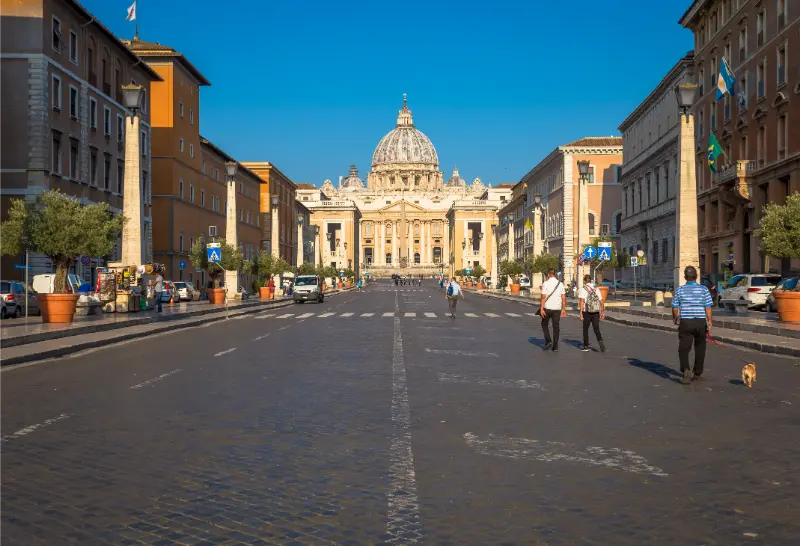
It is more useful for repeat visitors or longer stays than a first weekend, but accommodation can offer better space for the price compared with the historic core.
Best for: repeat visitors, longer stays, food, travelers arriving via Ostiense connections.
Should you stay near the Colosseum?
Staying near the Colosseum sounds ideal, and it can be—especially in Monti or on quieter streets behind the monument. But avoid choosing a hotel solely because the listing says ‘Colosseum view’. The surrounding roads can be busy, restaurants facing major attractions may be expensive, and other sights such as the Vatican are across town. Monti usually offers a better overall experience than the most traffic-heavy blocks immediately around the amphitheater.
Should you stay near the Vatican?
If the Vatican is only one morning of a three-day trip, you do not need to stay beside it. If you are attending religious events, want repeated access to St. Peter’s, or prefer Prati’s calmer streets, then it makes sense. Metro Line A helps connect Prati with the Spanish Steps and Termini.
How far from the center is too far?
Rome’s hotel maps can be deceptive. A lower price outside the center may be good value if the property is five minutes from a metro station; it may be poor value if it requires a slow bus plus a long walk. Before booking, map the hotel to Termini, the Colosseum, the Pantheon and the Vatican at the times you expect to travel.
What to check before booking a Rome hotel
- Air conditioning: essential for many travelers in summer; do not assume every historic property has strong climate control.
- Elevator: many older buildings have stairs or very small lifts.
- Street noise: read reviews mentioning bars, restaurants, tram lines and late-night pedestrian traffic.
- Reception hours: apartments and guesthouses may not offer 24-hour check-in.
- City tax: Rome levies an accommodation tax that varies by property type and can change; confirm whether it is included or payable locally.
- Luggage storage: useful for early arrivals and late departures.
- Exact walking route: check hills and cobblestones, not just straight-line distance.
Best neighborhood for a three-day first trip
For only three days, I would prioritize walkability over room size. Pantheon/Navona, Trevi/Spagna or Monti are the easiest starting points for an intensive first visit. Prati is an excellent alternative if you prefer calmer evenings and want to be close to the Vatican. Trastevere is best if nightlife and atmosphere are part of the trip itself.
Once you choose your base, use our 3-day Rome itinerary and getting around Rome guide to see how much transit you will actually need.



2 Comments
Comments are closed.