Hidden Gems in Rome: 20 Beautiful Places Beyond the Famous Sights
Rome has almost no truly “secret” places anymore, and pretending otherwise usually creates disappointment. A better way to think about hidden gems is to look for places that are less central to the standard first-time checklist: churches with extraordinary art but no timed ticket, archaeological sites hidden below modern streets, gardens where locals sit, and neighborhoods that reveal daily Rome rather than monumental Rome.
The places below are not all empty, and some are well known to experienced travelers. What they share is the ability to change the rhythm of a trip. Add two or three between major attractions and Rome begins to feel much richer than a route from Colosseum to Trevi to Vatican.
1. Basilica of San Clemente
Near the Colosseum, San Clemente is one of the best places to understand Rome’s vertical history. The medieval basilica sits above an earlier church, which in turn lies above Roman structures and a Mithraic sanctuary. Descending through the levels feels like physically moving backward through centuries.
2. Santo Stefano Rotondo
This circular church on the Caelian Hill has an unusual plan and a quieter atmosphere than major basilicas. The architecture alone is worth the detour, and the surrounding area makes a pleasant transition between the Colosseum and the Appian side of the city.
3. Case Romane del Celio
Beneath the Basilica of Santi Giovanni e Paolo are ancient Roman houses with frescoes and layered domestic spaces. They provide a more intimate view of Roman life than the monumental Forum. Check current opening arrangements before going because hours can be limited.
4. Basilica di Santa Prassede
A short walk from Santa Maria Maggiore, Santa Prassede contains dazzling early medieval mosaics, especially in the Chapel of St. Zeno. Many visitors walk through the Esquiline without realizing that one of Rome’s most beautiful mosaic interiors is behind a relatively modest façade.
5. Basilica di Santa Pudenziana
Also near Santa Maria Maggiore, this church preserves an important early Christian apse mosaic. It pairs well with Santa Prassede and gives you a compact alternative to a large museum visit.
6. Via di San Gregorio and the Celian slopes
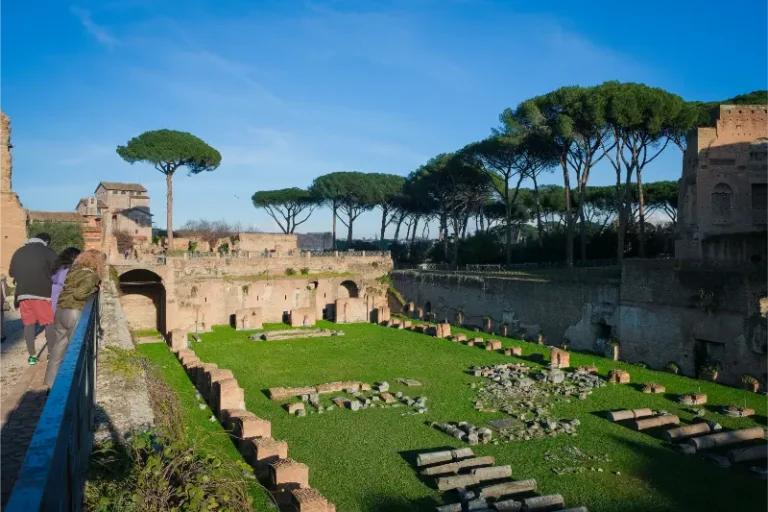
The streets between the Colosseum, Circus Maximus and Caelian Hill can feel surprisingly calm once you move away from the main entrance crowds. Walk slowly, look back at the Colosseum from different angles and enter churches when open.
7. Quartiere Coppedè
Coppedè is a small architectural fantasy north of the center, mixing Art Nouveau, medieval references, decorative animals and theatrical façades. It is not worth crossing Rome for everyone, but architecture lovers and repeat visitors usually enjoy the contrast with classical and baroque Rome.
8. Villa Torlonia
Villa Torlonia combines landscaped grounds, unusual architecture and museums in a residential part of the city. The Casina delle Civette is especially distinctive, with stained glass and a storybook appearance. The park also gives families space to slow down.
9. Centrale Montemartini
Ancient Roman sculpture displayed inside a former power station creates one of Rome’s most striking museum juxtapositions. Marble gods stand beside industrial machinery, making this branch of the Capitoline Museums memorable even for travelers who think they have had enough classical sculpture.
10. Protestant Cemetery
Beside the Pyramid of Cestius, the Non-Catholic Cemetery is peaceful, green and historically fascinating. The graves of poets John Keats and Percy Bysshe Shelley attract literary visitors, but the wider cemetery is worth walking slowly for its sculpture, trees and quiet atmosphere.
11. Pyramid of Cestius
A Roman pyramid beside a traffic intersection sounds improbable, which is exactly why it is memorable. Built as a tomb in the late Republican/early Imperial period, it later became incorporated into the Aurelian Walls. Combine it with Testaccio and the Protestant Cemetery.
12. San Pietro in Montorio and the Tempietto
Above Trastevere, the church of San Pietro in Montorio is associated with Bramante’s small Tempietto, one of the most influential High Renaissance buildings. The climb also places you close to Janiculum viewpoints, so architecture and panorama fit naturally into one outing.
13. The optical illusion on Via Piccolomini
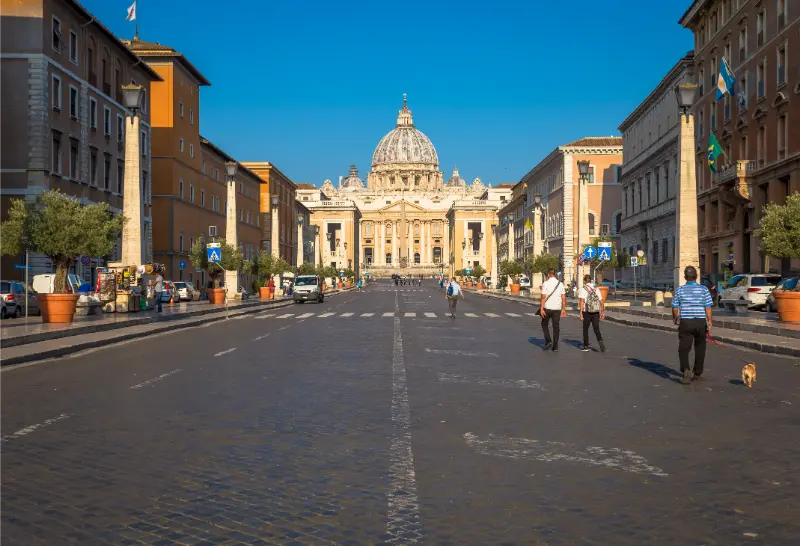
St. Peter’s dome appears to behave strangely as you move along Via Niccolò Piccolomini, a perspective effect created by the framing of the street. It is more fun than profound, but it makes an unusual stop if you are already west of the Vatican or traveling by taxi.
14. The Aventine beyond the keyhole
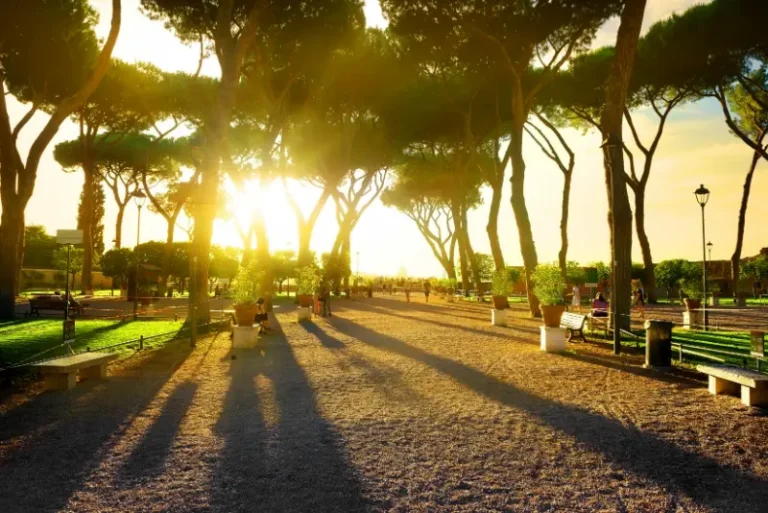
Many people visit the famous keyhole and leave. Instead, continue through the Orange Garden, Santa Sabina and the quiet residential streets. The Aventine is most rewarding as a hill to wander, not as one single photo stop.
15. Santa Cecilia in Trastevere
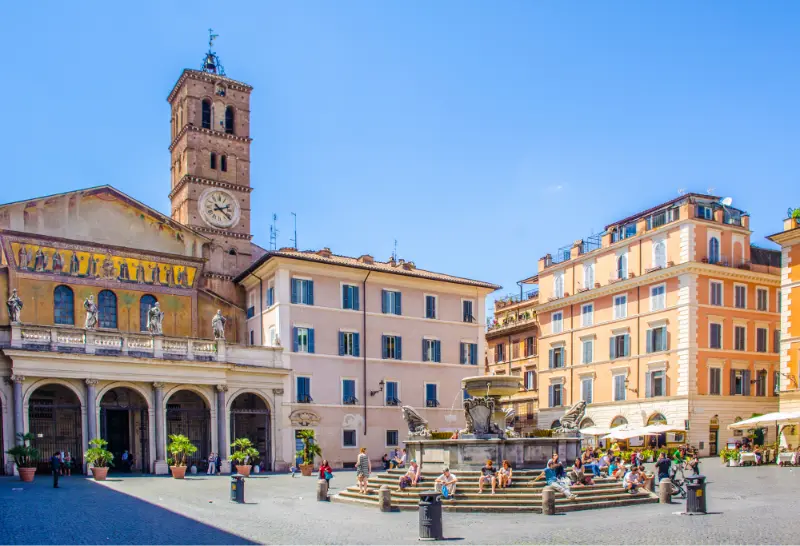
Trastevere can feel overwhelmed by nightlife in the evening, yet Santa Cecilia reveals a quieter side of the district. The church, courtyard and art make a good daytime stop before you explore the busier lanes around Santa Maria in Trastevere.
16. Orto Botanico
Rome’s botanical garden lies on the slopes of the Janiculum behind Palazzo Corsini. It is a useful escape on a warm day, particularly for travelers who need greenery after several hours of churches and stone streets.
17. Acquedotto Claudio in Parco degli Acquedotti
Parco degli Acquedotti is one of the best places to see monumental Roman infrastructure in an open landscape. The arches stretch across fields and lawns used by runners, families and dog walkers. Sunset can be beautiful, and the experience feels very different from a fenced archaeological site.
18. Garbatella
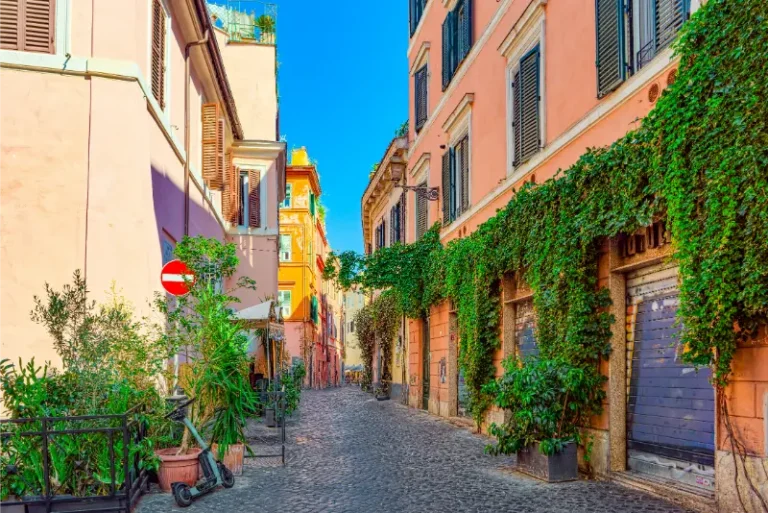
Garbatella is a residential district known for courtyards, garden-city planning and a distinct neighborhood identity. It is not a monument-focused destination; that is the point. Come for an urban walk, local food and a sense of twentieth-century Rome.
19. Basilica of San Paolo fuori le Mura
St. Paul Outside the Walls is one of Rome’s four major papal basilicas, yet many short-stay visitors never go because it lies outside the central sightseeing circuit. Its vast nave, cloister and monumental scale make the metro journey worthwhile for church and architecture lovers.
20. Appian Way on a quiet morning
The Appian Way is famous, but it can still feel like a hidden version of Rome when you walk beyond the most crowded entrances. Ancient paving, tombs, fields and umbrella pines create an almost rural atmosphere. Go early, wear proper shoes and choose a manageable segment rather than trying to cover the entire road.
Our Appian Way guide explains how to plan the route and connect it with catacombs.
How to add hidden places without ruining your itinerary
The best method is to attach one lesser-known stop to a major sight you already plan to visit. Near the Colosseum, add San Clemente. Near Santa Maria Maggiore, add Santa Prassede. Near Testaccio, add the Pyramid and Protestant Cemetery. Near Trastevere, add Santa Cecilia or climb toward San Pietro in Montorio. This keeps travel time low.
Hidden gems for families
Villa Torlonia, Parco degli Acquedotti and the Botanical Garden offer space to move. Centrale Montemartini can work for older children because the industrial setting breaks up the repetition of classical museums. Underground sites such as San Clemente are exciting for many children but involve stairs and enclosed spaces.
Hidden gems for rainy days
Choose Santa Prassede, San Clemente, Centrale Montemartini, Villa Torlonia museums and churches around the Esquiline. Save parks, the Appian Way and panoramic hills for clear weather.
How to avoid turning “local Rome” into another checklist
Do not try to collect all 20 places. Pick the ones that match your interests and location. A quiet church entered by chance can be more memorable than a cross-city journey to a supposedly secret viewpoint. Rome’s depth comes from layering experiences, not from maximizing the number of pins on a map.
Final thought
The famous sights deserve their fame, but Rome becomes personal in the spaces between them. Give yourself permission to follow a side street, step into an open basilica or spend an hour in a neighborhood with no headline attraction. Those moments are often what you remember after the photograph of the Colosseum has blended with everyone else’s.
Extra planning notes before you go
Before finalizing any plan around hidden gems in Rome, check official opening calendars again a few days before the visit. Rome changes constantly: restoration projects, religious events, strikes, heat measures and temporary exhibitions can alter entrances or routes. Save the official page on your phone and take a screenshot of any timed reservation so you are not dependent on mobile data at the entrance.
Build at least 20 to 30 minutes of margin around timed admissions. Central Rome looks compact, but cobblestones, security queues, crowded pavements and hot weather slow people down. A schedule that works perfectly on a map can feel stressful on the ground. It is usually better to arrive early and have a coffee nearby than to spend the final ten minutes running through unfamiliar streets.
For meals, move one or two streets away from the most photographed landmark before choosing a restaurant. Read the menu before sitting, check whether service or cover charges are clearly listed, and avoid places where staff pressure you from the pavement. A simple bakery, pizza al taglio counter or neighborhood trattoria often fits a sightseeing day better than an elaborate lunch beside a major monument.
Finally, keep water and footwear in mind. Rome is a walking city even when you use metro and buses, and many archaeological or historic surfaces are uneven. In summer, refill at public drinking fountains where appropriate and schedule outdoor sections earlier or later in the day. In winter, carry a compact rain layer and remember that daylight disappears much earlier.