Santa Sabina Rome: Aventine Basilica, Ancient Door and Visiting Guide
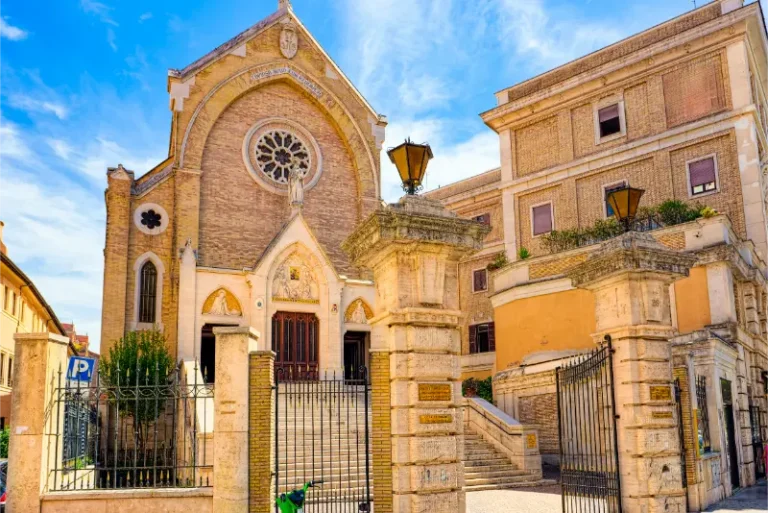
Santa Sabina is one of Rome’s most beautiful early Christian basilicas and one of the best reasons to explore the Aventine Hill beyond the famous keyhole. The church is spacious, restrained and filled with soft light, offering a powerful contrast to the ornate Baroque interiors found elsewhere in the city. Its fifth-century origins, ancient columns, early wooden door and later Dominican history make it especially valuable for understanding Christian Rome. Just outside, the Orange Garden provides one of the city’s best free views, so Santa Sabina fits naturally into a peaceful hilltop walk.
At a glance
| Best for | Early Christian architecture, quiet churches and Aventine walks |
| Location | Piazza Pietro d’Illiria, Aventine Hill |
| Nearby | Orange Garden and Aventine Keyhole |
| Cost | Ordinary church entry is generally free |
| Suggested time | 30–45 minutes inside; 90 minutes with the hill |
Why Santa Sabina feels different from Baroque Rome
The basilica’s power comes from proportion and light rather than decorative overload. A long nave, classical columns and high windows create a rhythm that helps you imagine the essential structure of an early Christian basilica. Later interventions exist, but the overall space remains unusually clear and calm.
If you have spent the previous day in richly decorated churches, Santa Sabina can reset your eye. Stand near the entrance before moving forward and notice how the columns direct attention toward the apse. The experience is architectural first; individual artworks come second.
The ancient wooden door
One of Santa Sabina’s most important survivals is the early wooden entrance door, whose carved panels include biblical scenes. The door is historically significant because so few monumental wooden works from late antiquity survive. Some panels have been lost or altered, but the remaining reliefs are remarkable.
Look without blocking the entrance. Because this is still a functioning doorway in an active church, visitors often crowd around it. Step to one side and let others pass. A zoomed photograph can help you study details later without turning the threshold into a bottleneck.
Saint Dominic and the Dominican tradition
Santa Sabina has been associated with the Dominican Order since the thirteenth century. Saint Dominic lived here, and the complex remains an important Dominican center. This later history adds another layer to a building that already reaches back to early Christian Rome.
The official Rome tourism listing provides current contact and liturgical information and notes that opening conditions can vary. As with all active churches, services take priority over sightseeing.
The Orange Garden and Aventine Keyhole
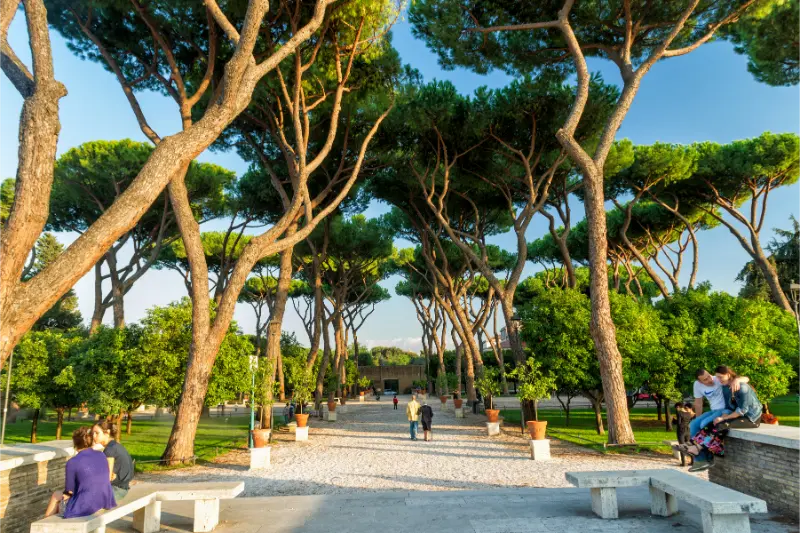
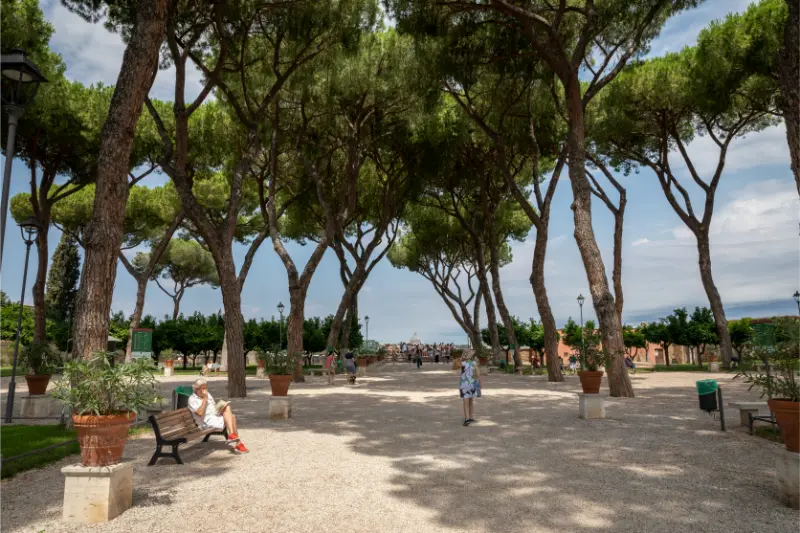
Santa Sabina stands beside the Orange Garden, a small public park with a celebrated terrace looking toward St Peter’s dome. From there, continue a few minutes to the Knights of Malta keyhole for the famous framed view. These three stops work together so naturally that there is little reason to visit one in isolation.
The Aventine Hill guide covers the broader area. The key is timing: early morning is quieter, while sunset brings beautiful light but larger crowds at viewpoints. The basilica may also have different access around services, so keep the order flexible.
How to reach the Aventine without exhausting yourself
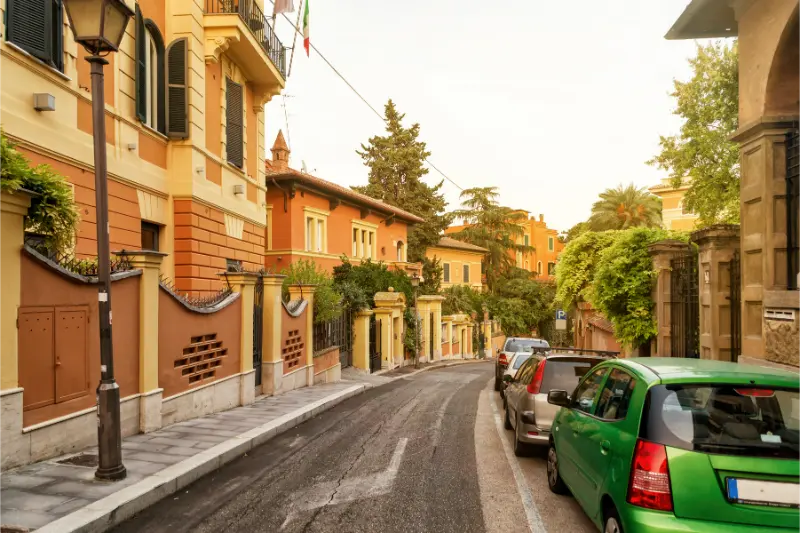
The Aventine is a hill, and some approaches are steeper than they appear. From Circus Maximus, the climb is manageable but noticeable in summer heat. Bring water, wear comfortable shoes and allow more time if traveling with children or anyone with reduced stamina.
A taxi can make sense for travelers with limited mobility, after which the main hilltop sights are close together. For a walking itinerary, combine the Aventine with Circus Maximus or Baths of Caracalla rather than descending and climbing repeatedly.
How to fit this into your Rome itinerary
A classic half day starts at Circus Maximus, climbs to Santa Sabina and the Orange Garden, continues to the keyhole and then descends toward Testaccio for lunch. This sequence gives you archaeology, church architecture, views and neighborhood food without long transport.
For a quieter alternative, visit Santa Sabina early on a weekday and spend extra time in the gardens before central Rome becomes crowded. The Aventine works particularly well as a recovery morning after a demanding Vatican or Colosseum day.
Common mistakes to avoid
- Visiting only the keyhole and skipping the basilica.
- Rushing past the ancient wooden door without realizing its significance.
- Underestimating the hill in hot weather.
- Entering during a service and treating the nave as a tourist corridor.
Frequently asked questions
Is Santa Sabina free to visit?
Ordinary entry is generally free because it is an active church.
How old is the basilica?
Its main origins date to the fifth century, making it one of Rome’s important early Christian basilicas.
Is the Orange Garden next door?
Yes. The park is immediately beside the basilica.
How much time should I allow for the Aventine?
About 90 minutes is comfortable for Santa Sabina, the Orange Garden and keyhole, excluding longer breaks.
Final thoughts
Santa Sabina is one of the best places in Rome to understand how powerful simplicity can be. The early Christian structure, ancient door and Dominican history are meaningful on their own, while the Orange Garden and keyhole make the surrounding walk exceptionally rewarding. It is a calm, low-cost experience that balances the city’s more crowded headline attractions.
A more realistic way to plan the visit
Travelers researching Santa Sabina Rome often make the day harder than it needs to be by optimizing every minute. Rome works better with buffers. Security lines, church services, public-transport gaps, weather and simple fatigue can all shift the schedule. Keep at least thirty minutes of uncommitted time around this stop, save the official page on your phone, and choose one nearby alternative in case access changes. This is especially useful in the historic center, where a closed door rarely means a wasted hour because another church, square, café or museum is usually within walking distance.
A second useful principle is to decide in advance what would make the stop successful for you. Art lovers may want time to study individual works; families may need shorter sections and a food break; photographers may care most about light and exterior views. Building the visit around your own priority is more effective than copying a generic two-hour schedule. It also reduces the temptation to rush through rooms or streets simply because an online list says they are mandatory.

Practical comfort, accessibility and timing
Rome rewards comfortable footwear and realistic pacing. Historic paving can be uneven, churches may have steps, museums can involve long standing periods and neighborhood walks may be hotter than expected. Carry water, but remember that food and drink are often restricted inside cultural sites. Travelers with reduced mobility should confirm the current accessible entrance before arrival, because the most picturesque historic doorway is not always the step-free route.
Morning generally gives you more energy and more flexibility if something changes. Late afternoon can be excellent for atmosphere, but it also increases the risk of arriving close to last entry or during liturgical activity. For food topics, the logic reverses: follow normal Roman meal rhythms rather than chasing snacks continuously. Whatever the subject, the goal is the same—leave enough space to notice the city around the main attraction rather than treating Rome as a sequence of isolated pins on a map.
Who should prioritize this experience
Santa Sabina Rome is most rewarding when it matches the reason you came to Rome rather than appearing as another obligation on a long list. First-time visitors should prioritize it when the subject strongly interests them or when it sits naturally beside attractions already planned for the same area. Repeat visitors can give it more space because they are less pressured by the Colosseum–Vatican–Trevi circuit. Families should decide whether the visual story is immediate enough for children, while serious art, history and food travelers can slow the pace and compare details instead of rushing onward.
Season also changes the experience. Summer heat makes shaded interiors and early starts more valuable, while winter and rainy days can make museums, churches and food-focused stops especially attractive. Spring and autumn bring comfortable walking weather but also heavy visitor demand. There is rarely one universally perfect hour. The better rule is to check current access, place the stop where it makes geographic sense, and keep the rest of the day flexible enough that a queue or temporary closure does not become a crisis.
What makes the experience genuinely memorable
The strongest travel memories usually come from one or two details noticed properly: the expression on a sculpture, the scale of a nave, the texture of an old street, the contrast between two recipes, or the moment a neighborhood changes character at sunset. Before leaving, pause and identify what surprised you. That small habit makes museums and churches feel less like inventory, and it prevents food exploration from becoming a race to photograph famous dishes. Rome is unusually generous to travelers who pay attention to context.
One last planning point for Santa Sabina Rome: leave the visit with a clear next step rather than immediately opening another map search. Decide whether you want a nearby coffee, a quiet square, a short walk or a direct return to your accommodation. That small decision prevents fatigue from turning into random detours and keeps the experience connected to the rest of your day. In Rome, the quality of transitions between places matters almost as much as the attractions themselves, especially when heat, crowds and cobbled streets begin to add up.