Pigneto Rome Guide: Street Art, Food, Nightlife and Local History
Pigneto is one of Rome’s most distinctive neighborhoods for travelers who want to see a contemporary, lived-in side of the city beyond the monumental center. Located east of Termini between Via Prenestina and Via Casilina, the district grew from working-class roots and later became associated with neorealist cinema, Pier Paolo Pasolini, street art, independent bars and a diverse food scene. It is not a neighborhood of grand must-see monuments. Its value lies in atmosphere, urban texture and the way old low-rise streets, modern transit and creative culture overlap. Visit with curiosity rather than a checklist.
At a glance
| Best for | Street art, nightlife, local atmosphere and repeat visitors |
| Main hub | Via del Pigneto pedestrian area |
| Transport | Metro C Pigneto plus tram/bus connections |
| Best time | Late afternoon into evening; morning for the market |
| Suggested time | 2–4 hours |
Why Pigneto is different from central Rome
The historic center can sometimes feel like a stage built for visitors. Pigneto feels more obviously residential and contemporary. Laundry, school runs, small groceries, bars, street art and traffic sit alongside a growing hospitality scene. This makes the neighborhood interesting for travelers who want to observe how modern Rome lives rather than only how ancient Rome survives.
Rome’s official Pigneto–San Lorenzo overview describes the area as historically working class and notes its association with cinema, markets, street food and nightlife. That mix still defines the visitor experience.
Pasolini, neorealism and the neighborhood’s film identity
Pigneto is strongly connected with postwar Italian cinema. Roberto Rossellini used the area for Rome, Open City, and Pasolini filmed parts of Accattone here. The streets were attractive to filmmakers because they expressed a rougher, peripheral Rome far from monumental postcard imagery.
You do not need to recreate exact film shots to appreciate this history. Walk the smaller streets off the pedestrian strip and look at building scale, courtyards and surviving fragments of older working-class housing. The neighborhood makes more sense when you understand that its cultural reputation grew from real social history, not from a recent branding exercise.
Street art and visual culture
Pigneto has become known for murals and smaller-scale street art, though works change over time as walls are repainted and new artists intervene. That impermanence is part of the appeal. Avoid relying on an old “top ten mural” article with exact works that may no longer exist. Instead, treat street art as something you discover while moving through the area.
The neighborhood also attracts independent creative businesses, music venues and cultural initiatives. Because these change faster than monuments, check current listings if a specific event matters to you. The general atmosphere is reliable; individual venues are not permanent.
Food, market and evening atmosphere
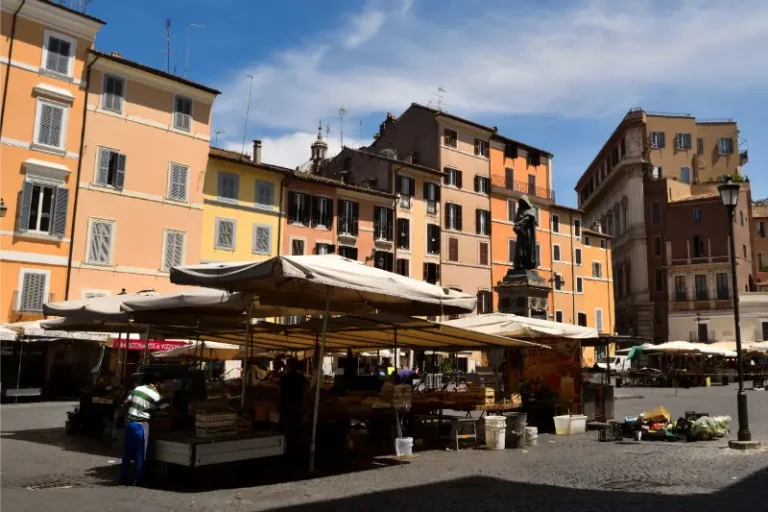
The pedestrian section of Via del Pigneto is a daytime market area and becomes much livelier toward evening. Around it you will find traditional Roman food, pizza, international kitchens, wine bars and casual nightlife. The diversity reflects the neighborhood’s changing population and younger crowd.
For food planning, use the area as a place to browse rather than chasing one famous name. If you want a broader understanding of what to order, read the Rome street food guide and Roman pasta guide before you go. Then choose based on what looks busy, fresh and suited to your appetite.
Safety, transport and expectations
Pigneto is an urban nightlife district, not a theme park. Use the same awareness you would in busy neighborhoods anywhere: watch belongings, stay alert late at night and use well-lit routes back to transit. Metro C makes access easier, while buses and trams connect the district with other parts of Rome.
Do not come expecting the polished beauty of Piazza Navona. Graffiti, traffic and uneven streets are part of the environment. Travelers who need every stop to look “pretty” may prefer Monti or Prati; travelers interested in contemporary urban Rome often find Pigneto much more memorable.
How to fit this into your Rome itinerary
For a first visit, arrive in late afternoon, walk the pedestrian area and side streets in daylight, stop for aperitivo or dinner, then leave after you have experienced the evening atmosphere. This lets you see both the neighborhood’s visual details and its nightlife without making the entire visit about bars.
Pigneto pairs well with Porta Maggiore or a separate San Lorenzo visit, but do not try to force both districts into a single fast walk if your goal is atmosphere. On a longer trip, give each neighborhood its own evening and compare how they differ.
Common mistakes to avoid
- Expecting a list of blockbuster monuments.
- Following an old street-art map as if every mural were permanent.
- Visiting only after dark and missing the neighborhood’s architecture and market life.
- Assuming every nightlife street is equally comfortable late at night; keep normal city awareness.

Frequently asked questions
Is Pigneto worth visiting on a first trip to Rome?
It is best if you have at least four or five days or a strong interest in modern neighborhoods. On a very short first trip, prioritize the historic center.
How do I get to Pigneto?
Metro C has a Pigneto station, and the area is also served by surface transport.
Is Pigneto good for nightlife?
Yes. The pedestrian area and surrounding streets are known for bars, food and a younger evening crowd.
Is Pigneto the same as San Lorenzo?
No. They are separate neighborhoods with related alternative reputations and are often discussed together in tourism material.
Final thoughts
Pigneto is valuable because it makes Rome feel like a present-day city rather than an archaeological backdrop. Film history, street art, working-class roots, markets and nightlife overlap in a relatively compact area. Go without expecting perfection, walk before you sit down for the evening, and let the neighborhood’s everyday contrasts be the main attraction.
A more realistic way to plan the visit
Travelers researching Pigneto Rome often make the day harder than it needs to be by optimizing every minute. Rome works better with buffers. Security lines, church services, public-transport gaps, weather and simple fatigue can all shift the schedule. Keep at least thirty minutes of uncommitted time around this stop, save the official page on your phone, and choose one nearby alternative in case access changes. This is especially useful in the historic center, where a closed door rarely means a wasted hour because another church, square, café or museum is usually within walking distance.
A second useful principle is to decide in advance what would make the stop successful for you. Art lovers may want time to study individual works; families may need shorter sections and a food break; photographers may care most about light and exterior views. Building the visit around your own priority is more effective than copying a generic two-hour schedule. It also reduces the temptation to rush through rooms or streets simply because an online list says they are mandatory.
Practical comfort, accessibility and timing
Rome rewards comfortable footwear and realistic pacing. Historic paving can be uneven, churches may have steps, museums can involve long standing periods and neighborhood walks may be hotter than expected. Carry water, but remember that food and drink are often restricted inside cultural sites. Travelers with reduced mobility should confirm the current accessible entrance before arrival, because the most picturesque historic doorway is not always the step-free route.
Morning generally gives you more energy and more flexibility if something changes. Late afternoon can be excellent for atmosphere, but it also increases the risk of arriving close to last entry or during liturgical activity. For food topics, the logic reverses: follow normal Roman meal rhythms rather than chasing snacks continuously. Whatever the subject, the goal is the same—leave enough space to notice the city around the main attraction rather than treating Rome as a sequence of isolated pins on a map.
Who should prioritize this experience
Pigneto Rome is most rewarding when it matches the reason you came to Rome rather than appearing as another obligation on a long list. First-time visitors should prioritize it when the subject strongly interests them or when it sits naturally beside attractions already planned for the same area. Repeat visitors can give it more space because they are less pressured by the Colosseum–Vatican–Trevi circuit. Families should decide whether the visual story is immediate enough for children, while serious art, history and food travelers can slow the pace and compare details instead of rushing onward.
Season also changes the experience. Summer heat makes shaded interiors and early starts more valuable, while winter and rainy days can make museums, churches and food-focused stops especially attractive. Spring and autumn bring comfortable walking weather but also heavy visitor demand. There is rarely one universally perfect hour. The better rule is to check current access, place the stop where it makes geographic sense, and keep the rest of the day flexible enough that a queue or temporary closure does not become a crisis.
What makes the experience genuinely memorable
The strongest travel memories usually come from one or two details noticed properly: the expression on a sculpture, the scale of a nave, the texture of an old street, the contrast between two recipes, or the moment a neighborhood changes character at sunset. Before leaving, pause and identify what surprised you. That small habit makes museums and churches feel less like inventory, and it prevents food exploration from becoming a race to photograph famous dishes. Rome is unusually generous to travelers who pay attention to context.