Rome Street Art Guide: Ostiense, Tor Marancia, Pigneto and More
Street art reveals a Rome that many first-time itineraries miss completely. Away from the Colosseum and Baroque center, former industrial districts, residential blocks and railway corridors have become open-air galleries where large murals sit beside twentieth-century architecture, markets and everyday neighborhood life. The strongest areas are Ostiense, Tor Marancia, Pigneto and San Lorenzo, but the experience is less about checking individual works and more about understanding the parts of the city that surround them.
This guide is designed for independent travelers who want to add contemporary Rome to a classical itinerary. Murals can be repainted, restored or covered, so treat exact artwork lists as changeable. The neighborhood context is more durable. For related planning, see our Ostiense guide, Pigneto guide and San Lorenzo guide.
| Area | What stands out | Best combined with |
|---|---|---|
| Ostiense | Large murals, industrial architecture, Gasometer | Centrale Montemartini, Testaccio |
| Tor Marancia | Big City Life murals on residential buildings | Appian Way / Garbatella area |
| Pigneto | Smaller-scale walls, bars, creative streets | Evening food and local nightlife |
| San Lorenzo | University atmosphere, political and artistic walls | Porta Maggiore, local evening |
| Quadraro / Torpignattara | Neighborhood projects and murals | A half-day outside the historic center |
Why Rome became an important street-art city
Rome’s contemporary art is often overshadowed by antiquity, but the city’s outer and post-industrial districts provide enormous walls, complex social histories and communities that have supported public-art projects. In several areas, street art has been used as part of neighborhood regeneration rather than as decoration added only for tourists. That difference matters: the most interesting murals belong to lived-in streets, housing estates and industrial zones.
Approach these areas with the same respect you would bring to any residential neighborhood. Do not photograph people through windows, block building entrances or treat courtyards as film sets. Some murals sit on private residential façades even when they are publicly visible. A good street-art walk balances photography with attention to the architecture, shops and local spaces around the works.
Ostiense: the easiest street-art district for visitors
Ostiense is the most straightforward place to begin because it combines murals with recognizable industrial landmarks and good transport. The Gasometer dominates the skyline, old warehouses and utility buildings shape the streets, and large-scale works appear around Via del Porto Fluviale and nearby roads. Rome’s official tourism material continues to highlight Ostiense as a district where street art, industrial archaeology and daily life meet.
Do not rush from mural to mural. Pair the street art with Centrale Montemartini, where ancient sculpture is displayed inside a former power station, or continue toward Testaccio for food. This creates a coherent half-day rather than a photography-only excursion. Our Centrale Montemartini guide and Testaccio guide fit naturally with the route.
Tor Marancia: Big City Life and a residential open-air museum
Tor Marancia is best known for the Big City Life project, created on residential buildings around Viale di Tor Marancia 63. The project transformed façades with large murals by international artists and became one of the city’s best-known examples of art integrated into social housing. Rome tourism information describes the Tor Marancia project as a major open-air contemporary-art site, with twenty large murals on the residential buildings.
The visual impact is immediate because the works occupy entire building walls, but remember that this is still a residential complex. Keep noise low, follow any posted access guidance and avoid treating residents as part of the attraction. Tor Marancia works well for travelers who have already seen central Rome and want a distinct contemporary experience rather than another historic church or museum.
Pigneto: street art mixed with nightlife and local culture
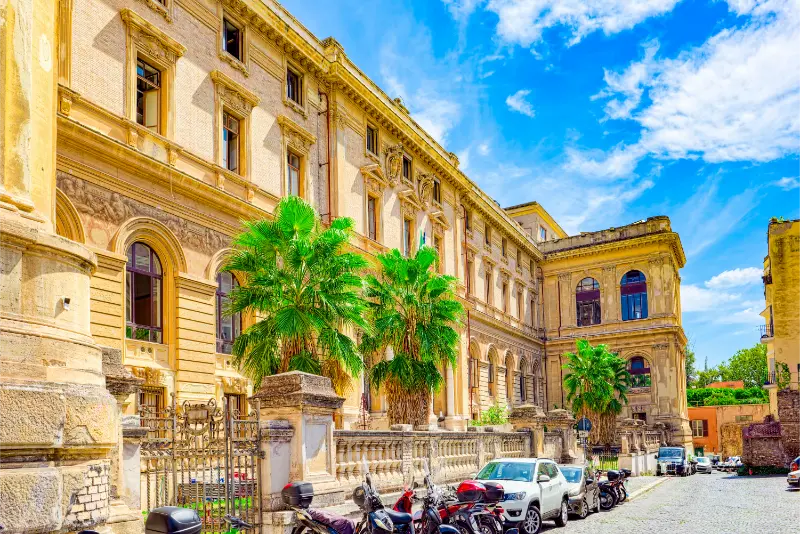
Pigneto feels different from Ostiense. The street art is often encountered as part of an active neighborhood rather than as a single formal project. Walls, shutters and smaller surfaces mix with cafés, bars, residential streets and references to Rome’s film history. The pedestrian section around Via del Pigneto can be a useful starting point, but the character changes quickly from street to street.
Visit in daylight if photography is your priority, then stay into the evening if you want food or nightlife. The area has become fashionable, yet it still has a more local rhythm than the historic center. Our Pigneto Rome guide explains how to combine street art with the neighborhood’s food, transport and history.
San Lorenzo: student energy and constantly changing walls
San Lorenzo, close to La Sapienza University and Termini’s eastern side, has a long association with student life, political expression and alternative culture. Its street art is more fluid than a curated mural district: pieces appear, disappear and overlap, which makes exact lists age quickly.
That temporary quality is part of the experience. Walk with an open itinerary and pay attention to posters, shutters and side streets rather than expecting a sequence of monumental works. The neighborhood also carries important twentieth-century history, including the bombing of 1943. Read our San Lorenzo guide before visiting so the area is more than a backdrop for photographs.
Quadraro and Torpignattara: for a deeper contemporary-Rome day
Travelers who want to go beyond the most accessible districts can look toward Quadraro and Torpignattara, where mural projects and community art have developed across residential streets. These areas are farther from the standard sightseeing circuit and reward visitors who are comfortable using metro, tram or bus connections outside the center.
Do not arrive with the expectation that every wall you saw in an old blog post will still exist. Public art changes, businesses close and surfaces are repainted. Use the neighborhood itself as the destination, with murals as one layer of the visit. If you are short on time, choose Ostiense or Tor Marancia instead of trying to collect every district.
How to build a half-day street-art itinerary
For most visitors, Ostiense and Tor Marancia make the strongest pairing. Start around Ostiense station or Piramide, explore the Porto Fluviale area and industrial landscape, then visit Centrale Montemartini or cross into Testaccio for lunch. In the second half of the day, continue toward Tor Marancia by public transport or taxi.
An alternative evening-oriented route is San Lorenzo plus Pigneto. Begin in San Lorenzo while there is good daylight, then move east toward Pigneto for dinner and a later walk. This route emphasizes neighborhood atmosphere over monumental murals. Check our getting around Rome guide because cross-neighborhood transfers can be less intuitive than walking in the historic center.
Street art and photography: practical etiquette

A wide-angle lens or modern phone works well for large murals, but the real challenge is perspective. Narrow streets can make it impossible to capture a façade straight-on. Move slowly, look for open spaces and accept that some images will include cars, balconies and daily life. Those elements often make the photograph more truthful.
Avoid stepping into traffic for a cleaner angle. Rome’s side streets can have fast-moving scooters and limited sidewalks. Early morning provides softer light and fewer parked-car movements, while late afternoon can produce dramatic shadows. If a mural faces directly into the sun, return later instead of standing in the roadway trying to force the shot.
Combine street art with modern and industrial architecture
Street art becomes more meaningful when paired with Rome’s modern architecture. In Ostiense, the Gasometer and former industrial buildings explain why huge wall surfaces exist. In EUR, rationalist architecture provides another twentieth-century contrast, while MAXXI in Flaminio shows contemporary culture in a formal museum setting.
If contemporary Rome is a major interest, build a full day that includes one street-art district and one museum or architectural area rather than only murals. See our EUR Rome guide and MAXXI guide for two very different extensions.
Safety and timing
These neighborhoods are ordinary urban areas, not controlled museum campuses. Visit unfamiliar zones in daylight the first time, keep valuables secure and use the same awareness you would elsewhere in a large city. Around rail corridors and busy intersections, traffic may be a greater practical issue than personal safety.
At night, Pigneto and San Lorenzo can be lively, while quieter residential streets may feel very different. If you are unsure about a route, return to a main road or transport stop rather than wandering for the sake of finding one more mural. Our Rome safety guide covers general precautions.
Common street-art mistakes
- Using an old mural list as if every work were permanent.
- Visiting only for photographs without understanding the residential context.
- Blocking entrances, courtyards or traffic for a better camera angle.
- Trying to cover Ostiense, Tor Marancia, Pigneto and San Lorenzo in one rushed day.
- Skipping nearby museums, markets and architecture that explain the neighborhoods.
- Assuming street art is always in tourist-oriented public space.
Frequently asked questions
Where is the best street art in Rome?

Ostiense is the easiest area for first-time visitors because it combines large murals, industrial scenery and strong transport links. Tor Marancia is the best-known concentrated project, while Pigneto and San Lorenzo offer a more fluid neighborhood experience.
Is Tor Marancia free to visit?
The murals are visible in a residential setting rather than a conventional ticketed museum, but visitors should respect any current access rules and the privacy of residents.
Can I combine Rome street art with famous sights?
Yes. Ostiense pairs naturally with Testaccio, the Pyramid of Cestius and Centrale Montemartini; Tor Marancia can be combined with the Appian Way area; Pigneto and San Lorenzo work well as evening neighborhood additions.
Final advice
Rome’s street art is most rewarding when you stop comparing it with the ancient center. These districts tell a different story: industrial change, housing, youth culture, regeneration and contemporary identity. Choose one or two areas, give them enough time and let the murals lead you into neighborhoods you might otherwise never see.