Santa Maria ai Monti Rome: Giacomo Della Porta Church and Visiting Guide
Santa Maria ai Monti sits at the center of one of Rome’s liveliest neighborhoods but remains easy to treat as background architecture. That is a mistake. Designed from 1580 by Giacomo Della Porta, the church marks an important moment between late Renaissance clarity and the theatrical Baroque language that would soon dominate the city. Its origin is tied to a revered Marian image and to popular devotion in the old Suburra area.
The visit works on two levels. Inside, frescoes, stucco and the miraculous icon create a concentrated sacred interior. Outside, Piazza della Madonna dei Monti and the surrounding lanes show how a major church can function as part of everyday neighborhood life. For travelers already visiting the Colosseum or Imperial Forums, it is one of the easiest meaningful detours into Monti.
| Planning point | Useful detail |
|---|---|
| Location | Via della Madonna dei Monti 41, in the heart of the Monti district |
| Access | Active church. Current Mass times and visiting access should be confirmed through the parish contacts. |
| Cost | Ordinary church entry is generally free. |
| Suggested time | 35–50 minutes |
| Best for | Late Renaissance architecture, sacred painting and a Monti neighborhood walk |
Why Santa Maria ai Monti is worth visiting
Santa Maria ai Monti works best when you treat it as part of Rome rather than as a box to tick. Its value comes from the way art, architecture, worship and the surrounding streets reinforce one another. Because it is less crowded than the city’s headline monuments, you can usually spend more time observing materials, inscriptions and spatial details instead of following a fixed tourist flow.
For travelers building a deeper itinerary, Santa Maria ai Monti also provides useful contrast. Rome’s major basilicas show imperial scale and papal ceremony; smaller churches often reveal guilds, foreign communities, confraternities, neighborhood devotion and the practical history of local worship. That human scale is one reason these sites become memorable after the first trip.
History and context
The site had an earlier religious history, but the decisive episode occurred in the sixteenth century when devotion grew around an image of the Virgin associated with reported miracles. Pope Gregory XIII supported the construction of a new church, and Giacomo Della Porta began the building in 1580.
Della Porta’s façade is often compared with the Church of the Gesù, another landmark in the development of Counter-Reformation church architecture. The design is disciplined and legible, with two levels connected by scroll-like elements, creating a model that would influence many later façades.
The interior decoration accumulated works by several artists, including Cristoforo Casolani, Giacinto Gimignani and Orazio Gentileschi. Rather than behaving like a gallery, however, the program is organized around devotion to the Virgin and the liturgical life of the church.
What to see
The façade by Giacomo Della Porta
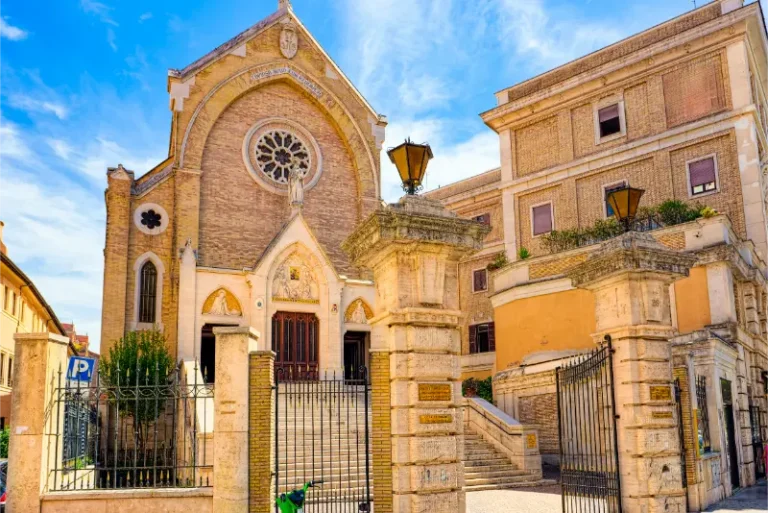
Stand across the street or in the piazza to read the façade as a whole. Pilasters, pediments and scrolling side elements create a controlled composition that feels monumental without requiring a huge square.
Compare it mentally with the Gesù if you have seen that church. The similarities help reveal how architectural ideas circulated through late sixteenth-century Rome and were adapted to different urban situations.
The revered Marian image
The high altar preserves the Marian image associated with the foundation story. Its importance is devotional rather than simply artistic, and understanding that distinction changes how you read the interior.
Observe how architecture, altar and surrounding decoration direct attention toward the image. The church was designed around a cult object that already mattered to local believers, not around a later museum display.

Ceiling, stucco and painted decoration
Look upward at the vault and arches, where painting and stucco create a continuous visual field. Cristoforo Casolani’s work and the sculptural decoration transform the long nave into a coordinated program rather than a collection of unrelated pictures.
Move slowly from the entrance toward the altar. The sequence is more effective when seen as a progression, with each bay contributing to the overall rhythm of the interior.
Works connected with Orazio Gentileschi and later artists
The church includes decorative work associated with Orazio Gentileschi and other painters active around the turn of the seventeenth century. This makes Santa Maria ai Monti a useful stop for travelers tracing artists beyond Rome’s best-known galleries.
Do not expect a single blockbuster canvas. The interest lies in context: artists worked within architectural frameworks and devotional programs, often collaborating with sculptors, stucco workers and patrons.
How to plan your visit
Santa Maria ai Monti is extremely easy to include because it stands inside a district most visitors already cross. The safest plan is to check current parish access and visit outside services. Even if the doors are closed temporarily, the piazza and surrounding streets remain worthwhile.
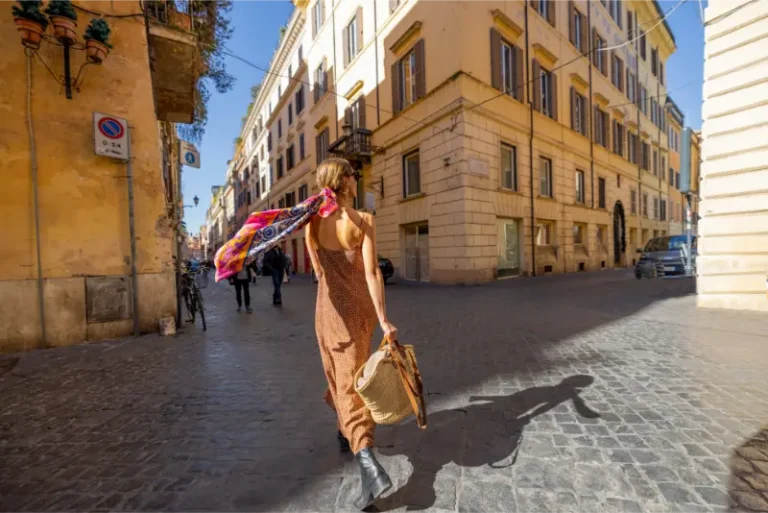
Pair the church with Monti rather than rushing back immediately to the Colosseum. The neighborhood rewards wandering, and the contrast between ancient monuments nearby and sixteenth-century sacred architecture makes the area easier to understand historically.
A useful way to visit Santa Maria ai Monti is to separate the experience into three passes. First read the architecture from the entrance without stopping for details. On the second pass, choose two or three works that explain the site’s history. Finally, return toward the door and look back at the space from the opposite direction. This simple method prevents a richly decorated Roman church from becoming a blur of names and helps you remember the relationship between structure, decoration and neighborhood context.
Do not judge Santa Maria ai Monti only by the number of famous artists attached to it. Smaller Roman churches are often valuable because scale allows you to understand relationships that disappear in larger basilicas. A chapel, memorial, floor pattern and altar may have been conceived as parts of one program. Spending ten extra minutes tracing those connections often produces more insight than adding another distant attraction to the same day.
Practical tips before you go
- Check current access shortly before visiting, especially because liturgies, maintenance and special events can change normal routines.
- Dress for an active place of worship: shoulders and knees should be covered, and hats should normally be removed inside.
- Use silent camera settings and avoid flash unless staff or posted rules explicitly allow it.
- Do not place an inflexible timed attraction immediately after the visit; allow a small buffer for unexpected closures or ceremonies.
- Read one or two key historical points before entering so the architecture and artworks have context rather than becoming a list of unfamiliar names.
If the doors are closed when you arrive, do not force the itinerary. Santa Maria ai Monti sits in an area with other worthwhile sights, so use the nearby route below and return later if practical. This is often a better strategy in Rome than waiting outside an active church whose schedule has changed.
What to see nearby
Santa Maria ai Monti combines naturally with Monti guide, Colosseum, Roman Forum, San Martino ai Monti. These nearby pages are already part of MyRomeTrip and can help readers turn one church visit into a coherent half-day rather than a disconnected detour.
Visit the Colosseum or Roman Forum first, then walk into Monti for Santa Maria ai Monti. Continue north through the neighborhood toward San Martino ai Monti. This route shifts gradually from imperial archaeology to early Christian and Counter-Reformation Rome without requiring transport.
Who will enjoy this stop most?
The church is ideal for architecture enthusiasts, travelers staying in Monti and visitors who want meaningful stops between major monuments. It is also a useful introduction to Counter-Reformation church design because the building is easier to read than some of Rome’s more overwhelmingly decorated Baroque interiors.
First-time visitors with only a few hours in Rome do not need to replace the Colosseum, Pantheon or Vatican with Santa Maria ai Monti. The better approach is to add it when geography already brings you nearby. Repeat visitors, art lovers and travelers who enjoy slower city exploration will usually get the greatest value from the stop.
Photography, accessibility and respectful visiting
The central neighborhood has uneven paving and busy pedestrian traffic. Historic thresholds may affect wheelchair access, so contact the parish if step-free entry is essential. Inside, remain conscious that the building is used for prayer; use silent camera settings and avoid flash unless explicitly allowed.
One more practical approach is to spend the first five minutes inside Santa Maria ai Monti without taking photographs. Let your eyes adjust, identify the main axis and notice which details attract your attention naturally. Photograph afterward. This reduces screen time in a sacred space and usually results in better images because you understand the room before framing it.
Official information and changing access
For current access, services and special closures, consult the official or municipal information page: visitor information for Santa Maria ai Monti. Hours published online can change, particularly around feast days, restoration campaigns and liturgical events, so readers should verify details close to the day of the visit.
FAQ
Who designed Santa Maria ai Monti?
The church was begun in 1580 by Giacomo Della Porta, one of the key architects of late sixteenth-century Rome.
Why was the church built?
Its construction was connected with devotion to a Marian image associated with reported miracles at the site.
Is it near the Colosseum?
Yes. It is in the Monti district and can easily be combined with the Colosseum and Roman Forum.
How long do you need?
Around 35–50 minutes is comfortable for the interior and exterior, longer if you are studying the art in detail.
Final tips
Santa Maria ai Monti is the kind of place that makes a Rome itinerary feel more personal. It does not require the logistics of a major museum, but it rewards context, patience and respectful attention. Pair it with nearby sights, keep the timing flexible and focus on a few details rather than trying to memorize every name. That approach is often the difference between simply entering another church and actually understanding why the building belongs to the story of Rome.