San Francesco a Ripa Rome: Bernini, Saint Francis and Trastevere Guide
San Francesco a Ripa is one of Trastevere’s most rewarding churches for travelers who want more than the neighborhood’s restaurants and evening atmosphere. The sanctuary is tied to the Roman memory of Saint Francis of Assisi and contains one of Gian Lorenzo Bernini’s most moving late sculptures, the Blessed Ludovica Albertoni.
Because the church lies away from the busiest lanes around Santa Maria in Trastevere, the visit feels calmer and more local. It works especially well in the morning, before lunch in Testaccio or a longer walk through Trastevere, and it gives art lovers a reason to explore the southern side of the district rather than turning back after the famous central piazza.
| Planning point | Useful detail |
|---|---|
| Address / location | Piazza di San Francesco d’Assisi 88, Rome |
| Access | Active Franciscan sanctuary; visiting access varies around liturgy. |
| Tickets / cost | Main church entry is generally free. |
| Suggested time | 40–60 minutes |
| Best for | Bernini, Franciscan history and a quieter cultural stop in Trastevere |
A Franciscan place in Rome
The site developed from a medieval hospice dedicated to San Biagio, associated with care for the poor and travelers near the river port of Ripa Grande. Franciscan tradition remembers Saint Francis staying here during visits to Rome in the early thirteenth century. Over time the complex became the principal Franciscan church in the city and was rebuilt and transformed, especially in the seventeenth century.
That history explains the building’s character. San Francesco a Ripa is not designed as a grand papal basilica. Its identity is linked instead to Franciscan spirituality, charitable activity and a neighborhood that historically stood close to river commerce. The quieter setting makes it easier to notice how a religious order shaped a part of Rome beyond the monumental center.
Bernini’s Blessed Ludovica Albertoni
The reason many art lovers come is Bernini’s sculpture of Blessed Ludovica Albertoni in the Altieri Chapel. Created in the 1670s, the marble figure reclines in an intense spiritual state while light from a concealed window animates the folds of fabric and the surrounding architecture. The work belongs to Bernini’s mature period and deserves to be seen in relation to the chapel rather than as an isolated sculpture.
Compare it with the more famous Ecstasy of Saint Teresa at Santa Maria della Vittoria. Both works use sculpture, architecture and controlled light to turn a chapel into a theatrical devotional space, but the emotional tone is different. The comparison is one of the best ways to understand Bernini beyond fountains and public monuments.
The memory of Saint Francis
The sanctuary preserves traditions connected with the room where Saint Francis is believed to have stayed. Access to conventual spaces is not always the same as access to the main church, so do not assume every part of the complex is continuously open. If this aspect is important to you, contact the sanctuary or check its current information before visiting.
Even without entering additional rooms, the Franciscan identity remains clear. Take time to look at the chapels, memorials and simpler architectural elements rather than focusing only on Bernini. The church makes most sense when seen as an active sanctuary with centuries of religious use, not merely as a container for one masterpiece.
San Francesco a Ripa and Trastevere
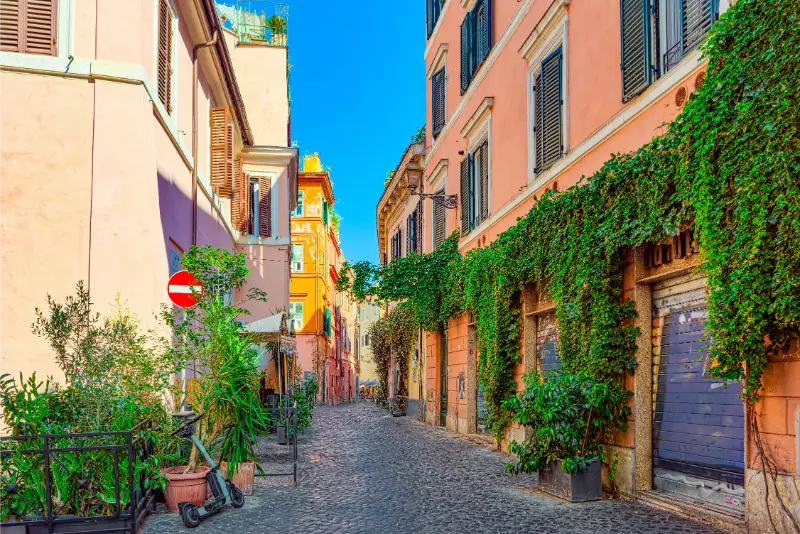
The church sits in a part of Trastevere that feels different from the area around Piazza Trilussa. From here you can walk to Santa Cecilia, cross toward the Tiber, or continue south to Porta Portese and Testaccio. This makes the sanctuary a useful anchor for a more complete exploration of the district.
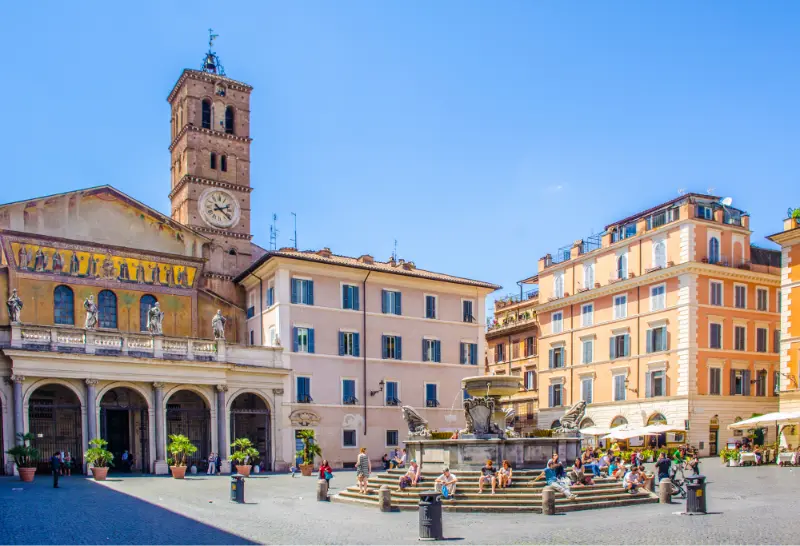
A strong half-day route combines San Francesco a Ripa with Santa Cecilia in Trastevere and then the food-focused streets described in our Trastevere guide. If you want a market or Roman food component, continue toward Testaccio rather than returning immediately to the tourist center.
How to visit without disrupting worship
These churches are living places of worship rather than museum galleries. Tourist access can pause for Masses, funerals, weddings, cleaning or parish events even when a door is normally open. The safest approach is to check the church or Tourism Rome information shortly before leaving, arrive outside liturgical times and be prepared to return later if a service is underway. That flexibility matters more than memorizing an opening-hour table months in advance.
Dress conservatively enough for an active Catholic church: shoulders and knees should be covered, hats removed inside and voices kept low. Photography rules vary. Even where photos are allowed, avoid flash near paintings and never photograph people at prayer without permission. A quiet visit is usually more rewarding anyway, because many of these interiors reveal their details slowly rather than through a single spectacular viewpoint.
How long to allow
For most visitors, 30 to 60 minutes is enough for the church itself, but art lovers should allow longer when there are major paintings, mosaics, chapels or underground remains. Build in extra time if the site has a crypt, archaeological level or a nearby monument that makes sense as part of the same walk. Rome becomes much easier when you group places geographically instead of zigzagging between famous names across the city.
A useful rhythm is to choose one major anchor attraction and two smaller stops in the same district. That keeps the day varied without turning churches into a checklist. It also gives you room for a coffee, a market, a park or simply a slower walk through the neighborhood, which is often where a trip to Rome becomes memorable.
Best time to visit
Early morning and the quieter part of the afternoon are usually the easiest moments for art-focused visits. Midday can work well in hot weather because church interiors are cooler, but lunchtime closures are common in Rome. On Sundays and feast days, expect more religious activity. If seeing a specific artwork is the priority, keep a second window in your itinerary in case the relevant chapel is temporarily inaccessible.
Light also matters. Mosaics and marble often read differently as the sun changes, while darker chapels may be easier to appreciate when their artificial lighting is switched on. Do not plan a rushed five-minute stop just before closing; staff may begin clearing spaces earlier than the posted final time.
Accessibility and practical comfort
Historic churches can present steps, uneven paving, narrow side chapels and occasionally inaccessible crypts. Main naves are often easier than archaeological levels, but accessibility varies from entrance to entrance. Travelers with reduced mobility should check the latest access notes directly with the site rather than assuming that an apparently flat façade means a step-free visit.
Carry only what you need. Large bags can be awkward in crowded interiors, and there is rarely secure luggage storage at a church. If you are visiting on arrival or departure day, use a dedicated luggage facility rather than bringing suitcases into religious buildings. In summer, water is useful outside, but eating and drinking inside the church should be avoided.
How to get there and plan the route
Central Rome is compact on a map but not always quick on foot. Choose the route based on the attractions immediately before and after this stop rather than on your hotel alone. Live public-transport information is useful because buses and surface routes can change with road works, demonstrations and special events. If you use a taxi, enter the full address rather than only the attraction name, especially for churches, parks and archaeological complexes with more than one entrance.
The best itineraries keep one district together. Nearby options include Trastevere, Santa Cecilia, Bernini in Rome. Linking these stops reduces wasted travel time and gives you a better sense of how each monument fits into Rome’s urban fabric.

What to bring and common mistakes to avoid
- Check same-week access information when the site is religious, archaeological or subject to maintenance.
- Wear comfortable shoes: cobbles, stairs and uneven historic surfaces are common even in the center.
- Carry water in warm weather, but do not eat or drink inside churches and protected museum spaces.
- Avoid scheduling a minor site immediately before a fixed-time Colosseum, Vatican or gallery reservation.
- Do not rely on third-party ticket sellers before confirming whether the site actually requires a paid ticket.
- Keep photography respectful and follow local signs on flash, tripods and restricted areas.
Is it worth adding to a first trip?
For a first visit to Rome, San Francesco a Ripa Rome makes sense when its subject matches your interests and it fits naturally into the neighborhood you are already exploring. It should not replace the Colosseum, Vatican or Pantheon for most first-time travelers, but it can make a busy sightseeing day feel more personal and less predictable.
Repeat visitors will get even more from the stop because they already understand the city’s basic geography. Smaller churches, specialized museums and neighborhood parks often become highlights on a second or third trip precisely because there is no pressure to race through them.
FAQ
Is San Francesco a Ripa Rome worth visiting?
Yes, especially for travelers interested in bernini, franciscan history and a quieter cultural stop in trastevere. The strongest reason to visit is not simply adding another attraction to a list but seeing a part of Rome that explains the city from a different angle.
Do I need to book in advance?
It depends on the site. Active churches normally do not require a tourist reservation, while specialized archaeological monuments may use scheduled access. Museums can have capacity limits even when tickets are free. Check the current official information shortly before your visit.
How much time should I allow?
Plan about 40–60 minutes. Add extra time if you are combining the stop with a nearby museum, archaeological level, park or longer neighborhood walk.
What should I see nearby?
Good nearby choices are Trastevere, Santa Cecilia, Bernini in Rome. Keeping the day geographically compact is usually more rewarding than crossing Rome after every attraction.
Is the site suitable for children?
It can be, but the answer depends on the child and the type of site. Parks and visible architectural features are easier for younger visitors; quiet churches and detailed museums work better when children have a simple story or visual goal to follow.
Final planning advice
San Francesco a Ripa Rome is most rewarding when you treat it as part of a neighborhood rather than an isolated pin on a map. Verify current access, arrive with enough time to look carefully, then continue on foot to one or two nearby places. That slower pattern is one of the best ways to experience Rome beyond the headline attractions.