Ponte Sisto Rome: History, Tiber Views and Walk Between Trastevere and Campo de’ Fiori
Ponte Sisto is one of Rome’s most useful beautiful bridges. It connects the Campo de’ Fiori and Via Giulia side of the historic center directly with Piazza Trilussa and Trastevere, turning what could be a transport problem into a scenic walk. The dome of St Peter’s appears in the distance, the Tiber opens below and the city changes character immediately on the opposite bank.
The present bridge was built for the Jubilee of 1475 under Pope Sixtus IV, on the site of an older Roman crossing. Its four arches and distinctive circular opening give it a clear silhouette. Most visitors use it simply to reach dinner in Trastevere; spending ten extra minutes on the bridge makes the route itself part of the experience.
Ponte Sisto at a glance
| Area | Tiber crossing between Regola and Trastevere |
| Best for | sunset walks, couples, river views and Trastevere routes |
| Suggested time | 15–30 minutes on the bridge; 1–2 hours with both riverbanks |
| Cost | Free |
| Best moment | Late afternoon and evening |
Why it deserves a separate stop
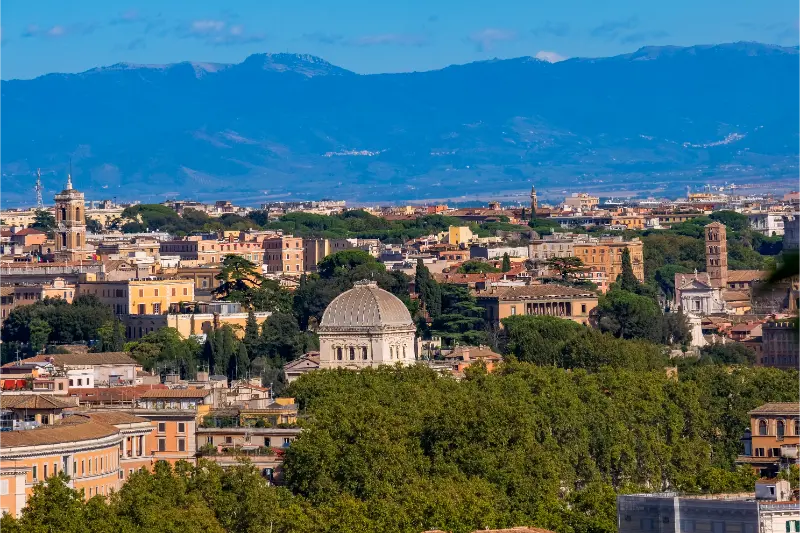
Bridges are among the best places to understand Rome spatially. From Ponte Sisto you can see the river walls, domes, trees and the relationship between the historic center and Trastevere.
It is also one of the easiest sunset additions to an itinerary because no reservation, ticket or opening time is involved. If a museum day has become too dense, ending with a river crossing can reset the pace.
History and context
A Roman bridge existed in this area, traditionally associated with Agrippa and later restorations. Flood damage eventually left the crossing ruined for centuries.
Sixtus IV commissioned the new bridge in connection with the Jubilee of 1475, improving movement between the Vatican side and the rest of the city. Later alterations added metal walkways, which were removed during a modern restoration that returned the bridge closer to its Renaissance appearance.
What to see and notice
The central oculus
The circular opening above the central pier is one of the bridge’s defining features. Historically, openings of this kind helped reduce pressure during high water. Visually, it breaks the heavy masonry and gives Ponte Sisto its recognizable profile.
Views toward St Peter’s
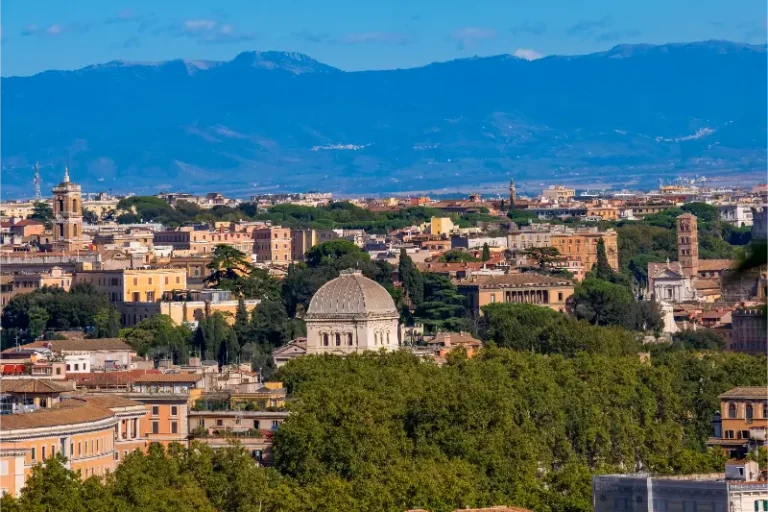
Move to the side and look upstream and westward for the distant dome of St Peter’s. The exact visibility changes with trees, light and river conditions, but the skyline is one of the reasons the bridge is popular at sunset.
Piazza Trilussa
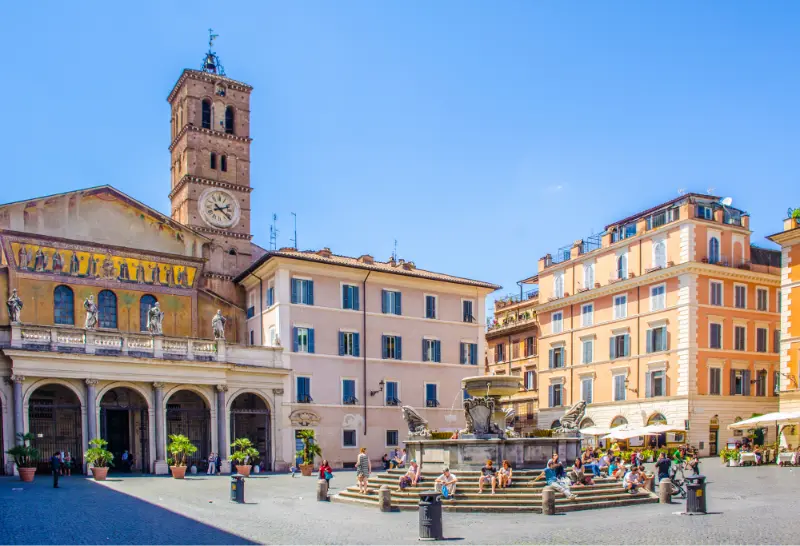
On the Trastevere side, the bridge delivers you directly into Piazza Trilussa, a lively meeting point. Even if you do not stay for nightlife, pause here to see how the river crossing feeds the neighborhood’s evening energy.
Historic-center approach
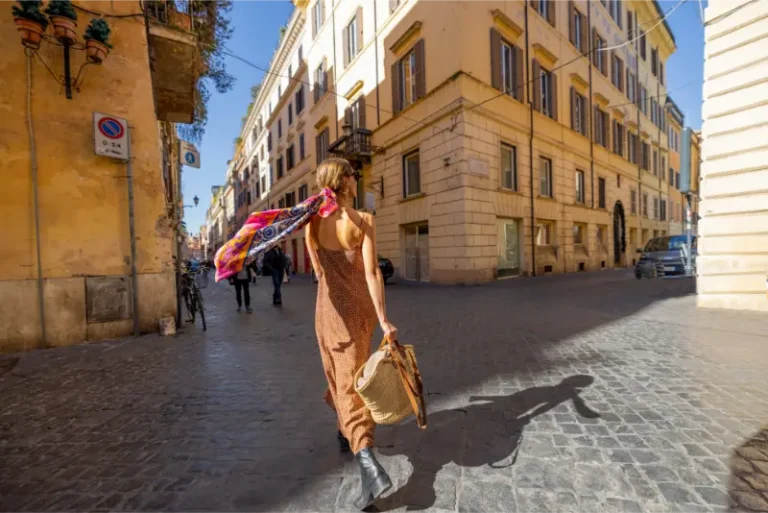
On the eastern bank, the lanes quickly lead toward Via Giulia, Piazza Farnese and Campo de’ Fiori. The transition from river to Renaissance streets is especially enjoyable after dark.
The Tiber itself
Do not focus only on skyline photographs. Look down at the river, embankments and tree-lined Lungotevere. The modern flood walls changed Rome’s relationship with the water, and the bridge offers a good vantage point to observe that separation.
A practical walking route
The classic direction is from Campo de’ Fiori toward Trastevere in the late afternoon.
- Begin at Campo de’ Fiori or Piazza Farnese.
- Walk west through the lanes toward the river, optionally using a short stretch of Via Giulia.
- Cross Ponte Sisto slowly, stopping only where you do not block other pedestrians.
- Enter Piazza Trilussa and continue into Trastevere.
- For a longer walk, return by a different bridge so you experience another section of the Tiber.
This one-way flow works particularly well before dinner. It avoids backtracking and gives the evening a natural sense of progression from center to river to neighborhood.
When to go
Late afternoon and sunset are most atmospheric, especially in clear weather. The bridge can become crowded, so arrive slightly before peak sunset rather than expecting an empty photo spot.
Morning is better for architecture and quiet river views. At night the crossing remains lively because of Trastevere traffic on foot, but stay normally aware of belongings in crowds.
How to combine it with nearby Rome
On the historic-center side, pair the bridge with Campo de’ Fiori and Piazza Farnese. On the western side, continue directly into Trastevere.
For a river-focused route, walk north or south along the Lungotevere after crossing. The scenery is less monumental than the central squares, but it gives you a better sense of Rome’s geography.
Practical tips that make the visit better
The bridge surface can be slippery when wet, so use appropriate footwear.
Do not stop in the middle of the main pedestrian flow for long photo sessions. Move to the side and let people pass.
Street performers and crowds can gather around the approaches. Enjoy the atmosphere while keeping normal control of phones and wallets.
In hot weather, sunset is more comfortable than midday because the bridge itself has little shade.
Common mistakes to avoid
- Treating Ponte Sisto only as a shortcut to Trastevere.
- Blocking the bridge while taking group photographs.
- Expecting a completely quiet sunset.
- Ignoring Piazza Farnese and Via Giulia on the historic-center side.
- Taking a taxi across the river for a short trip when the walk itself is one of the best parts.
A simple itinerary around this stop
A simple evening route starts at Campo de’ Fiori, passes Piazza Farnese, crosses Ponte Sisto and continues to Trastevere for dinner. It requires no timed tickets and works well after museums close.

For a longer river walk, cross Ponte Sisto, explore Trastevere, then return to the historic center via another bridge. The loop shows how the neighborhoods relate to the Tiber instead of treating them as isolated map pins.
Safety and river conditions
The bridge is a normal public crossing, but wet stone, dense evening crowds and occasional events can change how comfortable it feels. Keep walking lanes clear and do not climb parapets for photographs.
After heavy rain, the Tiber can look very different from its summer level. Observe from the bridge or embankment paths that are officially open; never enter closed river areas to get closer to the water.
Why crossing on foot matters
A taxi from the historic center to Trastevere can save only a few minutes while removing the most memorable part of the transition. On foot, you watch the skyline open, cross the river and arrive directly into Piazza Trilussa.
This kind of connective walking is one of the main reasons to stay centrally in Rome. The journey between sights becomes part of the visit rather than dead time.
Official information and current access
Turismo Roma describes Ponte Sisto’s Jubilee reconstruction under Sixtus IV, its four arches and later restoration on the official Turismo Roma page for Ponte Sisto.
Opening conditions, security arrangements, religious services, restoration work and special events can change with little notice. Check the official source shortly before your visit rather than relying on an old screenshot or a timetable copied by a third-party site.
FAQ
Is Ponte Sisto free?
Yes. Crossing the bridge costs nothing.
What does Ponte Sisto connect?
It links the historic-center side near Campo de’ Fiori and Via Giulia with Piazza Trilussa and Trastevere.
Is it good for sunset?
Yes. It is one of central Rome’s most popular free sunset walks, with river and dome views.
How old is the bridge?
The present bridge was built for the Jubilee of 1475, although an older Roman crossing existed on or near the site.
How long do you need?
The crossing itself takes only a few minutes, but allow 15–30 minutes for views and at least an hour if you include both riverbanks.
Planning this stop well
Rome rewards geographic planning. Before leaving your hotel, group this stop with places that sit in the same part of the city and keep only one or two timed reservations in the day. Moving repeatedly between distant neighborhoods wastes energy and makes delays feel more stressful than they need to be.
Allow a margin for churches, security controls, temporary closures and simple discoveries. A doorway, small exhibition or street scene may deserve ten minutes you did not schedule. Building that flexibility into the day produces a more realistic itinerary than trying to hit every saved map pin.
For lunch and dinner, read current menus and recent information rather than following a years-old recommendation blindly. Rome’s restaurant scene changes, while the best choice also depends on where you happen to be when you are hungry. Walking a few streets away from the most famous square often improves both atmosphere and value.
Carry a refillable bottle, sun protection in warm months and a compact layer in cooler seasons. Central Rome involves more outdoor time than many travelers expect, even on museum-heavy days, because the streets and squares between attractions are part of the experience.
If accessibility is important, verify the exact route rather than judging from distance alone. Cobblestones, steps, steep ramps, security barriers and historic thresholds can make a short walk more demanding than a longer modern street. Official accessibility information should take priority over general travel descriptions.
Is it worth adding to your Rome itinerary?
Ponte Sisto is worth treating as a destination because it turns a practical crossing into one of the city’s easiest scenic experiences. The bridge links neighborhoods, historical periods and different moods of Rome in a few hundred meters.
Use it in the evening when possible. A walk from Campo de’ Fiori to Trastevere over Ponte Sisto is simple, free and often more memorable than adding one more rushed ticketed attraction.