St Paul’s Within the Walls Rome: Burne-Jones Mosaics and Episcopal Church Guide
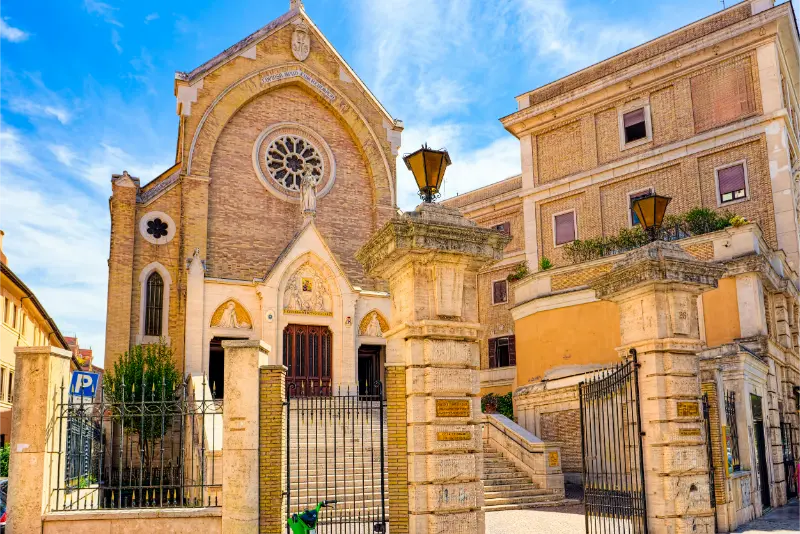
St Paul’s Within the Walls is one of Rome’s most distinctive nineteenth-century churches. On Via Nazionale, close to Repubblica, its striped brick-and-stone exterior signals a world very different from the Baroque basilicas nearby. Inside, mosaics designed by the Pre-Raphaelite artist Edward Burne-Jones and other Victorian decorative elements make the church a strong stop for travelers interested in British art, Gothic Revival architecture and Rome after Italian unification.
It is also historically important as the first non-Roman Catholic church built within Rome’s city walls after the political changes of 1870. That fact places the building inside the story of modern Rome, religious freedom and the city’s increasingly international population.
St Paul’s Within the Walls at a glance
| Area | Via Nazionale, near Repubblica |
| Best for | mosaics, Victorian art, architecture and unusual churches |
| Suggested time | 30–60 minutes |
| Cost | Church visit generally free; concerts/events vary |
| Best moment | Weekday visiting hours when no service or event is underway |
Why it deserves a separate stop
Visitors often spend this part of town moving between Termini, Santa Maria degli Angeli and Via Nazionale shops. St Paul’s offers a compact cultural stop that feels genuinely different from Rome’s older churches.
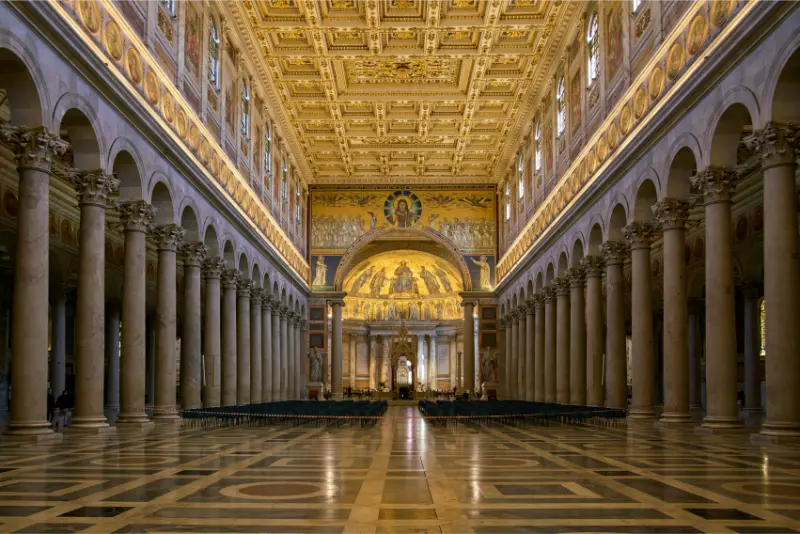
The art is the main attraction. Burne-Jones’s apse and choir mosaics bring Pre-Raphaelite imagery into a Roman church, while stained glass and decorative details create a coherent late-nineteenth-century interior.
History and context
The Episcopal congregation established the church in the nineteenth century, and the building was designed by the English architect George Edmund Street. Construction followed the opening created by the end of papal temporal rule, which allowed non-Catholic communities greater visibility within the city walls.
The church quickly became both a religious home for an international congregation and a showcase for English artistic culture in Rome. Its decoration involved leading British designers and artists, making it a rare bridge between Roman setting and Victorian aesthetics.
What to see and notice
Burne-Jones mosaics
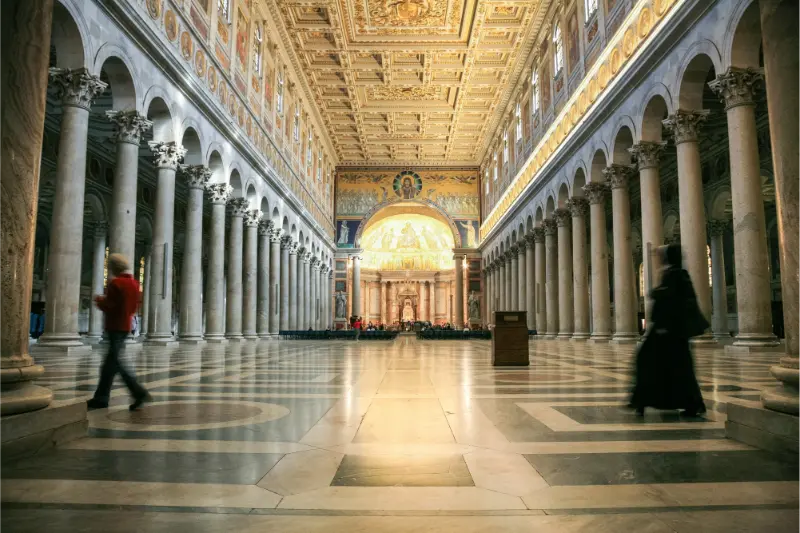
The apse and choir mosaics are the visual centerpiece. Burne-Jones designed figures and compositions that were executed in mosaic, producing a luminous surface that changes with the interior light. Spend time at different distances: the overall composition matters, but so do the faces and symbolic details.
Gothic Revival architecture
The pointed arches, polychrome masonry and vertical emphasis are immediately different from the Renaissance and Baroque language that dominates central Rome. The contrast makes the church especially useful for architecture lovers building a comparative itinerary.
Stained glass and decorative arts
The interior includes colored glass and decorative elements connected with British workshops and the broader Arts and Crafts world. Turismo Roma notes majolica associated with William Morris, adding another reason to look beyond the headline mosaics.
International religious history
This is an active Episcopal church, not simply an art monument. Its presence on Via Nazionale reflects the cosmopolitan Rome that developed after 1870. Respect the congregation and remember that worship takes priority over sightseeing.
Via Nazionale context
The location makes the church easy to combine with Repubblica, Palazzo Esposizioni and Santa Maria degli Angeli. That cluster demonstrates how late-nineteenth-century Rome expanded around the new capital’s administrative and transport needs.
A practical walking route
The easiest approach is from Repubblica or Termini, using Via Nazionale as the main axis.
- Start near Repubblica and Santa Maria degli Angeli to compare radically different church architecture.
- Walk down Via Nazionale to St Paul’s Within the Walls.
- Spend most of your interior time on the mosaics and decorative arts rather than trying to read every plaque.
- Continue toward Palazzo Esposizioni if you want modern exhibitions, or toward the Quirinal area for architecture.
- Finish by descending toward the historic center instead of returning to Termini unless your schedule requires it.
This is a compact route and works well on an arrival or departure day when you are staying near Termini but still want a meaningful cultural visit.
When to go
The church’s official website has listed visitor hours Monday to Friday, 10:00–16:00, while Turismo Roma advises checking the church directly for current visiting conditions. Treat those hours as something to verify, not a permanent guarantee.
Services, concerts and community events can change access. If you specifically want to see the mosaics, avoid arriving only minutes before a scheduled event.
How to combine it with nearby Rome
The strongest comparison is with Santa Maria degli Angeli at Piazza della Repubblica: one adapts ancient Roman baths into a major Catholic basilica, the other expresses nineteenth-century Anglican/Episcopal architecture.
You can also continue toward Palazzo Esposizioni or the Quirinal area, keeping the whole half day within the Via Nazionale corridor.
Practical tips that make the visit better
Use the Via Nazionale entrance information shown on Turismo Roma, but consult the parish website for current events and services.
The church is active and multilingual. If a service is beginning, sightseeing should stop or become participation.
Concerts are sometimes held in the church; tickets and schedules belong to separate event organizers, so do not assume a normal visit includes a performance.
The area is easy to reach by Metro A at Repubblica and by many buses, but walking from Termini is also straightforward.
Common mistakes to avoid
- Confusing it with St Paul Outside the Walls, the major papal basilica in a different part of Rome.
- Expecting Baroque decoration instead of Victorian Gothic Revival.
- Arriving during a service and moving around for photographs.
- Assuming an old visitor-hours post is permanently valid.
- Skipping the apse mosaics because the church looks modest from outside.
A simple itinerary around this stop
Allow about 45 minutes inside, then walk to Santa Maria degli Angeli and Piazza della Repubblica. The two churches together create a strong comparison without requiring cross-city transport.

If you have more time, continue down Via Nazionale toward the center and add Palazzo Esposizioni or another nearby museum. This makes an excellent rainy-day route because several stops are indoors.
Why the mosaics look different from medieval Rome
Burne-Jones worked within the nineteenth-century Pre-Raphaelite world, which admired medieval and early Renaissance art but reinterpreted it through Victorian design. The mosaics therefore feel both historical and unmistakably modern compared with the medieval apses of Santa Maria in Trastevere or Santa Prassede.
This makes St Paul’s a useful place to ask how later artists imagined Christian antiquity rather than seeing only artworks made in antiquity or the Middle Ages themselves.
Music and events
The church frequently participates in Rome’s English-language cultural life and can host concerts and community events. An event can be an excellent reason to return, but it also means ordinary sightseeing may be limited at certain times.
Check the calendar if music interests you. Do not buy tickets from an unrelated seller without confirming the venue, program and organizer.
Official information and current access
The parish website publishes current worship, event and contact information; its visitor information has listed weekday visiting hours, so verify the latest details on the official St Paul’s Within the Walls website.
Opening conditions, security arrangements, religious services, restoration work and special events can change with little notice. Check the official source shortly before your visit rather than relying on an old screenshot or a timetable copied by a third-party site.
FAQ
Is St Paul’s Within the Walls the same as St Paul Outside the Walls?
No. St Paul’s Within the Walls is an Episcopal church on Via Nazionale; St Paul Outside the Walls is one of Rome’s four major papal basilicas.
What is the main artwork?
The best-known works are the mosaics designed by Edward Burne-Jones in the apse and choir.
Is it a Catholic church?
No. It is an Episcopal church with an international congregation.
What are the visiting hours?
The church has listed weekday visitor hours, but services and events can alter access. Check the official site shortly before visiting.
How long do you need?
Thirty to sixty minutes is usually enough for the architecture and mosaics.
Planning this stop well
Rome rewards geographic planning. Before leaving your hotel, group this stop with places that sit in the same part of the city and keep only one or two timed reservations in the day. Moving repeatedly between distant neighborhoods wastes energy and makes delays feel more stressful than they need to be.
Allow a margin for churches, security controls, temporary closures and simple discoveries. A doorway, small exhibition or street scene may deserve ten minutes you did not schedule. Building that flexibility into the day produces a more realistic itinerary than trying to hit every saved map pin.
For lunch and dinner, read current menus and recent information rather than following a years-old recommendation blindly. Rome’s restaurant scene changes, while the best choice also depends on where you happen to be when you are hungry. Walking a few streets away from the most famous square often improves both atmosphere and value.
Carry a refillable bottle, sun protection in warm months and a compact layer in cooler seasons. Central Rome involves more outdoor time than many travelers expect, even on museum-heavy days, because the streets and squares between attractions are part of the experience.
If accessibility is important, verify the exact route rather than judging from distance alone. Cobblestones, steps, steep ramps, security barriers and historic thresholds can make a short walk more demanding than a longer modern street. Official accessibility information should take priority over general travel descriptions.
Is it worth adding to your Rome itinerary?
St Paul’s Within the Walls deserves a place on an art-focused Rome itinerary because it broadens the city beyond antiquity, Renaissance and Baroque. It shows how international communities and Victorian artists left a serious architectural legacy in the new capital.
It is especially worthwhile if you are already near Termini or Via Nazionale. The visit is compact, free or low-cost, and visually unlike almost any other church in central Rome.