Sant’Agnese in Agone Rome: Borromini Church on Piazza Navona and Visiting Guide
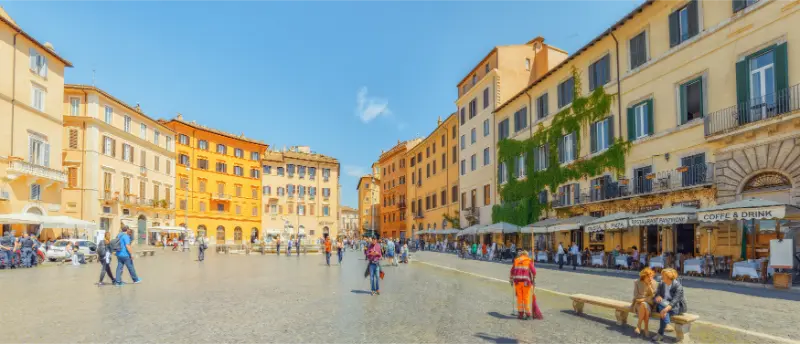
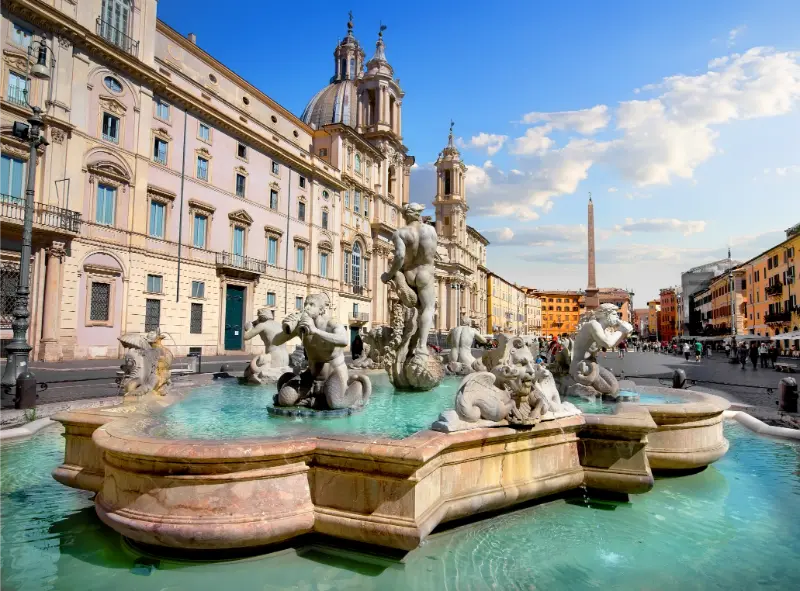
Sant’Agnese in Agone forms the dramatic western wall of Piazza Navona. Its concave Baroque façade and dome are so integrated into the square that many visitors photograph the church repeatedly without entering. Inside, the noise of the piazza drops away and the building becomes a compact lesson in seventeenth-century architecture, Pamphilj patronage and the cult of Saint Agnes.
The church stands on the traditional site of the saint’s martyrdom in the ancient Stadium of Domitian. The current Baroque building was begun by Girolamo and Carlo Rainaldi and reshaped by Francesco Borromini. It is one of the most rewarding free interiors to add to a Navona visit, provided you respect services and current access rules.
Sant’Agnese in Agone at a glance
| Area | Piazza Navona |
| Best for | Baroque architecture, churches, sacred art and Piazza Navona visitors |
| Suggested time | 30–60 minutes; longer with crypt tour if available |
| Cost | Main church normally free; crypt tours or events may differ |
| Best moment | Morning or late afternoon outside Mass |
Why it deserves a separate stop
Piazza Navona is often experienced only from outside, but entering Sant’Agnese changes the reading of the square. The church is not background scenery; it was part of the Pamphilj transformation of the area and belongs to the same Baroque world as the fountains and palace.
The interior is also manageable. Unlike a vast basilica, it can be appreciated in a focused visit, making it ideal for travelers who want serious art and architecture without committing several hours.
History and context
A church dedicated to Saint Agnes existed here long before the present building. The location was connected by tradition to the young martyr’s ordeal in the ancient stadium. In the seventeenth century, Pope Innocent X Pamphilj and his family reshaped the square and commissioned a new church beside their palace.
The Rainaldi architects began the project in 1652. Borromini later altered the design, most visibly in the concave façade and relationship between the central mass, dome and twin towers. Other architects completed elements after his departure, so the building reflects both a strong Baroque vision and a complicated construction history.
What to see and notice
The façade
Stand near the center of Piazza Navona and look at how the façade bends inward. The concavity creates space around the dome and visually responds to the long oval piazza. Move closer afterward to see how the columns and openings control light and shadow.
The dome
From inside, the dome organizes the central-plan church and draws attention upward. The scale is compact enough that decorative details remain readable. Give your eyes a moment to adjust rather than entering, photographing immediately and leaving.
Pamphilj connections
The church belongs to the political and family history of Innocent X. Members of the Pamphilj family are buried here, reinforcing the link between church, palace and papal patronage around Piazza Navona.
Saint Agnes and the crypt
The site’s identity is inseparable from Saint Agnes. The crypt and martyrdom tradition add a much older layer beneath the Baroque building. The official church site has reported restoration work in parts of the crypt, and guided access should be checked rather than assumed.
The relationship with the Four Rivers Fountain
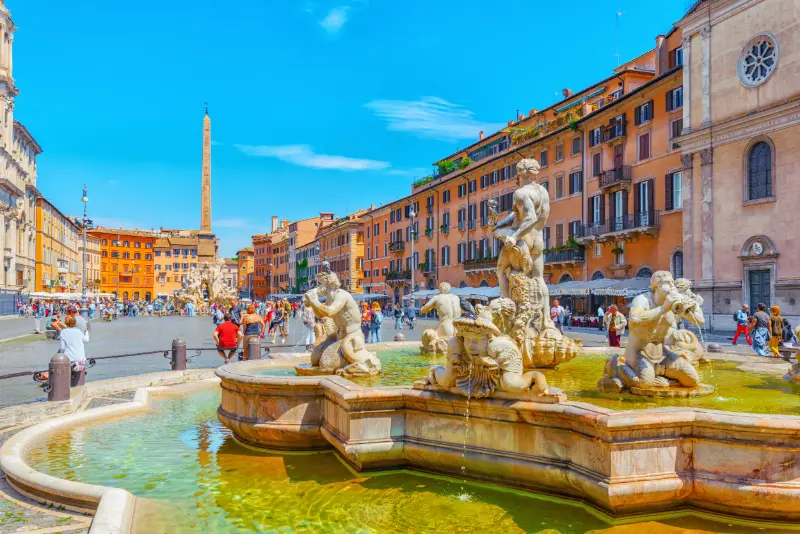
Popular stories often exaggerate a rivalry between Bernini and Borromini by interpreting the fountain statues as reacting to the church. The chronology does not support the simplest version of that legend. Enjoy the theatrical contrast, but treat the “secret insult” story as entertaining folklore rather than secure fact.
A practical walking route
A good visit begins outside in Piazza Navona, then moves inside the church and finishes with another look at the square.
- Walk the full length of Piazza Navona first so you understand the church’s position.
- Stand across from Sant’Agnese to read the façade and dome together.
- Enter quietly and spend time with the dome, side chapels and central space.
- If crypt visits are available and interest you, follow the current booking instructions rather than assuming walk-in access.
- After leaving, compare the façade with the Fountain of the Four Rivers and continue toward nearby San Luigi dei Francesi.
This inside-outside sequence prevents the church from becoming just another quick interior and makes the architecture much easier to understand.
When to go
The official site currently lists weekday opening from 9:00 to 13:00 and 15:00 to 19:00, with Monday closed; Saturday and Sunday hours extend to 20:00 after the afternoon reopening. Always recheck because services and special events can affect access.
Morning is generally calmer. Late afternoon works well if you want to see the church and then remain in Piazza Navona into the evening. Avoid entering immediately before or during Mass unless you are attending the service.
How to combine it with nearby Rome
The obvious pairing is Piazza Navona. From there, San Luigi dei Francesi and the Pantheon create a strong church-and-art route.
If you prefer quieter streets after the piazza, continue toward Via Giulia or Santa Maria della Pace rather than moving directly to another crowded landmark.
Practical tips that make the visit better
Dress and behave as you would in an active church, not a museum. Keep voices low and avoid blocking worshippers.
Photography rules can change during services or special events; follow signs and staff instructions.
The official website is the best source for crypt restoration updates and guided-visit availability.
If you arrive on Monday, expect the church to be closed under the current published schedule and plan Piazza Navona as an exterior visit instead.
Common mistakes to avoid
- Believing every Bernini-versus-Borromini legend literally.
- Entering during Mass only to take photographs.
- Assuming the crypt is always open independently.
- Visiting only the exterior because the piazza is crowded.
- Failing to recheck Monday closure and current hours.
A simple itinerary around this stop
For one hour, walk Piazza Navona, enter Sant’Agnese and then cross to study the fountains with better architectural context.
For a half day, continue to San Luigi dei Francesi and the Pantheon, then finish with coffee or a walk along Via dei Coronari. This creates one of central Rome’s strongest combinations of Baroque architecture and painting.
Understanding the Baroque without an art degree
Focus on movement. The façade curves, the dome rises behind it and the interior pulls your gaze toward a central vertical axis. Baroque architecture often works through controlled drama rather than isolated decorative objects.
Then compare the church with the open space outside. Piazza Navona’s elongated shape comes from the ancient stadium, while the seventeenth-century church inserts a concentrated Baroque statement into that much older footprint.
Crypt restoration and changing access
The church has continued restoration work in the crypt area, including the zone associated with the martyrdom of Saint Agnes. Restoration is precisely the kind of condition that makes old guidebook claims unreliable.
If the crypt is important to you, use the official booking information close to your travel date. If it is unavailable, the main church still provides a complete and worthwhile visit.
Official information and current access
The church’s official website currently lists opening hours, Monday closure, service times and contact information; check the official Sant’Agnese in Agone hours and contact page.
Opening conditions, security arrangements, religious services, restoration work and special events can change with little notice. Check the official source shortly before your visit rather than relying on an old screenshot or a timetable copied by a third-party site.
FAQ
Is Sant’Agnese in Agone free?
The main church is normally free to enter, while guided crypt visits or special activities may have separate arrangements.
Is it open on Monday?
The official site currently states that the church is closed on Monday.
Who designed the church?
Girolamo and Carlo Rainaldi began the Baroque project; Francesco Borromini later reshaped important elements, including the façade.
Can you visit the crypt?
Guided crypt access is promoted by the church, but restoration work and booking conditions can change, so check the official site.
How long do you need?
Thirty to sixty minutes is enough for the main church, more if you join a crypt visit or spend time studying the piazza outside.
Planning this stop well
Rome rewards geographic planning. Before leaving your hotel, group this stop with places that sit in the same part of the city and keep only one or two timed reservations in the day. Moving repeatedly between distant neighborhoods wastes energy and makes delays feel more stressful than they need to be.
Allow a margin for churches, security controls, temporary closures and simple discoveries. A doorway, small exhibition or street scene may deserve ten minutes you did not schedule. Building that flexibility into the day produces a more realistic itinerary than trying to hit every saved map pin.
For lunch and dinner, read current menus and recent information rather than following a years-old recommendation blindly. Rome’s restaurant scene changes, while the best choice also depends on where you happen to be when you are hungry. Walking a few streets away from the most famous square often improves both atmosphere and value.
Carry a refillable bottle, sun protection in warm months and a compact layer in cooler seasons. Central Rome involves more outdoor time than many travelers expect, even on museum-heavy days, because the streets and squares between attractions are part of the experience.
If accessibility is important, verify the exact route rather than judging from distance alone. Cobblestones, steps, steep ramps, security barriers and historic thresholds can make a short walk more demanding than a longer modern street. Official accessibility information should take priority over general travel descriptions.
Is it worth adding to your Rome itinerary?
Sant’Agnese in Agone is one of the easiest ways to deepen a Piazza Navona visit. It turns a famous outdoor spectacle into a richer story about martyrdom traditions, Pamphilj power and Baroque architecture.

Even travelers with limited church interest should step inside if access is available. The change in scale and sound from the piazza is part of the experience.