Villa Torlonia Rome: Museums, Casina delle Civette and Bunker Guide
Villa Torlonia is one of Rome’s most unusual combinations of historic park, aristocratic residence, decorative-arts museum and twentieth-century memory site. The grounds on Via Nomentana are free to walk through, while several buildings operate as museums with separate or combined ticket options. The result is flexible: you can come for an hour in the park, focus on the fantastical Casina delle Civette, visit the Casino Nobile, or plan a deeper half day that includes the bunker and air-raid shelters associated with the period when Benito Mussolini lived at the villa.
At a glance
| Location | Via Nomentana 70 |
| Museum hours | Tuesday–Sunday 9:00–19:00 for the main museum buildings; last entry one hour before closing |
| Closed | Monday, 1 May and 25 December for the museums |
| Park | Outdoor grounds can be enjoyed separately from museum tickets |
| 2026 change | From February 2026 museum admission is free for residents of Rome and the Metropolitan City with valid ID |
Understanding the villa before you arrive
Villa Torlonia is not a single museum. Think of it as a landscaped estate containing several destinations. The Casino Nobile is the principal aristocratic residence; the Casina delle Civette is a smaller, highly decorative building famous for stained glass and an almost storybook appearance; the Casino dei Principi hosts exhibitions; the Serra Moresca and tower add an exotic nineteenth-century architectural note; and the bunker and air-raid shelters tell a much darker twentieth-century story. This variety is the attraction, but it also means you should decide what matters most before buying tickets.
The official museum site lists the main buildings as open Tuesday to Sunday from 9:00 to 19:00, with last admission at 18:00, while the Serra Moresca has seasonal hours and closes in July and August. Always check the official practical-information page because exhibitions and access conditions can affect individual spaces.
Casino Nobile: aristocratic Rome and twentieth-century history
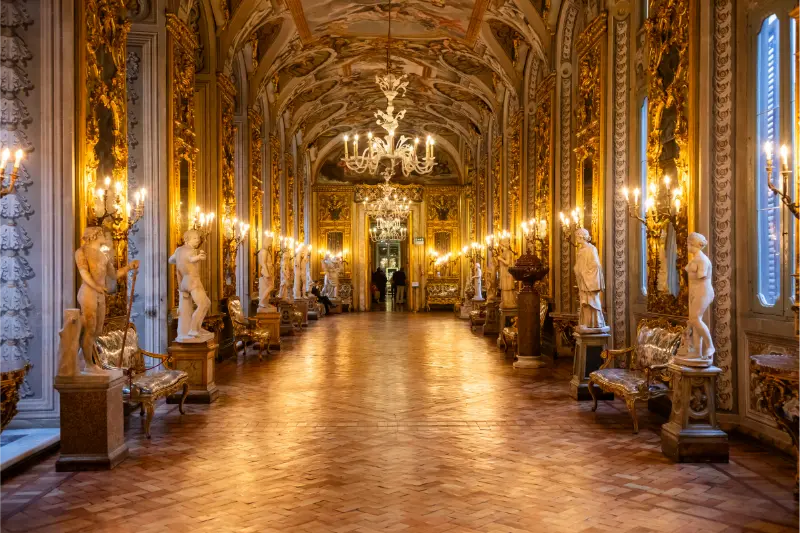
The Casino Nobile is the architectural center of the estate. Its decorated rooms, neoclassical language and surviving interiors help explain the ambitions of the Torlonia family, one of Rome’s most powerful nineteenth-century dynasties. Later, the building became closely associated with Mussolini, who lived at Villa Torlonia for many years. That later history changes the way the elegant rooms are experienced: the villa is both a display of aristocratic culture and a place connected to dictatorship and war.
Do not visit only for famous names. Look at the sequence of rooms, wall decoration, architectural views into the park and the way a private residence was designed to impress. If you also plan the bunker tour, seeing the Casino Nobile first provides useful context because it contrasts the public luxury above ground with the defensive spaces below.
Casina delle Civette: stained glass and fantasy architecture
For many visitors, the Casina delle Civette is the most memorable building. Its asymmetrical roofs, decorative details and stained-glass windows make it feel closer to a fairy-tale house than a formal Roman villa. The current museum presentation emphasizes decorative arts and the extraordinary glass, which changes character depending on the light outside.
This is an excellent stop for travelers who think they have “seen enough palaces.” The scale is domestic, the decoration is playful and the atmosphere is completely different from central Rome. Families often find it more engaging than a conventional painting gallery because the building itself is part of the experience.
The bunker and air-raid shelters
The bunker and air-raid shelters are visited only on guided tours with compulsory reservation, according to the official museum information. All visits are conducted by the site’s educational staff, including groups that arrive with their own guide. This is important when planning: you cannot simply add the bunker spontaneously in the same way you add another room.
The tour works best if you treat it as a historical experience rather than a curiosity. The shelters connect the villa to the fear of aerial bombardment during the Second World War and to Mussolini’s residence here. Because the subject is politically and historically sensitive, a guided format is useful; it provides context that the physical rooms alone cannot supply.
Tickets and the 2026 resident policy
From February 2026, admission to the municipal museum system at Villa Torlonia is free for residents of Rome and the Metropolitan City who show valid identification. Non-residents continue to use full or reduced tickets, and prices vary depending on the building and exhibitions. The official ticket page currently lists, for example, different rates for Casino Nobile and Casino dei Principi rather than a single universal price.
For travelers, the practical lesson is simple: check the exact combination you want on the day you book. Do not copy a single ticket price from an old article because temporary exhibitions can change the tariff. Online purchase is strongly recommended by the museum, especially for time-sensitive visits.
How long to spend and the best visit sequence
For a light visit, allow 60–90 minutes and choose one museum building plus a park walk. For a richer visit, two and a half to three hours is more realistic. If you have a bunker reservation, build the rest of the day around that fixed time and keep the other museum spaces flexible.
A good sequence is Casino Nobile first, then Casina delle Civette, followed by the gardens and any temporary exhibition that interests you. If the Serra Moresca is open in the season of your trip, add it near the end. This order moves from formal history to more imaginative architecture and finishes outdoors.
What to combine with Villa Torlonia
Villa Torlonia sits outside the densest tourist core, which is part of its appeal. Nearby you can explore the Nomentano area, see Porta Pia or continue toward Quartiere Coppedè. If you want another unusual architecture stop, the Quartiere Coppedè guide pairs especially well because the two places show different sides of Rome beyond antiquity and the Baroque.
Do not combine Villa Torlonia with too many central headline attractions in the same half day. It works best when you allow the neighborhood to feel different. That change of pace is exactly why repeat visitors often enjoy it so much.
Frequently asked questions
Is the park at Villa Torlonia free?
The outdoor park can be entered independently, while the museum buildings use their own ticket rules.
When are the museums closed?
The main museum buildings are normally closed on Mondays, 1 May and 25 December. Always verify current notices.
Do I need to book the bunker?
Yes. The bunker and air-raid shelters are visited on guided tours with compulsory reservation.
Is Villa Torlonia worth visiting on a first trip?
Yes if you have at least four or five days, enjoy architecture or want something less crowded. On a very short first visit, prioritize the historic center and major ancient sites first.
Final thoughts
Villa Torlonia is valuable because it breaks the usual Rome pattern. Instead of another ancient ruin or Baroque church, you get a landscaped estate where aristocratic taste, decorative fantasy, modern political history and museum culture sit side by side. Choose the buildings that match your interests, check the official 2026 ticket information, and give the park enough time to make the visit feel relaxed.

Extra planning notes for a smoother visit
For Villa Torlonia Rome, the most reliable plan is to keep one part of the visit flexible. Rome and Lazio sites can change access because of worship, exhibitions, restoration work, weather or transport disruption. Check the official source on the morning of travel, keep a screenshot of any reservation, and avoid building a chain of appointments with no buffer. If you arrive earlier than expected, use nearby streets, a coffee stop or a public square rather than entering another paid attraction you do not have time to enjoy. This approach is especially useful in Rome because short map distances can hide queues, cobblestones, security checks and crowded public transport. A well-paced day usually produces better memories than a longer checklist, and it also gives you room to react when a church is temporarily closed, a museum route changes or the weather makes an outdoor plan less comfortable.
A final practical perspective
For Villa Torlonia Rome, the most reliable plan is to keep one part of the visit flexible. Rome and Lazio sites can change access because of worship, exhibitions, restoration work, weather or transport disruption. Check the official source on the morning of travel, keep a screenshot of any reservation, and avoid building a chain of appointments with no buffer. If you arrive earlier than expected, use nearby streets, a coffee stop or a public square rather than entering another paid attraction you do not have time to enjoy. This approach is especially useful in Rome because short map distances can hide queues, cobblestones, security checks and crowded public transport. A well-paced day usually produces better memories than a longer checklist, and it also gives you room to react when a church is temporarily closed, a museum route changes or the weather makes an outdoor plan less comfortable.