Museo della Repubblica Romana: 1849 History on the Janiculum
The Museo della Repubblica Romana e della memoria garibaldina is one of Rome’s best small museums for travelers who want to understand the city beyond emperors and popes. Its subject is the short-lived Roman Republic of 1849, a revolutionary episode that brought figures such as Giuseppe Garibaldi and Giuseppe Mazzini into a dramatic struggle over Rome’s political future.
The setting makes the museum particularly powerful: it occupies Porta San Pancrazio on the Janiculum, close to the ground where major fighting took place. That means the museum can be followed immediately by a historical walk through the hill itself. Pair it with our Janiculum Hill guide for a half-day that mixes history, monuments and panoramic views.
| Feature | Why it matters | Time needed | Nearby |
|---|---|---|---|
| 1849 Roman Republic | Explains a key Risorgimento episode | 45–90 min | Janiculum monuments |
| Porta San Pancrazio | Museum inside a historic defensive gateway | 15 min exterior | Villa Doria Pamphilj |
| Garibaldian memory | Connects people, battles and national memory | 30 min | Monuments on the hill |
| Janiculum walk | Turns museum history into landscape | 1–2 hours | Viewpoints and noon cannon |
What happened in Rome in 1849?
In 1849, after political crisis and the flight of Pope Pius IX, Rome briefly became a republic. Its leaders attempted reforms and proclaimed principles that made the episode important far beyond its short duration. French forces eventually intervened to restore papal rule, and fighting on the Janiculum became central to the republic’s final defense.
The museum works best if you know this basic outline before entering. The galleries can then deepen the story with personalities, maps, documents and multimedia rather than forcing you to construct the chronology from zero.
Why Porta San Pancrazio is the right setting
The museum is housed at Porta San Pancrazio, a gateway whose history is directly tied to the 1849 fighting. The present structure was rebuilt after the battles, so the building itself is part of the memory landscape rather than a neutral container for exhibits. See the official museum website for current notices and practical information.
Stand outside before entering and look at the road, walls and slope of the hill. Military history becomes easier to understand when you can see why this approach to Rome mattered and why the surrounding villas became battlefields.
Garibaldi, Mazzini and the people behind the republic
The Roman Republic is often remembered through famous names, especially Garibaldi and Mazzini, but the museum helps broaden the story to soldiers, volunteers, politicians and civilians. The movement involved competing ideas about nation, democracy, religion and the future of the Italian peninsula.
Avoid reducing the story to a simple heroic narrative. The most interesting part is the tension between ideals and military reality: a political experiment trying to survive while powerful states intervened around it.
How the museum tells the story
The route uses objects, documents, images and multimedia interpretation rather than relying only on large artworks. That makes the visit relatively compact but information-rich. Read selectively: follow the chronology first, then spend more time on the figures or battles that interest you most.
If you are traveling with teenagers, the museum can work particularly well because the events involve clear stakes and recognizable personalities. Give them the basic question before entering: why did a five-month republic matter to the later history of Italy?
The Janiculum as an open-air extension of the museum
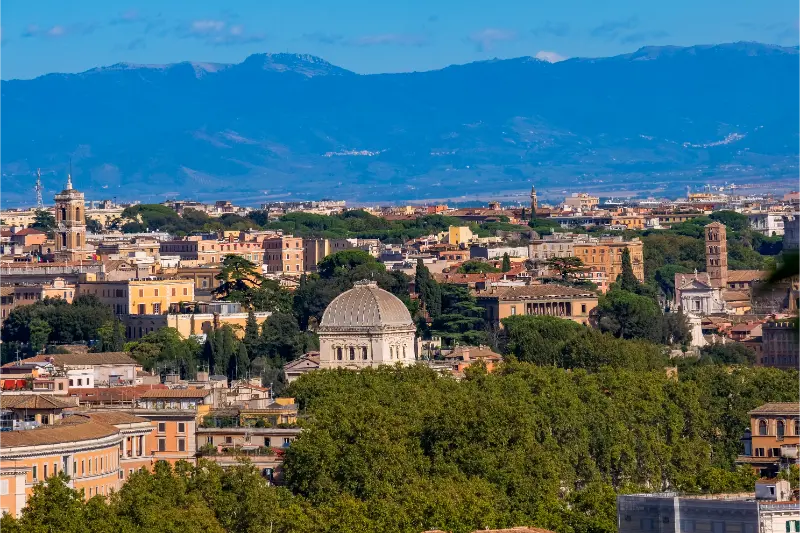
After the galleries, walk toward the monuments and busts dedicated to Risorgimento figures. The hill was deliberately shaped into a landscape of national memory, so statues that might otherwise look like generic nineteenth-century decoration become much more meaningful after the museum.
The Janiculum is also one of Rome’s best viewpoints. Our best views in Rome guide can help you continue toward terraces and the noon cannon if your timing works.
Combining the museum with Villa Doria Pamphilj
Villa Doria Pamphilj lies immediately beyond the gate and gives you a green break after a dense historical visit. It is one of Rome’s largest parks and works well for walking, a picnic or simply sitting under trees before returning to the center. Read our Villa Doria Pamphilj guide if you want to extend the day.
The contrast is useful: the museum covers urban fighting and national memory, while the park offers space and calm. Together they create a half-day with less crowd pressure than the central archaeological zone.
Current practical information
The museum is part of Rome’s civic museum system. Its schedule has traditionally differed between weekdays and weekends, and special events can affect access. Because municipal museums update hours and free-entry initiatives, use the official website rather than copying an old timetable.
The site also provides accessibility information. The museum route is arranged across multiple levels but has facilities intended to make the visit accessible to people with reduced mobility. If accessibility is essential, confirm the current entrance procedure before traveling up the Janiculum.
How long to spend
Most visitors can understand the core story in about an hour, while history enthusiasts may want ninety minutes or more. The museum is not enormous, which is part of its strength: it gives you a concentrated subject without consuming an entire day.
Budget at least another hour for the Janiculum. If you arrive only twenty minutes before closing, you lose the relationship between indoor history and outdoor landscape that makes this museum special.
Who should prioritize this museum?
Prioritize it if you enjoy modern Italian history, political history, Garibaldi, the Risorgimento or museums where the setting is part of the story. Repeat visitors to Rome often find it especially rewarding because it fills a chronological gap between Baroque papal Rome and the modern capital.
If you have only one day in Rome, it is not more important than the Colosseum or Vatican. But once the headline sights are covered, few small museums give as much historical context for so little time.
A half-day Janiculum itinerary

Start at Porta San Pancrazio and visit the museum while your energy is fresh. Walk through the surrounding Garibaldian memorial landscape, continue toward the main Janiculum terrace and the Acqua Paola, then descend toward Trastevere or return through Villa Doria Pamphilj depending on your interests.
This route is hilly. Wear comfortable shoes and do not schedule it immediately after an exhausting Vatican morning. The Janiculum is most enjoyable when you still have enough energy to stop at viewpoints instead of treating every incline as an obstacle.
Why the 1849 Republic matters beyond Rome
The Roman Republic lasted only a few months, but it brought together debates about citizenship, church and state, national independence and representative government that would continue through the Risorgimento. Its defeat did not erase those ideas. Many participants carried the experience into later political and military campaigns.
That makes the museum relevant even if you are not a specialist in Italian unification. It shows how a city famous for ancient empire and papal government also became a laboratory for modern political ideas. The contrast is especially strong when you have just visited the Vatican or the monuments of imperial Rome.
The Janiculum memorial landscape later transformed military ground into national memory. By walking outside after the museum, you can see how governments choose what to commemorate and how public statues teach history long after the people depicted are gone.
How to fit Museo della Repubblica Romana into a Rome itinerary
Plan Museo della Repubblica Romana by geography and energy rather than by the number of saved pins. Put the most important visit first, allow realistic time for walking and food, and leave one flexible block in case opening hours, weather or transport change. Rome and Lazio reward travelers who protect depth instead of maximizing quantity.
Save official pages and transport details before leaving the hotel. A screenshot of the return timetable, museum notice or address can prevent a weak signal from becoming a logistical problem. Keep one alternative nearby so a closure does not waste the day.
Finally, decide what success means before you start. One excellent museum, one archaeological complex or one well-paced town can be a complete travel day. There is no need to turn every free hour into another reservation.
Build in time to notice the setting around the main attraction. A river, defensive wall, station approach, market street or hillside view often explains why a town developed where it did and can make the visit more memorable than an extra rushed interior. This slower observational time also gives you room for weather changes, a delayed bus or an unexpectedly good local stop without losing the structure of the day.
Common mistakes to avoid
- Visiting without knowing the basic 1849 chronology.
- Treating Porta San Pancrazio as an ordinary museum building.
- Leaving immediately after the galleries and skipping the Janiculum memorial landscape.
- Using old opening hours without checking current municipal notices.
- Underestimating the hill and wearing unsuitable shoes.
- Expecting ancient Roman history rather than nineteenth-century political history.
Frequently asked questions
What is the Museo della Repubblica Romana about?
It explains the Roman Republic of 1849 and the Garibaldian/Risorgimento memory connected with the Janiculum.
Where is the museum?
It is inside Porta San Pancrazio on the Janiculum Hill.
How long do I need?
About one hour for the museum, plus at least another hour if you want to explore the Janiculum monuments and viewpoints.
Is it worth visiting on a first trip?
It is excellent for history lovers, but first-time visitors with very limited time may prioritize Rome’s major ancient and Vatican sites first.
Final advice
Visit this museum when you are ready to see Rome as a nineteenth-century political city as well as an ancient and papal one. The best experience is museum first, Janiculum second, so the landscape outside becomes part of the story you have just learned.