Villa Ada Rome: Park, Lake, History and Walking Guide
Villa Ada is one of Rome’s largest green spaces and one of the best places to see how the city changes once you move beyond the monumental center. Its woods, lawns, lake and former royal landscape make it a different experience from manicured Villa Borghese: less about ticking off sights and more about walking, running, shade and local life.
This guide focuses on what is actually useful when planning the visit: what makes the place distinctive, how much time to allow, how to reach it, who will enjoy it most and which nearby Rome sights combine naturally. Where 2026 prices or opening arrangements are mentioned, treat them as planning figures and recheck the official venue page shortly before travel because temporary events, maintenance and seasonal schedules can change.
| Planning point | Current practical detail | How to use it |
|---|---|---|
| Location | Large public park in north Rome with entrances along Via Salaria and surrounding streets | Check the exact entrance rather than navigating only to the attraction name. |
| Tickets / cost | Free entry to the public park | Buy ahead when timed capacity or a major exhibition makes sell-outs possible. |
| Opening pattern | Gate hours are seasonal; municipal information generally describes opening from early morning to sunset/evening | Recheck the live schedule close to the visit, especially around holidays and special events. |
Why visit Villa Ada Rome
The area has ancient roots connected with Antemnae, a settlement overlooking the meeting of the Tiber and Aniene, but the landscape visitors recognize today took shape through aristocratic estates and later the Savoy royal family. Victor Emmanuel II acquired the property in the nineteenth century and the grounds were developed as a large English-style landscape park. The name “Ada” came through a later owner before the Savoys regained the estate. Parts became public after the monarchy, while some buildings and areas retained other uses.
The strongest reason to include this stop is contrast. Rome can become visually and mentally intense when every hour is built around famous monuments. A smaller museum, garden or focused attraction often makes the rest of the trip better because it changes the pace without requiring a full day. Decide whether this place matches your interests rather than adding it only because it appears on a list.
What to see and what deserves priority
Woodland and long walking routes
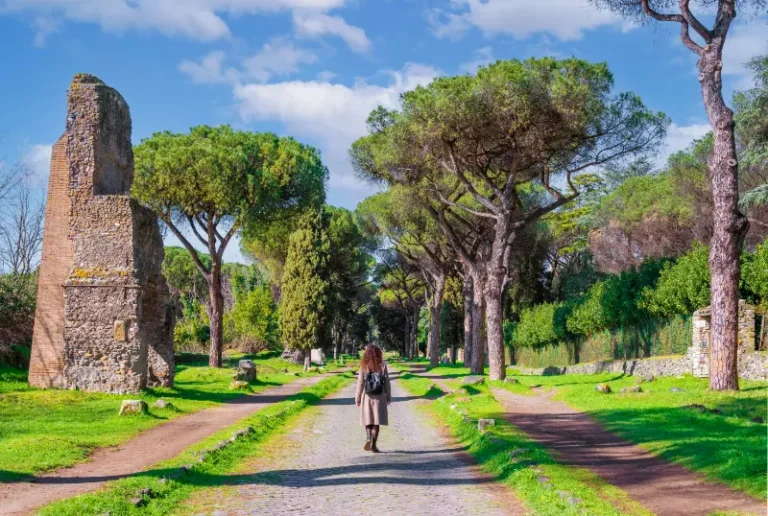
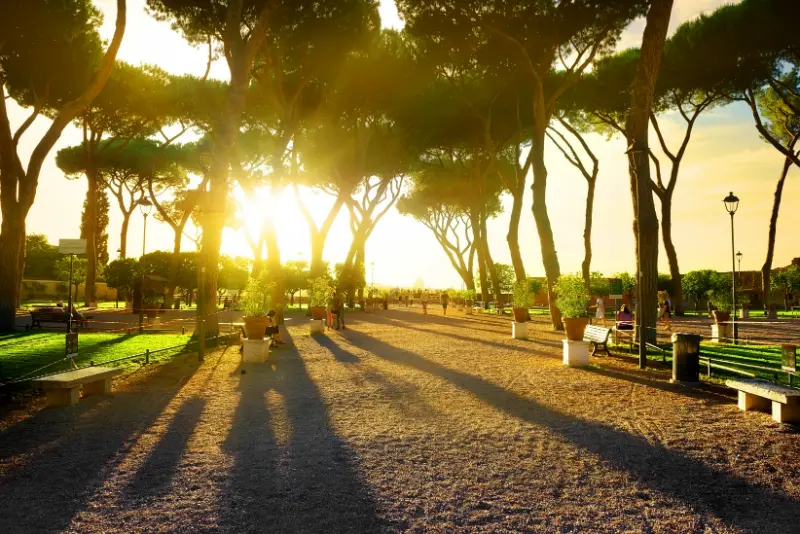
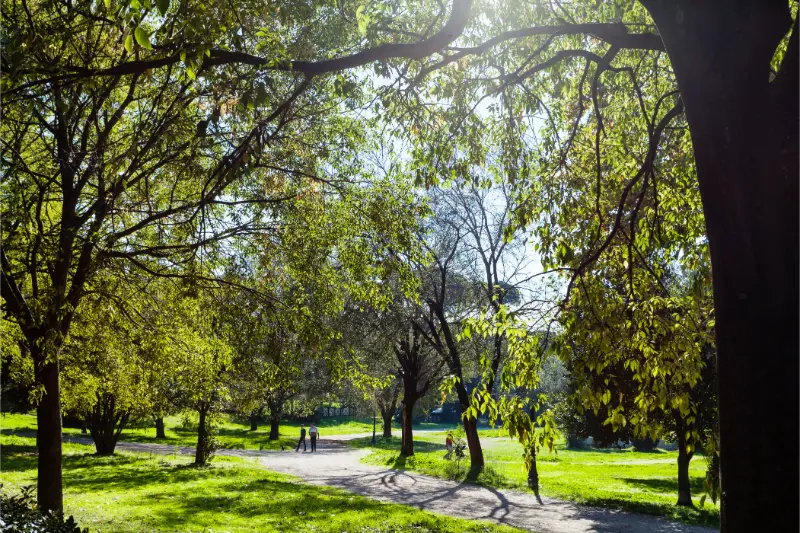
Villa Ada is valuable because it feels large. Paths pass through pines, evergreen oak, open lawns and more wooded sections, so a walk can feel almost semi-rural compared with central Rome. This is a park where route choice matters; you can easily cover much more distance than expected.
Lake and informal gathering areas
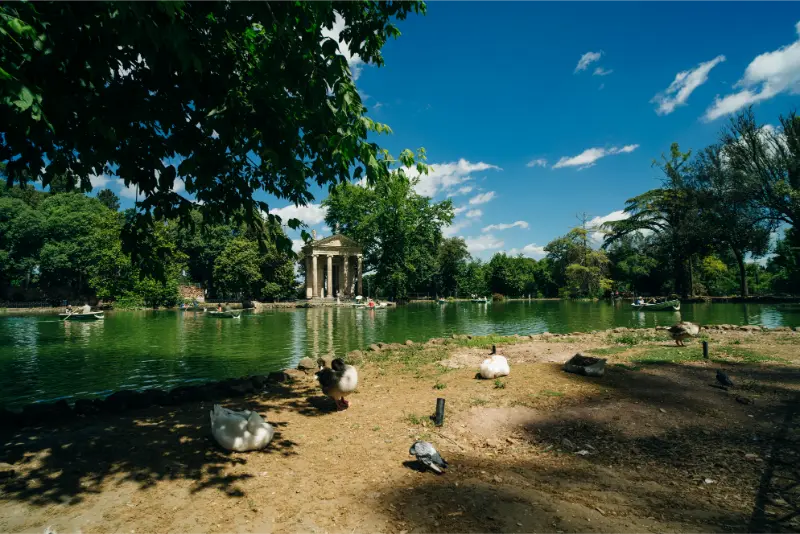
The lake is one of the park’s natural focal points and a useful orientation landmark. It is a popular place to pause, though the experience is informal rather than ornamental. Bring water and do not rely on every internal service being open at the exact time you need it.
Savoy-era history
Historic buildings, gates and landscape traces recall the period when the estate belonged to the royal family. Several structures are not normal tourist interiors, so the history is best understood through the landscape rather than by expecting a palace visit.
Running and active use
Villa Ada is popular with runners and local exercisers because of its size, shade and varied terrain. If you are looking for more active routes, compare it with our running in Rome guide; surfaces and gradients vary, so proper shoes are preferable to casual sightseeing footwear.
Practical 2026 information
Roma Capitale describes Villa Ada Savoia as one of the city’s largest and most important historic parks, around 150 hectares, with public entrances along Via Salaria and surrounding roads. Restoration and landscape works have continued through 2026 in parts of the estate, so follow current signs around any fenced or closed area.
For any attraction with a ticket, save the confirmation on your phone and keep a screenshot if mobile data is unreliable. For free parks and seasonal gardens, the equivalent habit is checking same-day municipal notices for closures caused by weather, maintenance or events. Rome changes constantly at street level, and a five-minute check before leaving the hotel can prevent a wasted cross-city journey.
How to get there
Villa Ada lies north of the historic center along the Via Salaria corridor. Several gates mean the “best” transport depends on which part of the park you want to reach. Bus routes serve the surrounding streets, while Metro B1 at Sant’Agnese/Annibaliano can be useful for some approaches. Check your chosen entrance on the map before leaving rather than navigating simply to “Villa Ada.”
If you are deciding where to base yourself, staying centrally reduces the friction of adding places like this to a flexible itinerary. Our guide to where to stay in Rome compares neighborhoods by sightseeing style, while the button below lets you compare current accommodation options.
How much time to allow
Do not judge the visit only by the physical size of the site. A compact museum can require more concentration than a large park, while a garden can take longer simply because sitting and wandering are part of the point. For a first visit, reserve a realistic block that includes arrival, toilets, a short break and the walk to your next stop. If you finish early, Rome always provides something nearby; if you schedule too tightly, the visit becomes stressful.
A good rule is to protect the first hour from competing reservations. Do not book another timed ticket across town immediately afterward. Central Rome looks small on a map, but heat, crowds, road crossings, station corridors and family logistics add time. Leaving a buffer also lets you stay when the place turns out to be better than expected.
Best time of day and best season
Cool mornings are excellent for walking and running, while late afternoon works well in spring and autumn. In summer, shade is the main reason to come, but temperatures can still be high and long internal distances increase fatigue. After storms or maintenance, individual paths or structures may be affected, so be prepared to reroute rather than forcing a fixed circuit.
Light and temperature matter even for indoor attractions because the journey before and after is part of the day. In July and August, reducing outdoor travel during the hottest hours can be more important than chasing the theoretically quietest museum slot. In winter, remember that parks and gardens lose daylight early. Spring and autumn usually offer the easiest balance, but they can also bring school groups and busy weekends.
Visiting with children
Families who need unstructured outdoor time often enjoy Villa Ada, particularly on longer Rome stays. Municipal information lists play areas and sports facilities in the park. Because the area is large, agree on a simple route and meeting point if older children are cycling or exploring. For a short city break, Villa Borghese is usually easier; Villa Ada rewards travelers who have time to go beyond the center.
If Rome is primarily a family trip, build the day around one anchor experience and one flexible activity. Our Rome with kids guide explains how to balance major landmarks with parks, food stops and downtime. Children rarely remember that you covered every item on an adult checklist; they remember the place where they were allowed to explore, rest or choose what happened next.
Accessibility and comfort
Some entrances and areas are accessible, but the park’s scale, gradients and natural surfaces are the main challenge. Visitors with limited mobility should choose a compact route near a convenient entrance rather than attempting a full circuit. Ongoing restoration and maintenance projects have affected parts of the historic estate in recent years, so local signage should take priority over old maps.
Accessibility in Rome is highly site-specific. Historic paving, slopes, lifts and temporary maintenance can change the practical route even when a venue is officially accessible. Use our accessible Rome guide for broader planning, but contact the attraction directly when a step-free route, accessible toilet, wheelchair loan or companion policy is essential to the visit.
What to combine nearby
Villa Ada pairs naturally with the Salario/Parioli side of Rome rather than with a dense historic-center itinerary. You can combine a shorter park visit with the Quartiere Coppedè using our Coppedè guide, or make Villa Ada the main destination for a recovery day after several museum-heavy mornings. It is also a good counterpoint to the more formal gardens in our best parks and gardens in Rome overview.
The best combinations are geographic, not thematic. Two fascinating attractions can make a poor day if they sit on opposite sides of Rome, while a modest church, park or piazza next door can create a much more satisfying route. Before adding another ticket, look at the walking path between stops and ask whether the transition itself is interesting.
A simple visit plan
- Before leaving: verify live opening hours, ticket conditions and any temporary closure or special event.
- On arrival: identify toilets, exits and the section you most want to see before following secondary interests.
- First half: prioritize the distinctive feature that justified the visit rather than spending energy on minor displays first.
- Break: pause before attention drops; water and a ten-minute sit often improve the second half of the visit.
- Final section: revisit one favorite area or choose a nearby stop instead of forcing completion for its own sake.
- Afterward: keep the next stage flexible enough to absorb delays, weather or a meal that lasts longer than planned.
Common planning mistakes
The first mistake is treating every Rome attraction as if it worked like the Colosseum. Some places require timed reservations; others are seasonal; others are simply best when you arrive without pressure. The second mistake is relying on a years-old blog post for hours and prices. Municipal museums and private exhibition venues can change tariffs, free-entry rules and schedules, while gardens can close because of weather or maintenance.
Another mistake is underestimating the transition between attractions. A “20-minute journey” may not include the walk out of a park, waiting for a bus or finding the correct entrance. Finally, do not confuse popularity with suitability. A quiet specialist museum can be a highlight for one traveler and a poor use of limited time for another. Match the stop to your interests and trip length.
Food, water and breaks
Carry water, especially from late spring through early autumn. Rome’s public drinking fountains can help in the wider city—see our Rome drinking water guide—but do not assume a fountain is located exactly where you need it inside every venue. For food, it is usually better to plan a neighborhood meal before or after the visit rather than depending on an internal café whose hours may differ from the attraction itself.
Photography and visitor etiquette
Photography rules vary. Outdoor public parks usually allow casual personal photography, while museums and temporary exhibitions may restrict flash, tripods, video or specific works. Always follow the sign in the room rather than an old online comment. In family attractions and memorial museums, be especially thoughtful about photographing other visitors. At remembrance sites, the dignity of the place matters more than producing content.
Is it worth adding to a first Rome trip?
For a two-day first visit, Rome’s essential ancient and Vatican sights usually come first. With four or five days, specialized attractions become much easier to justify because they add variety and reduce the feeling that every day is a race through headline landmarks. Repeat visitors should be even more willing to choose places like this: the city becomes richer when you stop measuring value only by fame.
If you are still shaping the overall schedule, compare our best things to do in Rome and Rome in 5 days guides. Use them as frameworks, then replace one famous stop with a more specific interest when that will make the trip feel more personal.
Frequently asked questions
Is Villa Ada free?
Yes. The public park is free to enter.

How big is Villa Ada?
Municipal sources describe it as roughly 150 hectares, making it one of Rome’s largest historic green spaces.
Is it worth visiting on a first trip?
Usually only if you have extra time or strongly value parks. First-time visitors with two or three days should prioritize the central monuments; repeat visitors gain more from Villa Ada.
Can I run in Villa Ada?
Yes. It is a popular running area with a mix of paths, shade and gradients.
Are all historic buildings open to visitors?
No. Some buildings have institutional, private or restoration-related uses, so treat the park itself as the main attraction and verify any special opening separately.
Final advice
Use this attraction as part of a coherent day rather than an isolated pin on a map. Verify the live information shortly before leaving, give yourself enough time to enjoy the distinctive parts, and keep the next step flexible. Rome rewards travelers who alternate major monuments with smaller places where attention can reset and the city can be experienced at a more human pace.