Boncompagni Ludovisi Museum Rome: Fashion, Decorative Arts and Visiting Guide
The Boncompagni Ludovisi Museum is one of Rome’s best small museums for fashion, decorative arts and the social world of the late nineteenth and twentieth centuries. Set in an elegant villa near Via Veneto, it shifts the focus away from ancient sculpture and Renaissance painting toward interiors, clothing, jewelry, furnishings and the relationship between art and modern style.
This guide is designed for practical trip planning rather than a simple description of the collection. It explains what makes the site distinctive, how long to allow, what the 2026 visitor information currently says, how to combine the stop with nearby Rome attractions and which details should be rechecked shortly before travel. For live changes, use the official website because temporary exhibitions, restoration work and special openings can alter hours, routes or prices.
| Planning point | Current practical detail | What it means for your visit |
|---|---|---|
| Location | Via Boncompagni 18, near Via Veneto | Navigate to the exact entrance rather than only to the district or park. |
| Tickets / cost | €6 full; €2 reduced; statutory free categories apply | Check the current tariff before purchase, especially during temporary exhibitions. |
| Opening pattern | Tuesday–Sunday 09:00–19:30; last entry 18:30; Monday normally closed, with selected 2026 special Monday openings | Recheck the live schedule within 24–48 hours of your visit. |
Why this museum deserves a place in your Rome itinerary
The villa was built in the early twentieth century and later donated to the Italian state. Its museum identity developed around decorative arts, costume and fashion, with collections that include furniture, paintings, objects and important garments. A particularly significant component is the wardrobe associated with Palma Bucarelli, the influential director of Italy’s National Gallery of Modern Art, whose clothing helps connect fashion with the cultural avant-garde of postwar Italy.
Rome’s most famous museums can dominate trip planning, but smaller or more specialized institutions often produce a stronger sense of discovery. They also make it easier to build days around one clear interest rather than following the same checklist as every first-time visitor. The key is to choose a museum because its subject fits you, not simply because it appears on a long list of things to do.
What to see and what deserves priority
Historic interiors
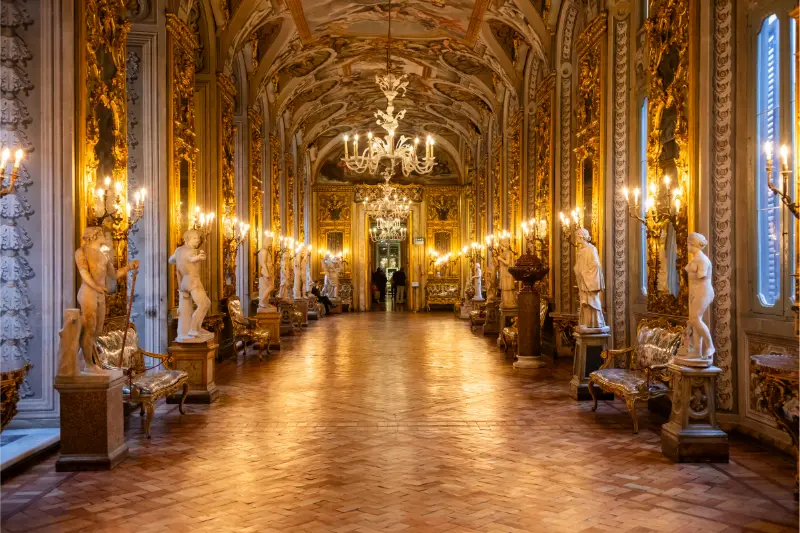
Rooms preserve the atmosphere of an elite Roman residence rather than functioning as neutral white galleries. Furniture, wall decoration and objects should be read together as a designed environment.
Fashion and costume collections
Clothing and accessories trace changing ideas of elegance, identity and modernity. Even visitors who do not follow fashion can find the objects useful for understanding social history and the visual culture of twentieth-century Italy.
Palma Bucarelli wardrobe
The garments and accessories linked to Palma Bucarelli connect museum culture, modern art and personal image. Her role in defending and promoting modern art in Italy gives the fashion material unusually strong historical context.
Current partial room access
In 2026, official notices state that some rooms on the piano nobile are not fully accessible because of maintenance and improvement work. The museum remains worth visiting, but do not assume every historic room will be open.
2026 opening hours, tickets and current notices
For 2026, the museum lists regular opening Tuesday through Sunday from 09:00 to 19:30, with last admission at 18:30, and a €6 full / €2 reduced tariff. Selected Monday afternoon openings are scheduled during the year. Some rooms on the piano nobile are currently affected by maintenance, so check notices before travel.
Treat prices and schedules as planning data, not permanent facts. Rome museums can change tariffs when temporary exhibitions open, adjust weekly closure days around public holidays or close individual rooms for conservation. Save the official page on your phone and check it again on the morning of the visit, especially if the attraction is the main reason you are crossing the city.
How to get there
The museum is a short walk from Via Veneto and the Ludovisi area. It fits naturally with Spanish Steps, Villa Borghese or a walk through the elegant streets north of the historic center. Bus routes along Via Veneto and nearby avenues can reduce the uphill walk.
If you are still choosing accommodation, our where to stay in Rome guide compares neighborhoods by transport, atmosphere and sightseeing style. Staying in a well-connected area makes specialist museums much easier to add without turning every day into a long commute.
How much time to allow
For a first visit, protect at least 60–90 minutes even when the museum is small. Arrival, ticketing, security, toilets and orientation all consume time, and house museums or specialist collections often reward slower observation more than their floor area suggests. Larger archaeological museums may justify two or three hours. If the venue uses timed entry, do not schedule another fixed reservation immediately afterward.
A useful rule is to leave a 30–45 minute buffer before the next important commitment. Rome’s buses can be delayed, park paths can be longer than expected and historic-center walking times increase when streets are crowded. A buffer also lets you stay when a museum turns out to be more interesting than expected rather than forcing an early exit.
Best time of day and season
Because this is a smaller museum, mid-morning or late afternoon is usually comfortable. Fashion enthusiasts may want to check the event calendar for temporary displays. In hot weather, the indoor visit pairs well with a shaded Villa Borghese walk rather than another exposed archaeological site.
Season also affects the journey around the museum. In July and August, an indoor cultural stop can protect the hottest part of the day, while in winter earlier sunset makes it sensible to place parks and viewpoints before late-afternoon museums. Spring and autumn usually offer the easiest balance, but school groups and weekend events can make some institutions busier than expected.
Visiting with children
This museum is more suitable for teenagers interested in fashion, design or social history than for very young children. A short visit focused on clothing and unusual interiors works better than expecting children to absorb every decorative-arts label.
For broader family planning, see our Rome with kids guide and best museums for kids in Rome. A specialist museum usually works best when children have one simple mission—find a favorite object, sketch an unusual detail or choose three things to explain afterward—rather than being asked to follow every adult label.
Accessibility and comfort
The villa has been adapted as a museum, but historic interiors and current maintenance can influence the accessible route. Contact the museum if you need guaranteed step-free access to particular floors or services.
Historic Rome has no single accessibility standard. A venue may be officially accessible while a temporary gallery, garden path or upper room remains difficult. Use our accessible Rome guide for city-level planning, but contact the museum directly when a step-free route, accessible toilet, lift or companion policy is essential.

What to combine nearby
Pair the museum with Via Veneto, Villa Borghese or Galleria Borghese if you have a timed reservation. The contrast between aristocratic interiors, twentieth-century fashion and Baroque/modern art makes the area especially rewarding for design-focused travelers.
The best museum combinations are usually geographic rather than thematic. Two extraordinary collections on opposite sides of Rome can create a poor day, while a modest church, park or neighborhood next door may make the route much more enjoyable. Check the actual walking path between entrances before you add another timed ticket.
A low-stress visit plan
- 24–48 hours before: check the official website for closures, restoration notices, special exhibitions and ticket changes.
- Before leaving: save your ticket or reservation and confirm the exact entrance on the map.
- On arrival: identify the two or three sections you most want to see before following secondary rooms.
- Halfway through: pause briefly rather than continuing after concentration drops; a short reset improves the rest of the visit.
- At the end: leave enough buffer for the walk or transport to your next stop instead of scheduling every minute.
- If something is closed: use the surrounding neighborhood as part of the day rather than crossing Rome immediately for a replacement.
Ticket strategy and common mistakes
One common mistake is assuming every Rome museum needs advance booking. Some do, some only recommend it, and others are designed for walk-in visits. The opposite mistake is assuming a small museum can always be visited spontaneously: house museums may use tiny timed groups, while temporary exhibitions can suddenly increase demand. Follow the venue’s actual booking rule rather than a generic Rome strategy.
Another mistake is relying on search-result snippets or old travel posts for current hours. This matters particularly in 2026 because several Roman institutions are undergoing PNRR work, restoration, exhibition installation or revised ticketing. If the official page and an older directory disagree, use the official notice. For a closed site, do not publish an optimistic timetable based on historical opening hours.
Food, water and practical breaks
Do not assume every small museum has a full café. Plan a neighborhood coffee or meal before or after the visit, and carry water in hot weather. Rome’s public drinking fountains can be useful between attractions—see our guide to drinking water in Rome—but liquids may need to remain closed or stored in exhibition spaces.
Photography and museum etiquette
Photography policies can vary by room, exhibition and lender. Flash, tripods and video may be restricted even when casual photography is allowed. House museums deserve extra care because visitors move through fragile furnished rooms rather than broad galleries. Never touch furniture or display surfaces, keep bags close to your body, and follow staff instructions when access to private apartments or storage areas is supervised.
Is this museum worth it on a first trip?
On a two-day first visit, the Colosseum, historic center and Vatican usually take priority. With four or five days, specialist museums become much easier to justify because they add variety and allow you to follow personal interests. Repeat visitors should be especially willing to choose them: Rome becomes more rewarding when the itinerary moves beyond the same ten famous landmarks.
If you are still building the overall schedule, compare our best things to do in Rome and Rome in 5 days guides. Use those pages as frameworks, then replace one generic stop with a museum that matches your interests in archaeology, contemporary art, fashion, music or design.

Frequently asked questions
What is the museum best known for?
It focuses on decorative arts, costume and fashion of the nineteenth and twentieth centuries, including material associated with Palma Bucarelli.
How much is admission in 2026?
The official tariff is €6 full and €2 reduced, with statutory free categories.
What are the regular hours?
The museum lists Tuesday–Sunday 09:00–19:30 with last admission at 18:30, while Monday is normally the weekly closure except selected special openings.
Are all rooms open?
Not currently. The museum has warned that parts of the piano nobile are undergoing maintenance and are not completely accessible.
How long should I allow?
Around 60–90 minutes is comfortable for a first visit; fashion specialists may want longer when temporary displays are substantial.
Final advice
Build the museum into a coherent neighborhood day, verify the live information shortly before leaving and give yourself enough time to notice what makes the collection different. Rome’s smaller institutions are at their best when they are not treated as boxes to tick. A focused hour in a distinctive museum can be more memorable than rushing through another famous site simply because it appears on every itinerary.