
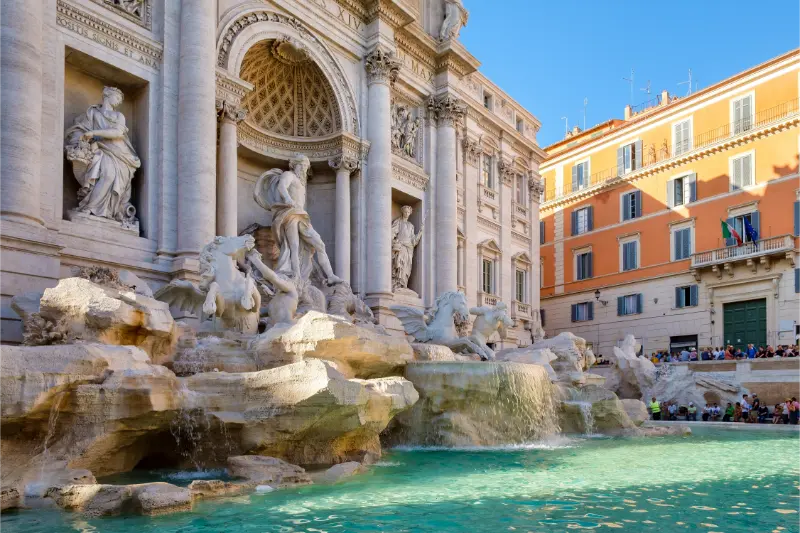
Trevi Fountain Rome: €2 Ticket, Best Times and Visitor Guide
Trevi Fountain is one of Rome’s most recognizable landmarks, but the experience has changed in 2026. The fountain is still visible from the surrounding public space, yet access to the inner perimeter closest to the basin is now managed with a small paid ticket for tourists and non-residents. That means the best visit begins with understanding exactly what is paid, what remains freely visible and when crowds are likely to be most intense.
The fountain itself remains as theatrical as ever: a monumental late-Baroque composition squeezed into a relatively small urban square, where pale travertine, rushing water and the façade of Palazzo Poli create a scene that feels closer to a stage set than a normal city fountain. This guide covers the new visitor system, the best times to go, the coin-toss tradition, photography and an easy walking route through the historic center.
The new €2 Trevi Fountain ticket in 2026
From 2 February 2026, tourists and non-residents pay €2 to enter the controlled inner area around the fountain. According to Roma Capitale, access is free for residents of Rome and the Metropolitan City, children under six, eligible visitors with disabilities and one companion, and licensed tour guides under the published rules.
The current access hours published by Roma Capitale are 11:30–22:00 on Mondays and Fridays and 09:00–22:00 on the other days, with last admission at 21:00. Tickets bought in advance are open rather than tied to a specific date and time. Because maintenance or exceptional events can alter access, verify details on the official Roma Capitale information page before your visit.
| Question | 2026 answer |
|---|---|
| Can I see the fountain without paying? | Yes. The €2 ticket is for access to the controlled inner perimeter closest to the monument. |
| Who pays €2? | Tourists and non-residents under the current system. |
| When is the inner area open? | Mon/Fri 11:30–22:00; other days 09:00–22:00; last entry 21:00, subject to changes. |
| Best crowd strategy | See the square very early, then use the ticketed area later if you want a close-up visit. |
Why Trevi Fountain looks so dramatic
The fountain marks the terminal display of the Acqua Vergine, the modern descendant of an ancient Roman aqueduct associated with Agrippa. The current monument was designed primarily by Nicola Salvi in the eighteenth century and completed after his death. At the center, Oceanus stands above a rocky landscape while horses and tritons animate the water below.
What makes Trevi especially memorable is the urban setting. There is almost no long ceremonial approach. Instead, you hear water before the full façade appears, then the space opens suddenly between dense streets. That compressed arrival is part of the experience, so walking to the fountain from the Pantheon or Spanish Steps is better than treating it like a destination reached only by taxi.
What time should you visit?
If your priority is atmosphere and photography, early morning remains the best moment. The controlled paid area may not yet be open depending on the day, but the wider square is far calmer than at midday or in the evening. You can appreciate the architecture, take wider photographs and then return later if you want to enter the inner perimeter.
After dark, the fountain is beautifully illuminated and the square has a lively energy. It is not a quiet experience, but it can be magical if you accept the crowds. Mid-afternoon in high season is generally the least attractive combination of heat and density. In summer, pair Trevi with indoor stops or shaded streets and carry water.
How to toss a coin into Trevi Fountain
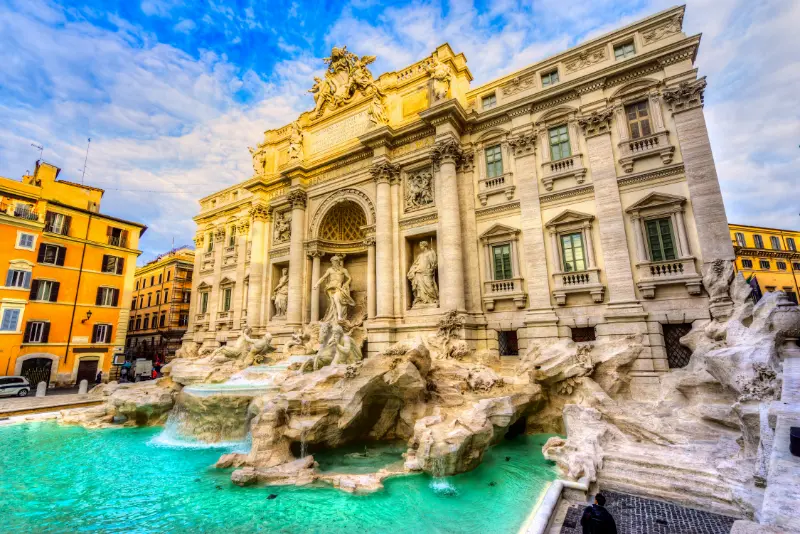
The familiar tradition is to stand with your back to the fountain and throw a coin over your shoulder into the water. Popular folklore says one coin helps ensure a return to Rome; other modern variations add romantic meanings to additional coins. Treat the ritual as a playful tradition rather than a historical rule.
Do not climb on the monument or enter the water. Trevi is protected cultural heritage, and behavior that might seem harmless in a photograph can result in enforcement action. Follow the staff instructions in the controlled area and keep the visit moving when it is busy.
Best photo angles
- Wide view from the back of the square: best early in the morning when there is space to frame the entire façade.
- Side angle near the basin: useful for capturing the water and sculptural depth once you are inside the controlled area.
- Night view: emphasizes the illuminated stone against the darker streets.
- Detail shots: focus on the horses, tritons and rockwork instead of trying to make every image a full panorama.
What to see near Trevi Fountain
Trevi sits in the heart of the walkable historic center. The Pantheon is roughly a fifteen-minute walk away at a comfortable pace, while the Spanish Steps are even closer. Continue toward Piazza Navona and you can connect four of Rome’s classic central sights without using public transport.
If you like quieter corners, step away from the most obvious route and explore the streets around the Quirinal. The contrast between the intense fountain square and ordinary residential or institutional streets is part of what makes central Rome interesting.
Trevi Fountain with children
Children usually respond well to Trevi because the visit is visual, short and easy to combine with gelato or another nearby stop. The challenge is the crowd rather than the monument itself. Keep younger children close, avoid the densest midday periods and do not rely on a stroller moving smoothly through packed pedestrian space.
For a broader family plan, our Rome with kids guide includes parks, museums and pacing advice that can make monument-heavy days easier.
Is Trevi Fountain free?

The answer now needs a little precision. You can still see the fountain from the surrounding public space without buying the €2 ticket. The paid system regulates access to the inner perimeter near the basin. For budget travelers, this means Trevi remains a worthwhile free sight even if you choose not to enter the closest viewing area.
A smart route: Spanish Steps to Trevi to Pantheon
Start early at Piazza di Spagna and the Spanish Steps, walk to Trevi Fountain, then continue to the Pantheon. From there, reach Piazza Navona for lunch or an afternoon stroll. The entire sequence covers a relatively compact section of the historic center and is far more enjoyable on foot than by hopping between buses.
If you want to continue into the evening, follow our Rome at night guide and revisit Trevi after dinner. Seeing the fountain once in daylight and once illuminated is one of the easiest ways to understand why the mood changes so much after dark.
Common mistakes to avoid
- Assuming the whole fountain square now requires a ticket; the paid system concerns the inner controlled area.
- Arriving at peak afternoon hours expecting a peaceful photograph.
- Buying a complicated third-party package before checking the simple official access rules.
- Standing in the flow of people for a long photo session when the inner area is busy.
- Trying to touch the water, climb the stonework or imitate movie scenes inside the fountain.
How long do you need?
A basic visit can take 15–20 minutes, while a paid close-up visit plus photographs might take 30–45 minutes depending on queues. Trevi is not a museum where you need two hours. Its value comes from fitting it naturally into a larger central walk, then returning at another time of day if you want a different atmosphere.
Final tip
The most satisfying Trevi experience is often two short visits rather than one long one: first thing in the morning for space and architecture, then after sunset for the lights and energy. The 2026 visitor system adds a practical step, but it also makes it easier to understand the difference between simply seeing the fountain and entering the closest controlled zone.

How the controlled area changes the experience
The 2026 system is designed to regulate the space nearest the basin, where crowding used to make movement difficult. For visitors, that means it is useful to decide whether your goal is simply to see Trevi or to stand at the water’s edge. The first remains possible from the public area; the second now involves the small ticket and access window. Families, photographers and travelers with limited mobility may appreciate the more ordered flow, but queues can still form at popular times.
Trevi Fountain and accessibility
The surrounding historic-center streets are mostly pedestrian-friendly but paved with cobbles and can be crowded. Travelers using wheelchairs, walking aids or strollers should approach slowly and follow staff directions for the controlled perimeter. The best way to reduce stress is to avoid peak periods and use a taxi only for the longer journey to the neighborhood; once nearby, walking the final streets is usually simpler than trying to stop immediately beside the fountain.
Where to take a break nearby
The streets between Trevi and the Pantheon are packed with cafés, gelaterias and restaurants. Instead of choosing the closest terrace to the fountain, walk five or ten minutes away and compare menus. For a quieter break, head toward the Quirinal or use a church visit as a cool indoor pause. This is particularly helpful in summer, when the heat reflected by stone surfaces can make even a short sightseeing loop tiring.
Trevi Fountain on a budget
Budget travelers can still enjoy one of Rome’s most famous sights without paying, because the fountain remains visible outside the inner access zone. If you are deciding where to spend limited attraction money, reserve paid admission for experiences whose interiors matter most to you—the Colosseum, a museum or the Pantheon—and treat the €2 Trevi ticket as optional. That flexibility makes Trevi easy to include even on a very low-cost day in the historic center.