Santa Severa from Rome: Castle, Beach and Easy Coastal Day Trip
Santa Severa is one of the easiest ways to combine a castle, archaeology and the Tyrrhenian coast on a day trip from Rome. The fortified complex sits directly beside the sea north of the capital, creating a destination that feels very different from both central Rome and a conventional beach resort.
The key is to decide what kind of day you want: culture first with a beach walk, or a summer beach day anchored by a serious historic site. Either way, check the castle schedule and coastal transport shortly before traveling.
| Part of day | Plan | Why |
|---|---|---|
| Morning | Castle and museums | Best focus before beach time |
| Lunch | Coastal meal or simple break | Keeps day flexible |
| Afternoon | Beach or shoreline walk | Season-dependent |
| Return | Regional train or car | Check timing before relaxing |
Why Santa Severa is a different kind of day trip
Santa Severa is unusual because the historic complex stands directly beside the sea. You can move from archaeology and medieval architecture to a beach walk in a few minutes, which makes the destination especially appealing in late spring, summer and early autumn.
The castle is substantial enough to justify the journey even if you do not plan to swim. Families, photographers and travelers who want a softer break from Rome’s dense monuments can all make the day work.
The castle and its long history
The current complex includes a medieval fortress built over earlier layers of occupation connected with the ancient port of Pyrgi. The official site explains that the museum route presents the castle’s history from the Etruscan period to the present. Check current opening information on the official Castello di Santa Severa website before leaving Rome.
The visual power of the site comes from this layering. Towers and fortified walls dominate the shoreline, but the story extends much further back than the Middle Ages. Give yourself time for the museums rather than treating the castle only as a photo backdrop.
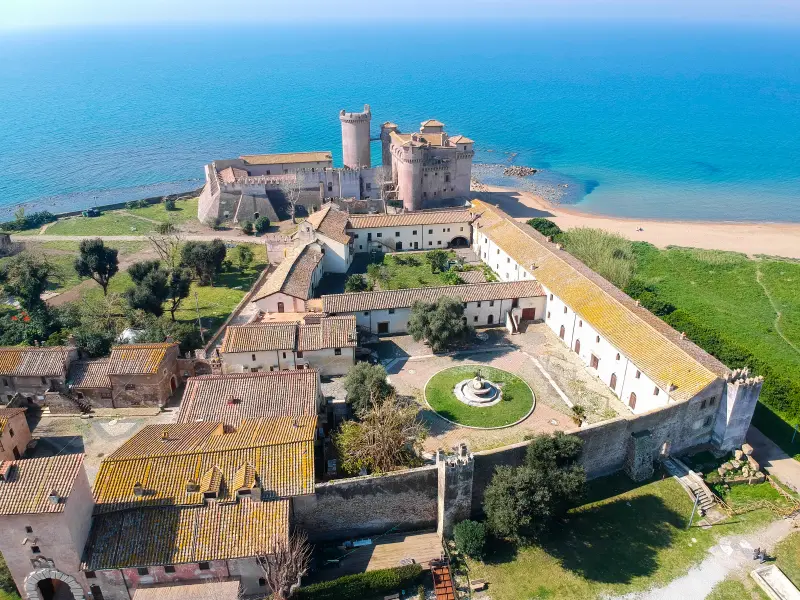
Look at Santa Severa Castle from the beach before heading inside if the weather allows. From that angle, the relationship between the fortified walls and the shore becomes immediately clear: this was a coastal position as well as a residence and later museum complex. The story reaches back beyond the medieval buildings to the ancient sanctuary and port of Pyrgi. Inside, focus on how the exhibits connect the site’s changing use to the sea beside it. Check the current museum route and access conditions in advance; a castle visit and a quick exterior photograph are not the same experience.
Museums and archaeological context
The complex contains museum spaces that help explain the fortress, local archaeology and the territory. Exact routes and exhibitions can change, so use the official website to see what is open on your date.
If you enjoy Etruscan history, Santa Severa also connects naturally with Cerveteri and the wider coastal landscape north of Rome. The area makes more sense when understood as part of an ancient network rather than an isolated castle.
The beach beside the castle
The beach is the feature that turns Santa Severa into a full leisure day. Conditions, access and beach services vary by season, so do not assume summer facilities operate year-round. In cooler months, the shoreline is still excellent for walking and photography.
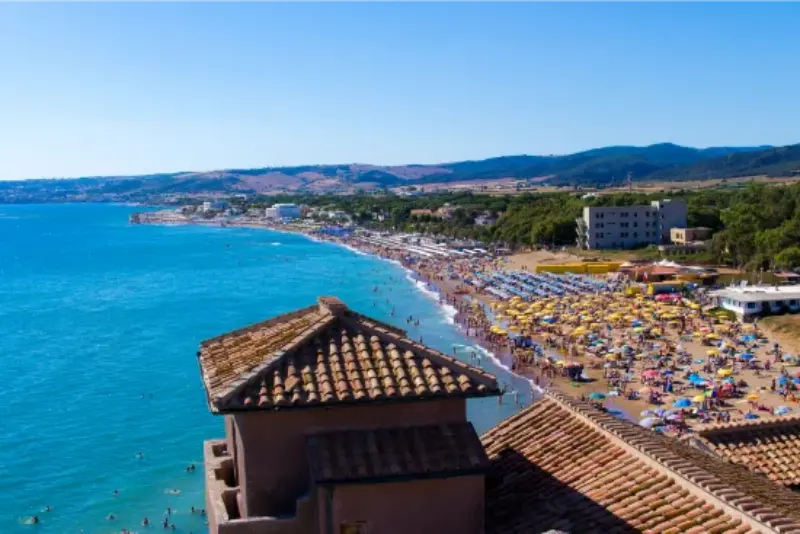
Bring swimwear only when the weather and sea conditions make sense. The castle should remain the core cultural visit; the beach is a flexible extension rather than something that needs to dominate the itinerary.
The shoreline is the right place to slow down after the museum rather than treating it as another attraction to tick off. In summer, pack the things you would bring for an ordinary beach day, including water, sun protection and suitable footwear. Facilities, lifeguard coverage and access may be seasonal, so check them locally and respect the sea conditions. Outside the swimming season, the beach still gives you room to appreciate the castle’s outline and the coastal setting. Keep the museum visit and beach time separate in your plan so a queue or delayed train does not spoil both.
Getting from Rome to Santa Severa
Regional trains on the coastal line make the area accessible without a car, but check the exact station, timetable and final walk for your travel date. Not every service pattern is identical, particularly on weekends or during works.
From the station, allow time for the transfer to the castle area. A car gives more flexibility if you want to combine the day with another coastal destination, but summer traffic and parking can reduce that advantage.
A train journey can make Santa Severa an easy escape from Rome, but do not plan only around the rail portion. You still need to reach the castle and beach from the station, and that final stretch matters if you are traveling with young children, carrying beach equipment or visiting in strong sun. Check the route on foot and your return train before leaving Rome. Drivers should confirm parking arrangements near the coast rather than assuming the beach provides unlimited spaces. Summer weekends can be noticeably busier, so an early departure is useful even for travelers who do not intend to swim.
A realistic one-day itinerary
Leave Rome in the morning, reach Santa Severa before the hottest part of the day and visit the castle complex first. After the museum route, have lunch or a simple seaside meal, then spend the afternoon on the beach or walking the coast.
In cooler seasons, replace swimming with a longer cultural visit, photography and a relaxed lunch. Check the return train before settling into the afternoon so the day remains calm.
Santa Severa or Santa Marinella?
Santa Marinella is better known primarily as a seaside escape, while Santa Severa offers a stronger cultural anchor through the castle. Our best beaches near Rome guide helps compare the coastal options.

If your priority is simply swimming, choose the beach with the best conditions and transport on your date. If you want history plus sea in one compact destination, Santa Severa is usually more distinctive.
Santa Severa and Cerveteri
Cerveteri is one of the most important Etruscan sites near Rome, and travelers with a car may consider pairing the two. Our Cerveteri day trip guide explains the necropolis.
However, combining them by public transport can make the day unnecessarily complicated. Choose one destination if you want a relaxed pace, especially in summer when beach time is part of the plan.
Santa Severa and Cerveteri both offer ways to explore the area’s Etruscan past, but they do not make an automatic two-stop trip. The necropolis at Cerveteri deserves focused time, and the journey between the sites can be awkward without a car. If archaeological history is your main interest, choose one site for the morning and verify opening arrangements before deciding on a second. If your aim is a relaxed seaside day, the castle and beach at Santa Severa are more than enough. Trying to fit an archaeological park, museum and swim into one short outing usually leaves too little time for each.
Food and beach-day logistics
Coastal day trips work best with flexible food expectations. Restaurants can be busier in summer and quieter outside the season. If a specific lunch matters to you, check opening days and reserve when appropriate.
Bring water, sun protection and a small towel if swimming. Keep valuables controlled on the beach and avoid leaving phones, passports or wallets unattended while entering the water.
Best season
Late spring and early autumn can offer the best balance of comfortable weather and lighter crowds. Summer is ideal for combining the castle with the beach but requires sun protection and more attention to weekend demand.
Winter gives the site a completely different atmosphere. You lose the swimming element, but the shoreline, fortress and museum can still make a worthwhile cultural excursion if opening schedules align.
Visiting with children
The castle-and-beach combination works especially well for families because the day can alternate structured history with free outdoor time. Children who are tired of museums may be more patient when they know the beach follows.
Keep the museum portion realistic for the child’s age and avoid overloading the day with another distant attraction. A simple castle, lunch and beach sequence is usually enough.
Accessibility and practical comfort
The restored complex has visitor facilities, but individual historic areas may involve stairs or uneven surfaces. Review current accessibility information if step-free access is essential.
Beach access introduces a different challenge because sand is difficult for wheelchairs and standard strollers. Families with young children should plan how much equipment they actually want to carry from the station or parking area.
Photography
The castle is particularly photogenic when viewed with the sea and shoreline in the frame. Morning and late-afternoon light can emphasize the contrast between stone walls and water, while summer midday light is harsher.
Do not fly drones or use professional equipment without checking current rules. Inside museum areas, follow posted photography restrictions and avoid blocking narrow passages.
Pyrgi and the Etruscan background
Long before the medieval fortress, the coast here was connected with Pyrgi, the port of the Etruscan city of Caere, modern Cerveteri. That background explains why archaeological finds in the area are so important: the shoreline was part of a major religious and commercial landscape well before Rome became an imperial capital.
Approach the museum displays with this wider context in mind. The destination is not simply “a medieval castle on a beach”; it is a place where Etruscan, Roman, medieval and modern layers occupy the same small stretch of coast. That depth is what makes Santa Severa more rewarding than a quick seaside photo stop.
Weekends, summer crowds and timing
Warm-weather weekends can attract both beach visitors and cultural visitors, so an early start is useful. Arriving before the hottest part of the day gives you more comfortable museum time and reduces the pressure to find food or beach space at peak hours.
If your schedule allows, a weekday can feel calmer, but always check museum opening days first. Outside high season, the opposite problem can occur: fewer services may be available, making it more important to confirm food, transport and attraction hours before leaving Rome.
Common Santa Severa mistakes
- Treating the castle only as a photo stop and skipping the museums.
- Assuming summer beach services operate all year.
- Leaving the train timetable until the end of the afternoon.
- Trying to combine too many coastal stops in one day.
- Carrying valuables onto the beach without a plan.
- Underestimating sun exposure around the shoreline and castle.
Frequently asked questions
Is Santa Severa worth visiting from Rome?
Yes, particularly if you want history and sea in the same day. The castle gives the destination more depth than a simple beach excursion.
Can I reach Santa Severa by train?
Regional rail can be practical, followed by the final connection or walk to the castle area. Check the exact current timetable and route for your date.
Can I swim at Santa Severa?
In suitable weather and sea conditions, the beach is a major part of the summer visit. Always follow local safety conditions and seasonal beach rules.
Final advice
Santa Severa is strongest when you keep the day simple: castle first, lunch, then the sea. Check the official museum schedule and return transport, bring only the beach gear you actually need and let the contrast between medieval walls and coastline be the reason for the trip.