
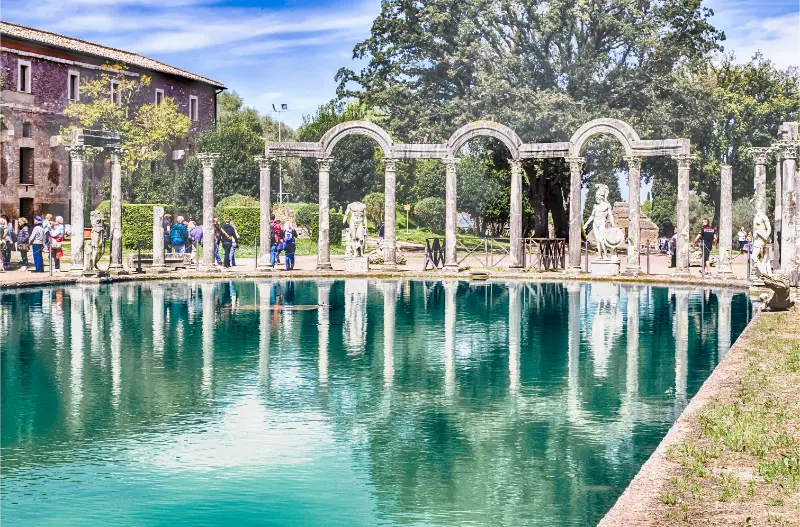
Tivoli Tours from Rome: Villa d’Este, Hadrian’s Villa and Day Trip Guide
Tivoli Tours from Rome can be an excellent use of paid tour time when the guide adds interpretation, access or logistics that would be difficult to reproduce efficiently on your own. This guide focuses on how to choose the right format, what to verify before paying and when an independent visit may actually be the better option.
Rome rewards travelers who understand the difference between a tour that solves a real problem and one that simply packages a route you could walk alone. For Tivoli tours from Rome, compare the exact itinerary, group size, transport, admission, language and cancellation conditions. Product titles are marketing; the inclusion list is what you are actually buying.
Quick facts
| Best for | Art, gardens, Roman history and travelers wanting a full cultural day outside Rome |
| Core sights | Villa d’Este and Hadrian’s Villa |
| Typical format | Half-day single-site tours or full-day combinations of both villas |
| Transport issue | The two villas are not next to each other; local transfer planning matters |
| 2026 check | Villae publishes seasonal hours and special openings; verify your date |
Why this experience can be worth booking
Tivoli is close enough to Rome to be a day trip but complicated enough that a guided tour can genuinely simplify the day. Villa d’Este sits in the historic town, while Hadrian’s Villa is a vast archaeological estate lower down the slope. Trying to treat them as neighboring attractions is the classic planning mistake. The transfer between them is the part of the day that organized tours solve most clearly.
The strongest reason to use a guide in Rome is context. The city is layered, and many important places are visually difficult to decode without someone explaining what changed over time. A second strong reason is logistics: transport, timed admissions and meeting points can consume a surprising amount of energy. The weakest reason is simply being escorted from one famous stop to another with little interpretation.
Main tour formats
Full-day two-villa tour
The most efficient choice for first-time visitors who want both UNESCO sites without managing local transfers.
This format works best when its pace matches your day. Before booking, ask how much time is spent on the core experience, how much is transport or waiting, and whether the guide remains with the group throughout. For Tivoli tours from Rome, those details can change the value more than a small difference in headline price.
Half-day Villa d’Este tour
Best for gardens, fountains and a lighter day, especially when you want to return to Rome for dinner.
This format works best when its pace matches your day. Before booking, ask how much time is spent on the core experience, how much is transport or waiting, and whether the guide remains with the group throughout. For Tivoli tours from Rome, those details can change the value more than a small difference in headline price.
Private Tivoli tour
More expensive but useful for slower pacing, mobility needs or a deeper focus on architecture and history.
This format works best when its pace matches your day. Before booking, ask how much time is spent on the core experience, how much is transport or waiting, and whether the guide remains with the group throughout. For Tivoli tours from Rome, those details can change the value more than a small difference in headline price.

Current information to verify for 2026
Villa d’Este is about movement, water, terraces and Renaissance garden design. Hadrian’s Villa is about scale: an imperial complex that makes more sense when someone explains how its pools, residences, reception spaces and architectural experiments fit together. A full-day tour gives useful contrast, but it can also be demanding in hot weather. If you dislike rushed museum-style itineraries, consider visiting only one villa well rather than both quickly.
Because official schedules and access rules can change, check the official information page shortly before booking and again before departure. Treat commercial listings as a description of the service, not as the final authority on monument opening conditions.
Guided tour or independent visit?
Official Villae pages publish seasonal schedules and special openings, and these can shift around maintenance, holidays and cultural events. Before booking a commercial excursion, check whether attraction tickets are included, whether the group enters with a guide or receives free time, and how long is actually allocated to each villa. A tour can advertise eight hours but still devote a meaningful share to meeting, traffic and transfers.
Independent travel gives you control over pace, breaks and the amount of time spent at each stop. Guided travel reduces decision-making and can reveal details you would otherwise walk past. A useful compromise is to book a guide for the most complex part of the day and explore the easy outdoor areas independently before or afterward. This keeps costs under control while still paying for expertise where it matters.
How to compare prices without being misled
Tour prices in Rome vary for legitimate reasons: private versus shared guiding, attraction tickets, transport, group size, duration and language all affect cost. Do not compare two products only by the large number shown on the results page. Open the inclusion list and calculate what you would otherwise buy separately. A cheaper tour can become more expensive if admission, transfers or required equipment are excluded.
Also check whether the listed price is per person or per group. Private tours can look expensive for a solo traveler but become more reasonable for a family of four. Conversely, a low-cost large-group product may save money while reducing the chance to ask questions or adjust the pace. Value is personal: identify the problem you want the tour to solve, then pay for that solution.
Booking checklist
- Confirm the exact meeting point and how early you must arrive.
- Check whether attraction admission, transport and equipment are included.
- Read the cancellation deadline and late-arrival policy.
- Verify the tour language and whether the guide is live or audio-based.
- Check group size rather than relying on vague terms such as “small group”.
- Ask about stairs, uneven surfaces, heat exposure and toilet access when relevant.
- For families, confirm minimum age and whether child equipment is supplied.
- Save the voucher and meeting-point map offline before leaving your accommodation.
Best time of day
The best departure time depends on the experience. Early starts usually mean cooler temperatures and fewer people, while late-afternoon departures can produce better light and a more relaxed transition into dinner. In July and August, exposed archaeology is significantly more comfortable early in the day. In winter, shorter daylight makes late departures less suitable for routes where the landscape is part of the attraction.
Do not stack timed tours too tightly. A two-hour experience rarely consumes exactly two hours once you add the journey to the meeting point, check-in, security, toilets and the walk to your next reservation. Leave at least 45–60 minutes of flexible time before another important booking, and more when you must cross the city.
Group size: private, small group or large group
Private guiding offers the most control and is especially useful for families, photographers, travelers with mobility needs and visitors with specialist interests. A genuine small group can provide much of the same conversational benefit at a lower price. Large groups are usually the most economical but require more waiting and make it harder to hear explanations in crowded spaces.
If a listing says “small group,” look for an actual maximum number. Eight, twelve and twenty people create very different experiences. For underground spaces, narrow streets and museums, the difference is particularly noticeable. A transparent operator states the maximum group size clearly and explains whether multiple groups depart at the same time.
Accessibility, comfort and physical effort
Historic Rome is full of cobbles, stairs, uneven archaeological surfaces and buildings that cannot be made completely step-free. Never assume that “accessible” means every part of the advertised route is accessible. Ask for the exact route and whether the operator can modify it. A tour that can adapt intelligently is more useful than one that merely repeats a generic accessibility label.
Comfort also matters for travelers without disabilities. Summer heat, long standing periods and limited seating can turn an interesting tour into an exhausting one. Wear supportive shoes, carry water, protect yourself from sun and choose a realistic duration. On food or wine experiences, tell the operator about allergies or dietary restrictions before the day, not when the first tasting is already on the table.
What to bring
- Photo ID when named tickets or age reductions may apply
- A charged phone with the voucher saved offline
- Comfortable shoes suitable for cobbles or archaeological surfaces
- Water, especially from late spring through early autumn
- A light layer for underground spaces, churches or air-conditioned interiors
- Only the equipment you genuinely need; large bags can complicate security checks
How to fit it into a Rome itinerary
Plan this experience as an anchor rather than squeezing it between unrelated reservations. Useful related reading on MyRomeTrip includes Tivoli day-trip guide; best day trips from Rome; Rome in 5 days. Connecting the tour to one nearby neighborhood, meal or independent walk usually creates a better day than racing across Rome to collect another major attraction.

For a short trip, pay for tours that unlock something difficult: specialist interpretation, controlled access or complicated transport. Leave piazzas, fountains, neighborhood wandering and simple viewpoints flexible. This balance keeps the itinerary from feeling like a sequence of appointments and gives you time to enjoy the city between scheduled activities.
Common booking mistakes
Independent travel remains a strong option for budget-conscious travelers who enjoy public transport. The advantage of a tour is not that Tivoli is impossible alone; it is that the logistics become predictable. That can be valuable on a short Rome trip when losing an hour to a missed connection matters more than saving a modest amount of money.

- Choosing by star rating without reading recent detailed reviews
- Assuming “skip the line” removes security checks
- Ignoring the difference between admission and guided-service fees
- Booking a departure too close to airport, train or another timed attraction
- Not checking the exact cancellation time zone
- Expecting a guide to change official access rules or closures
- Packing too many paid experiences into the same day
Frequently asked questions
How far in advance should I book?
For peak spring, Easter periods, summer weekends and limited-capacity products, book as soon as your dates are firm. Flexible outdoor walks can often be left closer to the trip.
Does “skip the line” mean no waiting?
No. It normally refers to a ticket or reservation queue. Security, identity checks, capacity controls and mandatory site procedures can still create waits.
Are attraction tickets always included?
No. Some tours include admission, some require you to buy a separate ticket and others visit only exterior areas. Read the inclusion list carefully.
Is a private tour always better?
Not automatically. Private tours offer flexibility and conversation, but a well-run small group can provide excellent value if the route and pace suit you.
What if the site changes access on the day?
Official authorities control monuments and archaeological areas. Reputable operators explain how they handle closures, substitutions or refunds, but they cannot guarantee access that the site itself withdraws.
Final advice
The best Tivoli tours from Rome is not necessarily the longest or most expensive option. Choose the product that clearly explains what you will see, who will guide you, how the logistics work and what is included. When those details are transparent, a paid experience can save time and deepen your understanding of Rome; when they are vague, independent travel is often the smarter choice.