Best Fiumicino Airport Hotels: Where to Stay Near Rome FCO
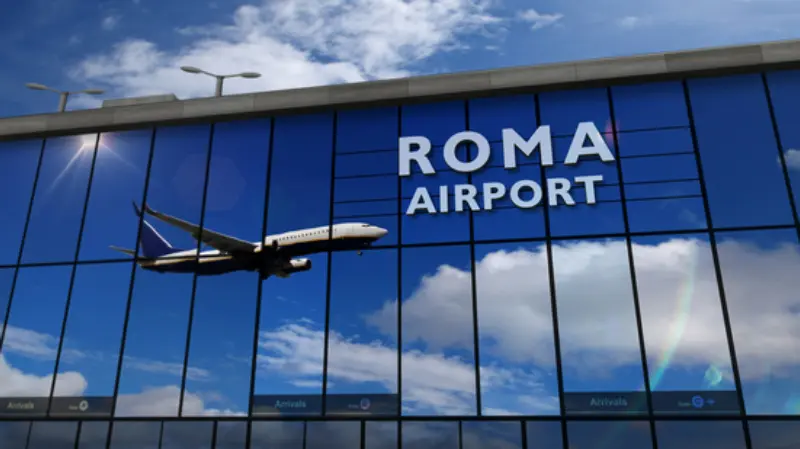
A hotel near Rome Fiumicino Airport (FCO) can be a smart choice before a very early flight, after a very late arrival or during an overnight connection. It is usually not the best base for sightseeing Rome for several days: the airport is in Fiumicino, roughly 30 km from the historic center, so daily commuting quickly becomes tiring and expensive.
The key distinction is between hotels physically connected to the terminal area, airport-zone hotels requiring a shuttle or taxi, and attractive Fiumicino-town properties closer to restaurants and the waterfront. Choose according to your flight time, luggage and willingness to transfer.
Quick airport-hotel shortlist
| Hotel | Location type | Best for |
|---|---|---|
| Hilton Rome Airport | Connected to airport by covered walkway | Maximum convenience for Terminals 1–3 |
| Hilton Garden Inn Rome Airport | Airport area | Travelers wanting a branded hotel with airport access |
| Air Rooms Rome Airport by HelloSky | Terminal/airport complex | Short overnight stays and connections |
| QC Termeroma Spa and Resort | Fiumicino area | Spa-focused stopover with more leisure time |
| Hotel Isola Sacra Rome Airport | Fiumicino | Travelers wanting a conventional hotel away from terminal buildings |
Hilton Rome Airport: easiest for walking to the terminal
Hilton Rome Airport is directly connected to Leonardo da Vinci Airport through a covered overpass with moving walkways. The hotel states that Terminals 1, 2 and 3 are within roughly a ten-minute walk. For an early departure, that ability to avoid a road transfer can justify a higher rate.
The hotel also lists an indoor pool and on-site dining. If convenience is the priority, compare the total cost with a cheaper airport hotel plus two taxi or shuttle rides. The “expensive” connected hotel can sometimes be competitive once transfers are included.
Hilton Garden Inn Rome Airport
The Hilton Garden Inn is another airport-area option, but unlike the connected Hilton you should verify the current transport arrangement to your terminal. It can be useful when rates are lower and you are comfortable with a short transfer rather than walking with luggage.
Air Rooms / terminal-style accommodation
Terminal-oriented rooms are designed for convenience rather than a Roman neighborhood experience. They make sense for short connections, disrupted flights or departures so early that a central-city hotel would force you to leave before dawn. Verify check-in rules and exactly which terminal path is used.
QC Termeroma
QC Termeroma offers a completely different proposition: a spa resort in the Fiumicino area. Choose it when you have enough time to enjoy the property rather than simply sleep for six hours. It can turn a pre-flight night into a relaxing final day, but you still need to plan the airport transfer.
Fiumicino town versus airport perimeter
Staying in Fiumicino town can give you restaurants, a more local evening and sometimes better value, but it normally requires a taxi or shuttle to the airport. For a 6:00 a.m. departure, terminal proximity is usually more important than atmosphere. For an afternoon flight, a town stay can be pleasant.
When should you sleep near FCO?
- Your flight departs very early and you want to minimize transport risk.
- You land after public transport becomes inconvenient.
- You have an overnight connection and do not need to sightsee.
- A strike or operational issue makes a central-city transfer less attractive.
- You are ending a road trip and want to return the car near the airport.
When should you stay in central Rome instead?
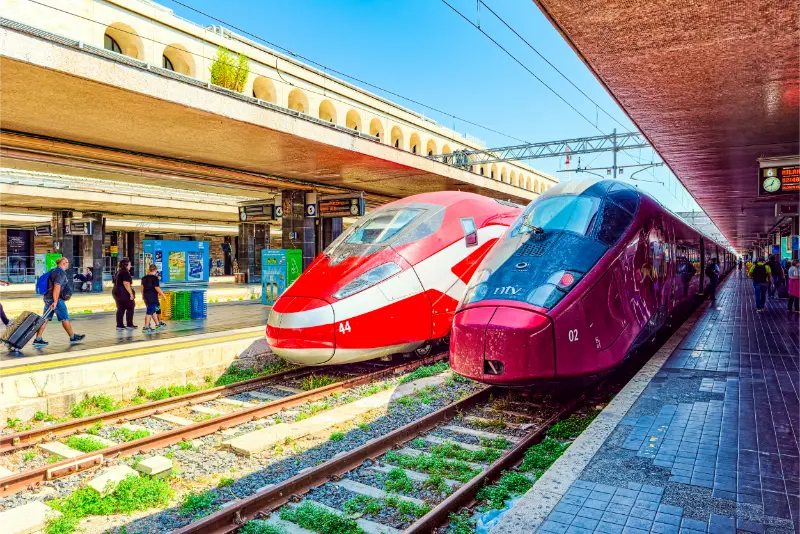
If your flight leaves after late morning, you can often stay in Rome and use the Leonardo Express or a taxi. The official Leonardo Express links Termini and Fiumicino Airport in about 32 minutes. See our Fiumicino Airport guide and Leonardo Express guide for the transport trade-offs.

Early-flight checklist
- Check your terminal the evening before departure.
- Confirm the hotel shuttle timetable if the property is not walk-connected.
- Book a taxi in advance if the shuttle does not match your flight.
- Allow extra time for baggage drop and security.
- Do not assume every “airport hotel” is physically inside the airport.
Parking and rental cars
Fiumicino hotels can be useful at the end of an Italian road trip because you can return the car nearby and avoid driving into Rome. If you still have the vehicle overnight, check hotel parking costs and whether the rental return is open when you need it.
Booking strategy
Airport hotels often behave differently from central Rome properties: rates can spike around major disruptions, early departures and events. Compare the connected hotel, an airport-area hotel and a Fiumicino-town option. Add transfer costs to the cheaper properties before deciding.
Frequently asked questions
How early should I book accommodation in Rome?
For spring, early autumn, Easter, Christmas/New Year and major event dates, booking several months ahead is sensible if location matters. The city rarely becomes literally sold out, but the best-value rooms in the most walkable neighborhoods disappear first. Keep a flexible rate when plans are not firm.
Is it better to stay in the historic center or near the Metro?
For a first visit of three or four nights, walkability usually wins. A Metro-adjacent hotel becomes more valuable when you plan repeated trips to the Vatican, EUR, Cinecittà or outer neighborhoods, or when your budget improves substantially outside the center.
Should I book breakfast with the room?
Compare the supplement with your routine. Hotel breakfast is convenient before an early museum entry, but Rome is full of bars where coffee and a cornetto can be quick and inexpensive. Families and travelers with dietary needs may value a dependable hotel breakfast more.
Do Rome hotels charge a tourist tax?
Rome applies a municipal accommodation tax whose amount depends on the type and category of lodging and is generally charged per person per night for a limited number of nights. Because rates and exemptions can change, check the current amount for your property before arrival and see our Rome tourist-tax guide.
Are hotel photos enough to judge a room?
No. Historic buildings often have very different room shapes, views and floor plans within the same property. Check the exact room category, listed square meters, bed type, bathroom, floor, elevator access and whether a terrace or landmark view is guaranteed rather than illustrative.
A final practical checklist before payment
Open the property on a map and trace the route you will actually walk with luggage. Check whether the entrance is on a pedestrian street, whether a taxi can stop nearby, and whether steps appear between the street and reception. Then read the room description line by line: bed type, square meters, bathroom arrangement, air conditioning, elevator, check-in window and cancellation deadline. These details influence a Rome stay more than a tiny difference in review score.
If you are comparing two properties, imagine a real day rather than a map pin. How long does it take to reach your first attraction? Can you return for a midday rest? Where will you eat after 21:00? How will you reach Termini or the airport with luggage? The hotel that gives the easiest answers is usually the better choice even when it costs slightly more.

Finally, keep the booking confirmation and property address available offline. Rome has many similarly named hotels, residences and guesthouses. Showing the exact street to a taxi driver or checking the address when mobile data is weak can prevent an annoying arrival mistake.
Final advice
For a very early flight, the Hilton Rome Airport has the clearest convenience advantage because it is connected to the airport by covered walkway. For a more relaxed stopover, compare spa or Fiumicino-town options. For several sightseeing days, stay in Rome and move to FCO only when the flight schedule truly justifies it.
How location changes the value of your stay
Accommodation value in Rome is strongly tied to geography. A property that appears expensive can save time when it lets you walk to two major sights before breakfast, return during the hottest part of the afternoon and go out again after dinner. A cheaper room farther away can be excellent when it sits beside useful Metro or rail connections, but only if those connections match the places you actually plan to visit. Compare door-to-door travel, not neighborhood reputation alone.
Think about the least glamorous moments of the trip: arriving with luggage, getting back after a late dinner, leaving for an early train, or returning to change clothes before an evening booking. These are the moments when a well-chosen base proves its value. Rome is a city where many visitors walk more than expected, so reducing unnecessary transfers can improve the entire trip.
If two properties remain close in price, prioritize the one with clearer room details, stronger recent operational reviews and a cancellation policy you understand. A reliable, well-located room usually creates more value than an extra amenity you may never use.
Questions to ask before arrival
Once the reservation is made, send the property any question that could affect arrival: the easiest entrance with luggage, whether reception is staffed at your expected time, whether a taxi can stop at the door, and whether you need to provide documents or arrival details in advance. Central Rome contains pedestrian streets and restricted-traffic areas, so the practical entrance can differ from what a map suggests.
For a landmark-area stay, also ask whether construction, rooftop events or street-facing rooms may affect noise. For airport and parking stays, confirm transport or garage arrangements again shortly before travel. A short message a few days before arrival can prevent most of the avoidable problems that turn a good booking into a stressful first evening.