Palatine Hill Rome: Tickets, Imperial Palaces, Views and Visiting Guide
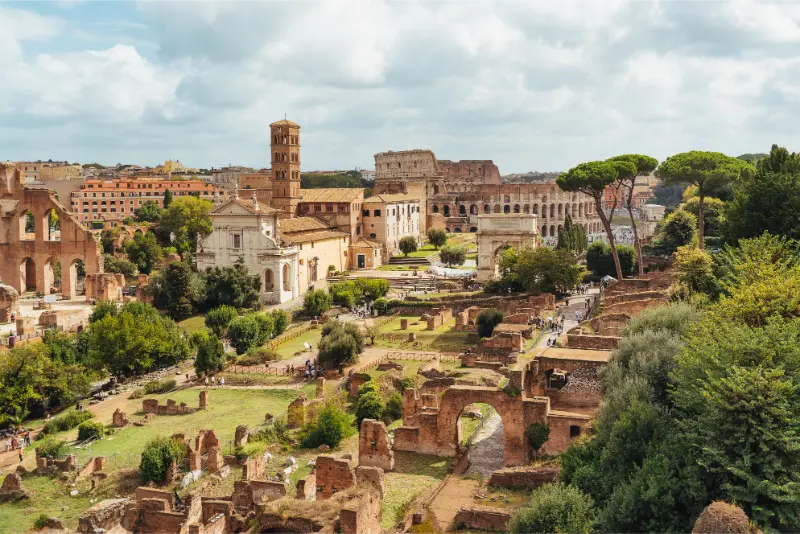
The Palatine Hill rises directly above the Roman Forum and offers a different experience from the ruins below. The Forum is dense and civic; the Palatine is broader, greener and more residential in character, shaped by the remains of imperial palaces, terraces, gardens and legendary associations with Rome’s foundation. Many visitors treat it as an optional climb after the Colosseum, but the hill is one of the best places to understand how political power eventually became architectural spectacle.
The Palatine is included in the same archaeological area as the Roman Forum. In 2026, the standard official Colosseum–Forum–Palatine ticket costs €18, while the Forum Pass SUPER also costs €18 and can include access to selected special sites subject to capacity and opening conditions. The Forum–Palatine area opens at 9:00, with seasonal closing times published by the Parco archeologico del Colosseo.
Quick facts
| Standard full ticket | €18 |
| Forum Pass SUPER | €18 |
| Opening | Forum–Palatine area opens 9:00 |
| Best visit length | 90 minutes–2 hours on the hill |
| Best feature | Ruins plus elevated views |
Why the Palatine is different from the Forum
The Palatine is one of the seven hills of Rome and is deeply connected with the city’s foundation traditions. In later centuries it became the preferred address of emperors and elites, which is why the English word ‘palace’ ultimately reflects the hill’s name. Walking here means moving through enormous fragments of residential and ceremonial complexes rather than a single intact building.
The scale can initially feel confusing because walls rise without roofs and rooms open into terraces that no longer have their original decoration. The key is to think in zones: imperial palace structures, earlier domestic remains, viewpoints over the Forum, and viewpoints toward the Circus Maximus. Once you do that, the hill becomes easier to read.
Imperial palace remains and the Stadium
Large parts of the Palatine preserve remains associated with the imperial residences often grouped under names such as the Domus Flavia and Domus Augustana. The so-called Stadium of Domitian is one of the easiest spaces to visualize because its elongated form is still clear. Whether used as a garden, exercise space or ceremonial setting, it conveys the controlled scale of imperial life better than isolated wall fragments.
Move slowly along the edges and look through openings rather than focusing only on the path in front of you. The Palatine is full of relationships between architecture and view. Emperors did not simply occupy large rooms; their residences commanded the valley, Circus Maximus and surrounding hills.
House of Augustus and special sites
The House of Augustus and other SUPER sites are among the most sought-after interiors because they preserve decorated spaces that make ancient elite life feel more immediate. Access can be limited by capacity, conservation needs or specific opening schedules. A Forum Pass SUPER can include eligible special sites, but possession of the ticket does not guarantee that every interior will be open at every moment.
If these sites are your priority, consult the official park page immediately before visiting and build the rest of the day around their current access. Do not make the common mistake of promising children or travel companions that a specific room will definitely be open simply because it appears on a map. Archaeological conservation takes priority.
Best viewpoints from the hill
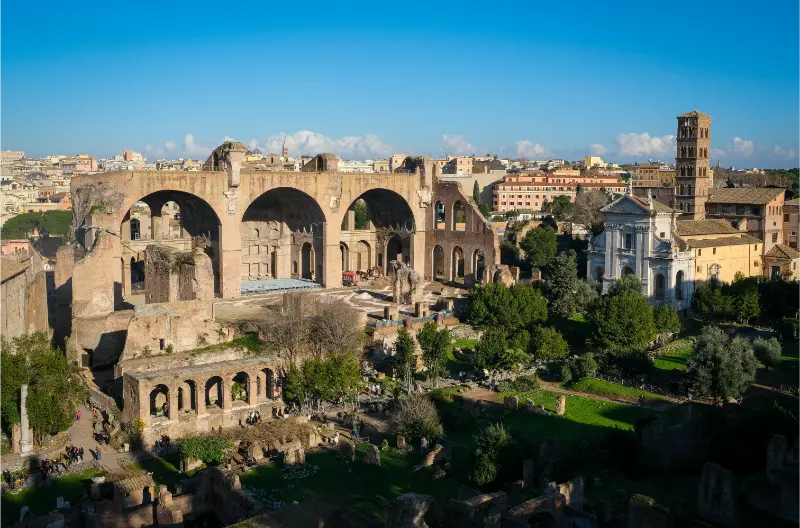
The Palatine offers some of the most useful high-level views in ancient Rome. From terraces above the Forum you can understand the civic valley as a whole, while the side toward the Circus Maximus gives a completely different sense of scale. These viewpoints are valuable not just for photos but for orientation.

Visit the Forum first if you want to recognize monuments from above afterward. Reverse the order if you prefer to begin with an overview and then descend into the details. In hot weather, starting on the hill can be more comfortable before the day becomes intense, but seasonal shade varies along the route.
Tickets and 2026 opening strategy
The official park currently lists the standard Colosseum–Roman Forum–Palatine ticket at €18 full price. It allows one entrance to the Forum–Palatine archaeological area under the ticket conditions, while the Colosseum itself requires a booked time. The Forum Pass SUPER is also €18 and focuses on the archaeological area, Imperial Fora and special sites.
From 29 March to 30 September 2026, the park closes at 19:15 with last admission at 18:15; closing times become earlier in October and winter. The Forum–Palatine area opens at 9:00. Always check current notices because sections of the hill can close temporarily for maintenance, weather or conservation.
How to combine Palatine Hill with the Forum
Do not leave the Palatine for the final 30 minutes of a long ancient-Rome day. By then, heat and fatigue make the slopes feel harder and the palace remains become less meaningful. A better plan is to give the Forum and Palatine a shared two-to-three-hour block, with a short water break between lower and upper levels.
If your Colosseum slot is in the morning, continue into the Forum and climb the Palatine afterward. If the Colosseum is later, visit the Forum–Palatine first as long as the ticket conditions and opening times align. Keep your booked Colosseum entry time in mind because archaeological wandering is easy to underestimate.
Families, accessibility and footwear
The Palatine is more physically demanding than many central Rome attractions. There are slopes, steps, rough paths and long outdoor stretches. Families with young children should prioritize a manageable loop rather than trying to cover every corner. Good footwear matters more here than fashion, especially after rain.
Travelers with reduced mobility should consult the park’s current accessibility information because routes and lifts can change. The hill still offers meaningful experiences even when not every level is accessible, so plan around specific viewpoints and entrances rather than assuming one standard circuit suits everyone.
Mistakes that reduce the experience
The most common mistake is treating the Palatine as empty space between the Forum and an exit. Another is reading every label while standing in direct sun until attention collapses. Pick a few themes — imperial residences, Rome’s foundation story, views — and let those guide the route.
Also avoid entering near closing time just because your ticket technically allows it. The hill deserves daylight, orientation and time to walk without rushing. If you have only 45 minutes left, spend them well in the Forum and return another day rather than turning the Palatine into a sprint.

Frequently asked questions
Is Palatine Hill included with the Colosseum ticket?
Yes. The standard official €18 ticket includes the Colosseum, Roman Forum and Palatine under its validity conditions.
What time does Palatine Hill open?
The official Roman Forum–Palatine archaeological area opens at 9:00.
How long should I spend on the Palatine?
Around 90 minutes to two hours is a useful target for a first visit.
Is the House of Augustus always open?
No. Special sites can have limited access, separate schedules or temporary closures.
Should I visit the Forum or Palatine first?
Either order works. Visit the Forum first for detail then viewpoints, or Palatine first for an overview before descending.
Plan the rest of your Rome trip
Use this article with our Roman Forum guide, Colosseum guide and Circus Maximus guide to understand the entire archaeological landscape.
A practical way to fit this into your itinerary
A balanced ancient-Rome day should leave time for food and rest. The Palatine is not simply another museum room; it is an outdoor landscape. Avoid scheduling it between two distant timed tickets, and keep the period after your visit flexible in case you stay longer than expected.
In cooler months you can spend more time examining palace foundations and viewpoints without heat pressure. In summer, prioritize morning hours, shade and hydration. Rome rewards visitors who adapt the order of attractions to the weather rather than following a rigid online itinerary.
What makes this stop worth your time
What makes the Palatine special is the combination of archaeology and topography. Few places let you stand among imperial residences while looking down at both the civic Forum and the great entertainment zone of the Circus Maximus.
It is also a useful antidote to the idea that ancient Rome was made only of isolated monuments. The Palatine shows a connected urban landscape: residences, ceremonial spaces, gardens, temples, roads and views were designed in relation to one another.
Final planning tips before you go
Before setting out, check the day’s weather, transport conditions and any official notices that could affect access. Rome rewards flexible planning: keep one or two priorities fixed, but avoid filling every hour. Leave enough time to walk between nearby sights, refill water, sit down for a proper break and change the route if crowds or heat make the original plan less enjoyable. For this stop in particular, comfortable footwear and a charged phone are more useful than an over-detailed timetable, because the surrounding streets and viewpoints often become part of the experience.
If you are visiting Rome for the first time, place this experience inside a neighborhood-based itinerary rather than crossing the city only to tick it off. Combine it with the related places linked in this guide, then move on when your attention starts to fade. Repeat visitors can do the opposite: slow down, read more of the interpretation, photograph details and compare the site with other periods of Roman history. That difference in pace is often what turns a famous stop into a memorable one.
It is also worth checking how this stop fits with meal times and the return journey to your accommodation. A central attraction may need no transport at all, while an archaeological or neighborhood visit can involve a longer walk than the map suggests. Save the address of your next destination, keep a backup route, and avoid committing to a distant reservation immediately afterward. A small buffer makes the day more resilient when entrances, church services, roadworks or simple fatigue change the pace.