10 Best Day Trips from Rome: Tivoli, Ostia Antica, Orvieto and More
Rome can fill a week without difficulty, but one of the advantages of staying in the capital is the range of places you can reach for a day: imperial villas, ancient ports, hill towns, volcanic lakes and major cities. The best day trips from Rome depend on whether you want archaeology, gardens, food, scenery or a completely different Italian city.
For a first visit of only three days, stay in Rome. With four or five days, one excursion can add variety. With a week, two are realistic if you still leave time for neighborhoods and the Appian Way.
1. Tivoli: Villa d’Este and Hadrian’s Villa
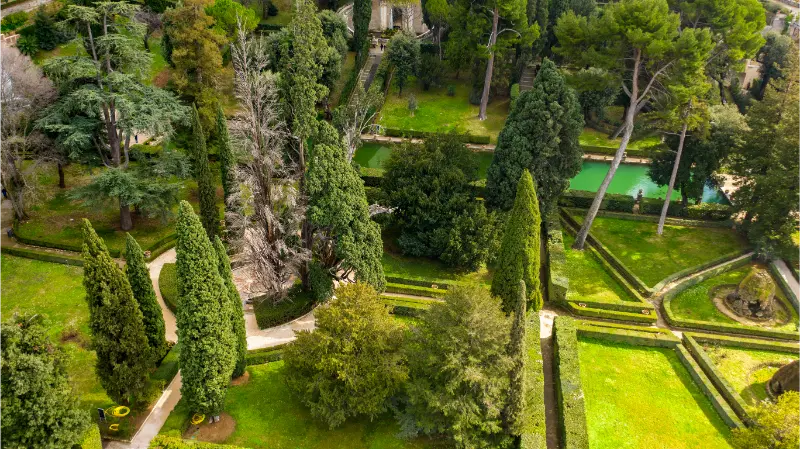
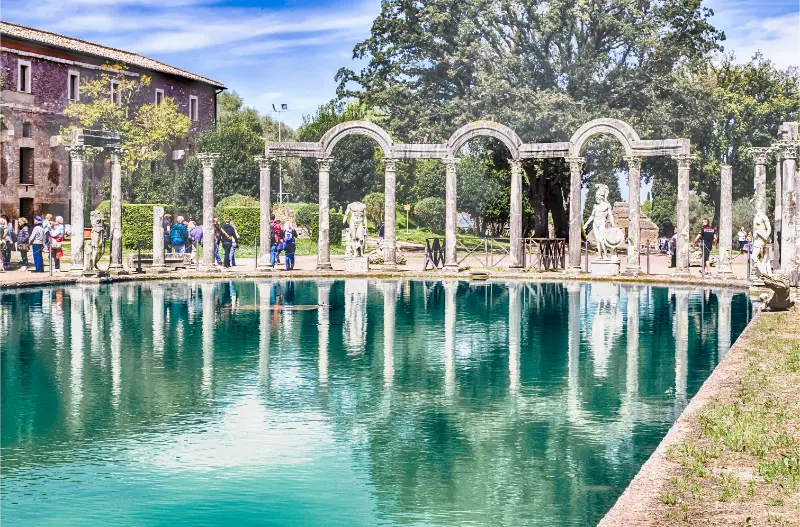
Tivoli is one of the strongest all-round choices because it combines two very different UNESCO sites. Villa d’Este is famous for Renaissance gardens, fountains and water engineering, while Hadrian’s Villa is a vast imperial complex associated with Emperor Hadrian.
The sites are not beside each other, so plan transport between them. The official VILLÆ authority publishes seasonal hours; in 2026 Villa d’Este operates with month-dependent times and a later Monday opening. Verify the official VILLÆ timetable before traveling.
2. Ostia Antica
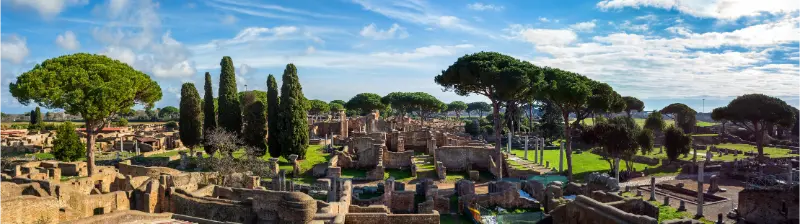
Ostia Antica was Rome’s ancient port city and is one of the best archaeological sites for understanding daily life. Streets, apartment buildings, baths, mosaics, warehouses and a theater make the urban structure easier to visualize than some parts of the Forum.
Allow several hours inside and bring water in warm weather. Check current opening days and transport works before leaving Rome, because rail service can occasionally change.
3. Orvieto
Orvieto sits in Umbria on a volcanic tuff cliff and gives a complete change of scale: a compact historic center, dramatic cathedral façade, medieval lanes and countryside views.
Rail connections make it practical for a day, with a funicular or local connection helping visitors reach the upper town. Leave time for lunch and wandering rather than treating the Duomo as the only stop.
4. Castel Gandolfo and Lake Albano
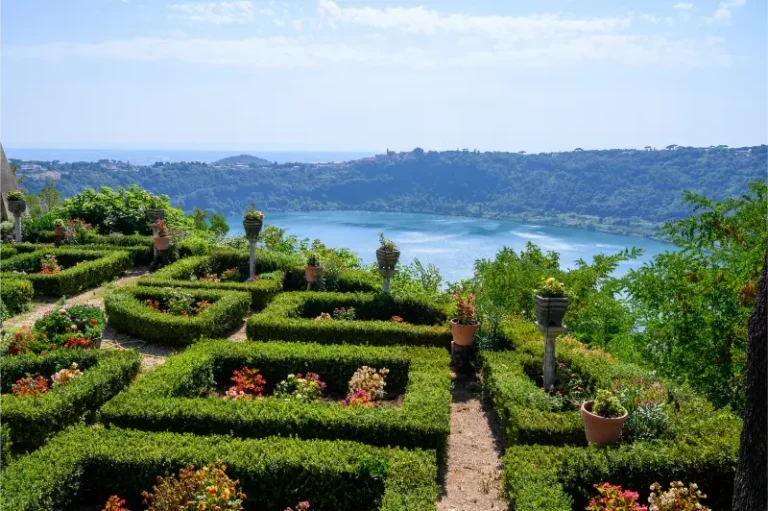
Castel Gandolfo is one of the most attractive towns in the Castelli Romani, set above Lake Albano and associated with the papal summer residence. It combines lake scenery, historic streets and a slower rhythm.
Decide whether your priority is the historic town, papal sites, the lakeside or a combination. Moving between the upper town and lake level can require more time and climbing than the map suggests.
5. Frascati and the Castelli Romani
Frascati is known for wine, villas and an easygoing town center in the Alban Hills. It is an excellent choice for travelers who mainly want lunch, local wine and a relaxed change of pace.
With a car you can connect several Castelli Romani towns; without one, choose one or two places rather than trying to cover the whole region.
6. Naples
High-speed trains make Naples surprisingly realistic. The city offers a dense historic center, exceptional food, major churches and an outstanding archaeological museum. Choose one clear theme rather than trying to see everything.
Book rail early for better fares and leave margin for the return. Avoid combining central Naples and Pompeii in one rushed day unless you have a very structured tour.
7. Florence
Florence is technically easy by high-speed train but makes for a fast-paced day. It is best for travelers who may not have another chance to see the city. Reserve any must-see museum and focus on a compact route.
If your wider Italy trip already includes Florence, use your Rome day for Tivoli, Ostia or Orvieto instead because they provide a more complementary experience.
8. Civita di Bagnoregio
Civita di Bagnoregio is famous for its dramatic position on an eroding tuff hill reached by a pedestrian bridge. Public transport is less straightforward than Tivoli or Orvieto.

It is therefore stronger for a rental-car day or organized combination. The village is small, so take time for the surrounding landscape rather than going only for one photograph.
9. Viterbo
Viterbo offers a medieval center, papal history and a slower Lazio atmosphere. The San Pellegrino quarter is particularly attractive for wandering and feels less internationally touristic than the most famous excursions.
Rail travel is possible but can be slower, so check the timetable for your date. It is a good repeat-visitor choice.
10. Sperlonga
Sperlonga is one of the most attractive coastal options within day-trip range, with whitewashed lanes and beaches. It is strongest from late spring through early autumn, although summer weekends can be busy.
The journey typically requires train plus local connection, so check the return before settling on the beach. A coastal day makes most sense when you have at least five days in Rome.
How to choose and organize the day
Ostia or Hadrian’s Villa suit archaeology lovers; Villa d’Este suits gardens; Orvieto suits a classic hill-town day; Frascati suits food and wine; Castel Gandolfo suits lake scenery; Naples and Florence suit travelers who want another major city.
Use trains where station access is simple, a car where destinations are dispersed, and an organized tour when it solves a real logistics problem. Do not schedule an important Rome attraction for the same evening after a long excursion.
How to choose between these day trips
Choose by travel time and by what your Rome itinerary is missing. If you want ancient history without another full day in the city center, Ostia Antica is the natural choice. For villas, gardens and imperial architecture, Tivoli gives you two world-class sites with a very different atmosphere from central Rome. Orvieto is ideal when you want a compact hill town, cathedral and Umbrian character. Castel Gandolfo and Frascati are slower options for views, food and the Castelli Romani. Naples and Florence are possible because high-speed trains are fast, but they are better thought of as ambitious day trips: both cities deserve longer stays. Civita di Bagnoregio and Sperlonga require more careful transport planning, so they reward travelers willing to organize connections or drive. Viterbo sits somewhere in the middle, with a strong historic center and a less rushed feel. Do not choose based only on a list of famous names; choose the place that adds the most contrast to the days you already have in Rome.
Train, car or guided tour?
Rail is usually the easiest option for Naples, Florence, Orvieto and many trips toward the Castelli Romani. It removes parking stress and allows you to return to Rome without driving after a long sightseeing day. A car becomes more useful when the destination is poorly connected, when you want to combine several small towns, or when the landscape between stops is part of the experience. Remember that historic centers often have restricted-traffic zones, so parking outside the core may be necessary. Guided tours make sense when transport between multiple sites is awkward or when interpretation is a major part of the value. Tivoli can be visited independently, but combining Villa d
‘
Este and Hadrian
‘
s Villa requires attention to local connections. Civita di Bagnoregio can also be simpler on an organized excursion. Always compare the actual itinerary, entry inclusions and time on site rather than buying a tour solely because it promises convenience.
A day-trip checklist
Check the official opening calendar before buying non-refundable transport, especially for museums, villas and archaeological parks that close one day per week or operate seasonal hours. Leave a margin between your planned return and any fixed evening reservation in Rome. Regional trains can be affected by works or strikes, while driving times around Rome are vulnerable to traffic. Carry water, sun protection and footwear appropriate to the destination. Tivoli and Civita involve gradients and steps; Ostia Antica is extensive and exposed; Sperlonga is more enjoyable when beach conditions are good. If a destination interests you enough that you are trying to squeeze five major sights into six hours, consider staying overnight instead. A day trip is successful when it feels like a distinct excursion, not when it becomes a race to collect landmarks.
Day-trip planning checklist
- Check the first realistic outbound connection and the last comfortable return.
- Reserve capacity-controlled villas or museums before leaving Rome.
- Carry water and sun protection for archaeological sites.
- Check Monday closures and seasonal hours; they vary by site.
- Leave 30-60 minutes of margin around important rail connections.
- Choose one destination that adds something Rome itself cannot.
Frequently asked questions
What is the easiest day trip?
Ostia Antica and Orvieto are among the easiest; Tivoli is excellent but requires more planning if you combine both major villas.
Can you visit Pompeii from Rome in a day?
Yes, but it is long. Travelers deeply interested in Pompeii will have a better experience with an overnight around Naples.
Is Florence too far?
High-speed rail makes it possible, but a day trip is only an introduction. An overnight is better when your itinerary allows.
What is best for ancient Rome fans?
Ostia Antica is the strongest complement to the Colosseum because it preserves streets, houses, baths and commercial buildings.
Final planning advice
Before committing to an excursion, ask what it adds that Rome cannot. That question prevents box-ticking and protects enough time for Rome itself. For city planning, use our Rome travel guide.