Crypta Balbi Rome: Archaeology, Urban History and Current Visiting Situation
Crypta Balbi is one of Rome’s most intellectually rewarding archaeological sites because it tells the history of one city block across many centuries rather than freezing the story in the age of emperors. Excavation here revealed how ancient buildings were reused, transformed, abandoned, occupied and built over through late antiquity, the Middle Ages and the modern city.
The practical complication is that Crypta Balbi has been affected by a major restoration and redevelopment project, so ordinary access has changed over time. In 2026 the official National Roman Museum information still requires visitors to check the current status before planning around it. Use this article as historical context, then verify the official Crypta Balbi page immediately before your visit.
| Question | Short answer | What to do |
|---|---|---|
| What is it? | A National Roman Museum site built around urban archaeology | Read the site history before going |
| Is ordinary access guaranteed? | No; restoration has affected access | Check official 2026 notices |
| Why is it special? | It follows one block from antiquity through later centuries | Focus on change and reuse |
| What is nearby? | Jewish Ghetto, Largo Argentina, Piazza Venezia | Build a walking cluster |
What the name Crypta Balbi means
The ancient complex was connected with the theater built by Lucius Cornelius Balbus in 13 BC. The word “crypta” refers to the large portico associated with the theater rather than a Christian crypt. Over time the area became layered with workshops, houses, religious buildings and later urban structures.
That layered character is exactly why archaeologists found it so valuable. Instead of clearing everything away to expose only one prestigious Roman monument, research traced how the same place continued to be used and reinterpreted across centuries.
Why Crypta Balbi changed the way visitors can understand Rome
Many Roman attractions emphasize monumental architecture: temples, baths, amphitheaters and imperial palaces. Crypta Balbi is different because it makes ordinary urban transformation visible. Small objects, production waste, building phases and reused materials can explain how economies and daily life changed after the western Roman Empire.
For travelers who enjoy asking “what happened next?”, this is a crucial idea. Rome did not vanish after antiquity and reappear in the Renaissance. The city remained inhabited, and sites such as Crypta Balbi help reconstruct that continuity.
The National Roman Museum connection
Crypta Balbi is one of the four principal sites of the National Roman Museum, alongside Palazzo Massimo, the Baths of Diocletian and Palazzo Altemps. The four sites approach ancient Rome from different angles: art, epigraphy, sculpture, architecture and urban archaeology.
If Crypta Balbi is not accessible on your dates, do not assume the entire National Roman Museum is closed. Palazzo Massimo, Palazzo Altemps and the Baths of Diocletian are separate venues. Our best museums in Rome guide helps you choose an alternative.
The current restoration and access situation
The museum has been undergoing a large PNRR-supported transformation. Official National Roman Museum material describes work intended to restore and reopen a much larger part of the block, while ordinary visiting information has at times listed Crypta Balbi as temporarily closed or accessible only through special “open construction site” visits.
Because this can change during 2026, do not publish or rely on a fixed weekly schedule without checking the official notice. If access is available, book the specific format requested. If it is closed, use the site as a reason to explore the surrounding historic layers rather than arriving at a locked entrance and losing time.
What archaeologists found here
Excavation documented ancient theater-related structures, later workshops, reused architectural material and evidence of craft production and everyday life. The importance lies less in one spectacular object than in the relationship between finds and the layers where they were discovered.
This is urban archaeology at its clearest: coins, ceramics, glass, metalwork and building debris can help date changes in use. When exhibits reopen or special tours are offered, pay attention to context labels rather than looking only for the most beautiful artifact.
Late antiquity and the Middle Ages
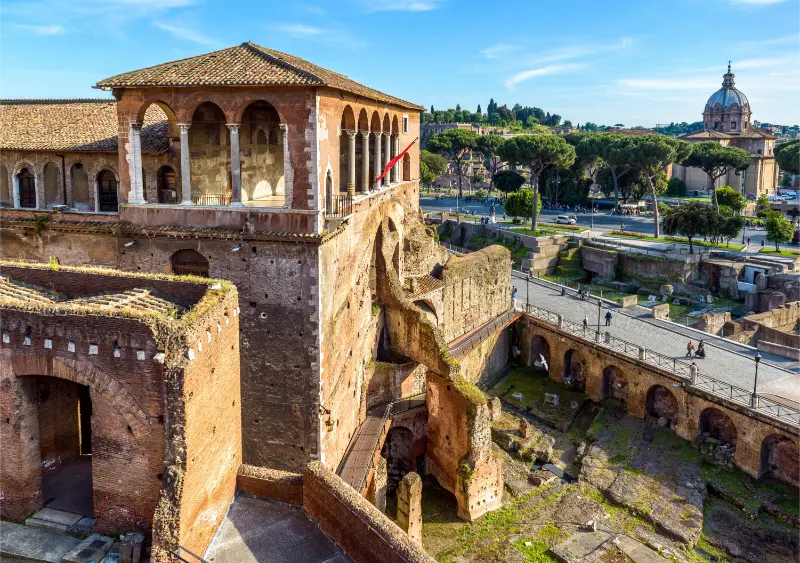
One of the site’s great strengths is the transition out of the classical world. Buildings were subdivided, materials were reused and economic activity shifted. These processes are easy to describe as “decline,” but archaeology shows a more complicated story of adaptation and new forms of urban life.
That perspective improves the rest of Rome. After learning how stone and brick were reused here, you begin noticing ancient columns in medieval churches, fragments in later walls and irregular street lines that preserve vanished structures.
How to combine Crypta Balbi with nearby sights
The location on Via delle Botteghe Oscure sits within an exceptionally dense historical area. Walk toward Largo di Torre Argentina, the Jewish Ghetto, Piazza Mattei or Piazza Venezia. Our Jewish Ghetto guide and Underground Rome guide provide natural companions.
This is one of the rare cases where a temporary closure does not ruin the broader itinerary. The surrounding streets themselves demonstrate the layered city that Crypta Balbi explains academically.
Who will appreciate Crypta Balbi most
Choose it if you enjoy archaeology, urban history, late antiquity, medieval Rome or museum interpretation. It is especially valuable for repeat visitors who already know the Colosseum and Forum and want to understand what happened to the city after the classical monuments lost their original functions.
A first-time visitor with only two days may prefer more iconic sites unless special access to Crypta Balbi strongly interests them. The museum rewards context and curiosity more than instant spectacle.
How much time to allow when access is available
Allow at least ninety minutes for a serious visit and more if a guided “cantiere aperto” format includes excavation areas. Urban archaeology becomes confusing when rushed because the story depends on sequence: one wall belongs to one period, another surface to a later use.
Avoid placing the visit immediately before a timed Colosseum or Vatican reservation across town. Keep the surrounding half-day geographically compact so that delays or changes in access do not damage the rest of your plan.
If Crypta Balbi is closed on your dates
Use the closure as an opportunity to build a “layers of Rome” route. Start around Largo Argentina, move through the Jewish Ghetto, cross toward Teatro di Marcello and the Capitoline area, and finish at an accessible National Roman Museum venue later in the trip. You will still encounter ancient structures reused by later Rome.
Save the official Crypta Balbi page for a future visit. The redevelopment project is precisely the kind of work that can make a second trip more rewarding because new spaces and interpretations may become available after restoration.
How to understand urban archaeology before you visit
Urban archaeology is less about finding a perfectly preserved building than about interpreting overlapping evidence. A wall may be cut by a later drain; a Roman room may become a medieval workshop; decorative marble may be broken up and reused as construction material. The sequence is the story.
Before visiting, imagine your own apartment block being excavated two thousand years from now. Archaeologists would find foundations, repairs, pipes, discarded objects, changes of floor level and evidence of different occupants. Crypta Balbi applies that logic to one of the most historically dense cities in the world.
This mindset turns fragmentary remains into something exciting. Instead of asking “where is the complete monument?”, ask “what changed here, and what evidence tells us?” That single question will also improve visits to the Roman Forum, San Clemente and many underground sites across Rome.
How to fit Crypta Balbi Rome into a Rome itinerary
Plan Crypta Balbi Rome by geography and energy rather than by the number of saved pins. Put the most important visit first, allow realistic time for walking and food, and leave one flexible block in case opening hours, weather or transport change. Rome and Lazio reward travelers who protect depth instead of maximizing quantity.
Save official pages and transport details before leaving the hotel. A screenshot of the return timetable, museum notice or address can prevent a weak signal from becoming a logistical problem. Keep one alternative nearby so a closure does not waste the day.
Finally, decide what success means before you start. One excellent museum, one archaeological complex or one well-paced town can be a complete travel day. There is no need to turn every free hour into another reservation.
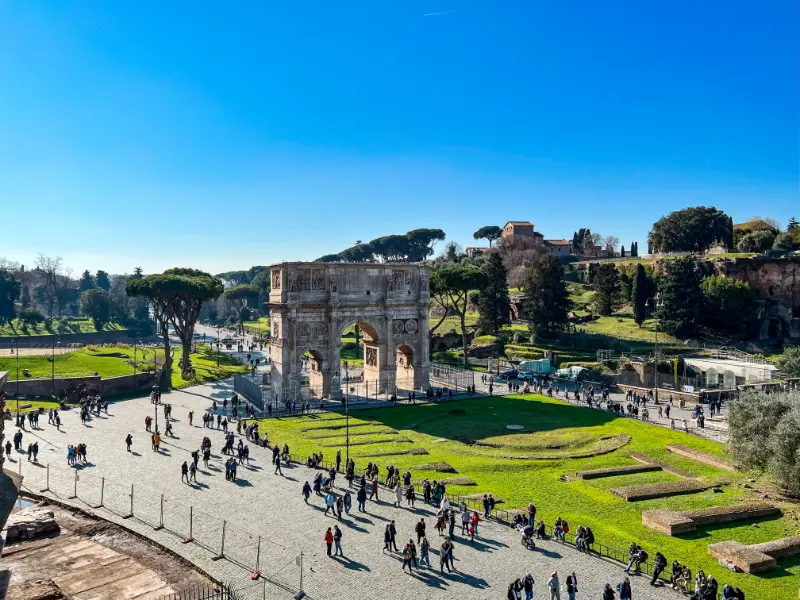
Build in time to notice the setting around the main attraction. A river, defensive wall, station approach, market street or hillside view often explains why a town developed where it did and can make the visit more memorable than an extra rushed interior. This slower observational time also gives you room for weather changes, a delayed bus or an unexpectedly good local stop without losing the structure of the day.
Common mistakes to avoid
- Assuming old blog opening hours are still valid during the restoration project.
- Expecting a single spectacular ruin comparable to the Colosseum.
- Ignoring late antique and medieval layers because they are less visually monumental.
- Confusing “crypta” with a Christian underground crypt.
- Skipping the other National Roman Museum sites if Crypta Balbi is closed.
- Scheduling the visit with no flexibility while access conditions are changing.
Frequently asked questions
Is Crypta Balbi open in 2026?
Access has been affected by major restoration work and may be limited or special-format. Check the official National Roman Museum page for your exact date.
What is Crypta Balbi famous for?
It is famous for urban archaeology that traces the transformation of one Rome city block from antiquity through later periods.
Is it part of the National Roman Museum?
Yes. It is one of the National Roman Museum’s four principal sites.
What can I see nearby if it is closed?
Largo di Torre Argentina, the Jewish Ghetto, Teatro di Marcello and Piazza Venezia are all nearby and fit the same layered-history theme.
Final advice
Crypta Balbi is less about one monument than about how Rome survives by changing. Check the current access situation first; if you can visit, slow down and follow the sequence of layers. If you cannot, keep the site on your list and explore the surrounding historic fabric with the same questions in mind.