Best Bakeries in Rome: Forni, Pizza Bianca, Bread and Sweet Stops
Rome’s bakery culture is one of the easiest ways to eat well without turning every meal into a restaurant reservation. A traditional forno may sell bread, pizza bianca, pizza rossa and baked savory food; a pasticceria focuses more on sweets; a bar may be the better stop for breakfast pastries and coffee. Understanding those differences makes a bakery crawl far more rewarding.
This guide focuses on what to look for and how to order rather than pretending there is one permanent ranking of “the ten best” counters in a city where quality, staff and opening hours can change. Use it together with our Rome food guide and Rome coffee guide to build a day around neighborhoods instead of chasing addresses across town.
| Place type | Look for | Best moment | Typical approach |
|---|---|---|---|
| Forno | Bread, pizza bianca, pizza rossa | Morning to lunch | Order by piece or weight |
| Pasticceria | Cornetti, tarts, pastries | Breakfast or afternoon | Choose at counter, then pay/order as directed |
| Panificio | Bread and simple baked goods | Morning | Good for picnic supplies |
| Pizza al taglio | Tray-baked pizza | Lunch/snack | Choose flavor and amount |
Forno, panificio, pasticceria: know the difference
The words overlap in everyday use, but they point you toward different expectations. A forno is literally an oven and often a practical neighborhood bakery with savory food as important as bread. A panificio is primarily bread-focused. A pasticceria is where cakes, pastries and sweets take center stage. Some businesses combine all three functions.
Do not judge a Roman bakery only by a display full of elaborate desserts. A simple rectangle of pizza rossa, a piece of well-fermented bread or pizza bianca split and filled with mortadella can be more representative of local everyday eating than a photogenic pastry.
Pizza bianca: the essential Roman bakery order
Pizza bianca is a Roman staple: a flat, olive-oil-rich baked dough with a crisp surface and airy interior. It can be eaten plain, used as a snack or sliced and filled. Mortadella is a classic partner, but cheese, cured meats and vegetables also work well depending on the bakery.
Texture matters more than thickness alone. You want a surface with character and an interior that is not dry. Buy a modest piece first if you are comparing bakeries; it is easier to return for more than to carry a large bag of bread through a day of sightseeing.
Pizza rossa and pizza al taglio
Pizza rossa is another deceptively simple test of a bakery: tomato, dough, olive oil and seasoning. It should taste good without requiring a mountain of toppings. Pizza al taglio broadens the idea with trays of different flavors that are cut to size and commonly priced by weight.
If tray pizza is one of your main food goals, our Rome street-food guide explains how it fits alongside supplì and other quick foods. At a busy counter, decide roughly how much you want before your turn so service stays smooth.
Bread to look for in Rome
Roman bread culture includes rustic loaves, rolls and styles influenced by the wider Lazio region. Rather than memorizing a long vocabulary, ask what was baked recently and what the staff recommends for the food you are pairing with it. A loaf for a picnic has different needs from bread you will eat immediately.
Fresh bread is at its best close to the bake. If you are staying in an apartment, buy smaller quantities more often instead of treating bread like a souvenir. This is one of the pleasures of having a neighborhood forno within walking distance.
Sweet bakery stops: maritozzo, crostata and more
Rome has an entire sweet tradition beyond the cornetto. Maritozzo with whipped cream is the famous indulgence, while crostata and seasonal pastries can be easier to carry. For a broader list, see our Roman desserts guide.
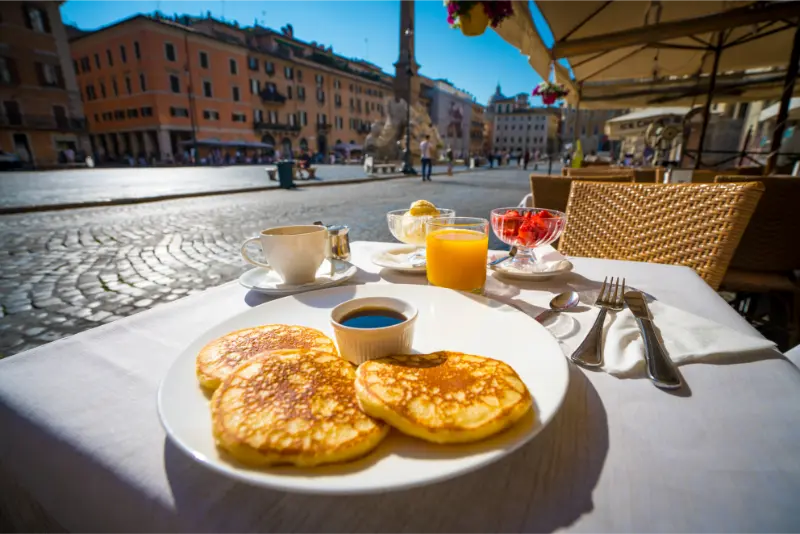
A pasticceria is often best visited when you can actually enjoy the pastry rather than carrying it for hours in heat. Cream-filled sweets deserve particular care in warm weather. If you want to photograph something delicate, take the photo and then eat it; do not turn pastry into luggage.
Breakfast: bakery or coffee bar?
Many Romans start the day at a bar with coffee and a cornetto, while a bakery may be more useful if your breakfast is bread-focused or you want food for later. The best solution is often to combine them in the same neighborhood rather than searching for one business that does everything perfectly.
Our Roman breakfast guide covers counter etiquette, common orders and why an Italian breakfast can feel much lighter than a hotel buffet. If you need a large savory breakfast, plan deliberately instead of expecting every bar to offer it.
How to order at a busy Roman bakery
Watch what other customers do. In some places you order first and pay afterward; in others you pay at the cashier and show a receipt. For pizza sold by weight, indicate the size with your hands or ask for a smaller or larger piece. Staff can then cut and weigh it.
A few Italian words help, but perfect Italian is not necessary. Be ready, be polite and keep the line moving. Pointing is acceptable when a display is clear. The most useful skill is knowing what you want before reaching the front.
Which neighborhoods are good for bakery exploring?
The historic center has famous addresses but also high tourist turnover. Neighborhoods such as Testaccio, Trastevere, Monti and residential areas outside the tight center can make a more natural bakery crawl because you can combine food with daily neighborhood life. Explore our Testaccio guide, Trastevere guide and Monti guide for nearby sights.
Do not cross the city for a loaf if you already have an excellent bakery near your hotel. Rome is at its best when food fits the route. The local forno you discover by smell on the way to a church can become a stronger memory than a famous address reached after two metro changes.
How to build a self-guided bakery crawl
Choose one compact neighborhood and set three targets: one savory bakery item, one sweet item and one bread purchase for later. Add coffee between them, not three full meals. Walking ten to fifteen minutes between stops gives you time to reset your appetite and notice the neighborhood.
Share portions if you are traveling as a couple or family. Bakery food makes tasting easy because many products can be cut into small pieces. Carry napkins and a reusable bag, and sit in a legal public space rather than blocking shop entrances.
Best time of day for bakeries
Morning gives you the broadest sense of a working neighborhood bakery, while late morning into lunch is excellent for pizza and savory food. Some items sell out, and small businesses may close for part of the afternoon or take weekly rest days. Check the specific shop if it is a must-visit.
On Sundays and holidays, patterns can change. If your plan depends on one bakery, confirm opening times the day before. If it does not, simply walk the neighborhood and choose the busiest good-looking alternative.
Budget and portion strategy
Bakery eating can be economical, but buying five small “cheap” items quickly becomes a full meal. Decide whether the stop is breakfast, lunch or tasting. Pizza by weight makes portion control easy once you understand the system.
For families, a bakery can be one of the easiest flexible lunches in Rome because everyone can choose something different and you avoid a long table service. Add fruit and water and you have a practical picnic.
How to judge a bakery beyond social media hype
Look at turnover, crust, aroma and what local customers are buying. A bakery with a constant flow of residents purchasing ordinary bread may tell you more about quality than a display designed around one viral product. Ask what has just come out of the oven when service is not rushed.
Seasonality matters. Pastries and breads connected to holidays may appear only at certain times of year, while summer heat changes what feels appealing. The best bakery experience is often contextual: the right product at the right hour, eaten nearby while it is fresh.
When comparing two bakeries, order the simplest thing both make rather than their most elaborate specialty. Pizza bianca, bread or a basic crostata exposes texture and ingredients more clearly than a heavily filled creation.
Common mistakes to avoid
- Confusing a pasticceria with a bread-focused forno and expecting the same products.
- Buying huge portions at the first stop of a bakery crawl.
- Crossing Rome for a famous address when an excellent local bakery is nearby.
- Forgetting that pizza al taglio is often priced by weight.
- Carrying cream pastries for hours in hot weather.
- Treating bakery food only as a snack instead of using it for a simple picnic or lunch.
Frequently asked questions
What should I try first at a Rome bakery?
Pizza bianca is a classic starting point, followed by pizza rossa or a simple seasonal pastry.
Is pizza al taglio the same as pizza bianca?
No. Pizza bianca is a specific plain Roman flatbread style, while pizza al taglio describes tray pizza cut to size with many possible toppings.
Are Roman bakeries good for breakfast?
Yes, but bars and pasticcerie often have a wider breakfast-pastry and coffee setup. The best choice depends on whether you want savory bread or a sweet cornetto.
Can bakeries work for families?
Very well. Small portions, quick service and easy takeaway make them useful between attractions.
Final advice
Use bakeries to make your Rome days more flexible. Learn the difference between a forno and a pasticceria, taste small portions, and let one neighborhood reveal its own everyday food rhythm instead of turning the experience into a citywide checklist.