
Best Rooftop Bars in Rome: Areas, Views, Reservations and Sunset Tips
A rooftop drink in Rome is less about finding the single highest terrace and more about choosing the right view. Some rooftops face domes and church towers, others look toward the Colosseum or across terracotta roofs, and many belong to hotels with limited tables.
Because venues, access policies and seasonal opening dates change, this guide focuses on the areas and booking strategy that remain useful year after year.
| Area | Typical view | Best moment |
|---|---|---|
| Pantheon/Navona | Domes and historic rooftops | Golden hour |
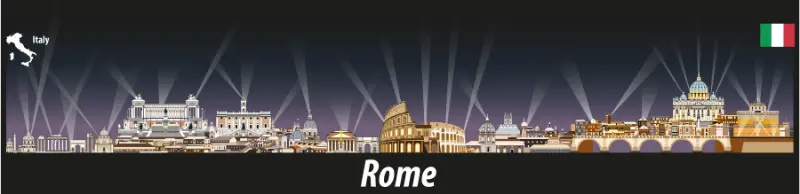
| Monti/Colosseum | Ancient Rome skyline | Sunset to blue hour |
| Spanish Steps | Elegant central rooftops | Aperitivo |
| Prati/Vatican | St. Peter’s dome | Late afternoon |
| Trastevere/Janiculum side | Broad city panorama | Sunset |
Choose the view before the venue
If the Colosseum matters most, focus on Monti and the Celio side. If you want domes and dense rooftops, the Pantheon and Piazza Navona area may be stronger. Compare neighborhoods first with our best views in Rome guide.
A famous rooftop can disappoint if your table faces the wrong direction. When reserving, ask whether view tables are guaranteed or allocated on arrival.
Sunset strategy
Arrive before the exact sunset time so you can settle in, order and see the light change. The best visual period often continues after the sun disappears, when the sky deepens and city lights begin to show.
In summer, sunset is later and terraces can be hot before evening. In winter, some rooftops reduce hours or use enclosed spaces, so verify seasonal operation.
Reservations, minimum spends and dress codes
Hotel rooftops often have limited capacity and may prioritize guests or diners. A reservation can be essential on weekends. Ask about minimum spends, table time limits and whether standing bar access is available.
Dress codes vary from casual-smart to formal. You do not need eveningwear everywhere, but beachwear and sports clothing may be unsuitable at upscale hotel terraces.
Aperitivo or dinner?
A drink-only reservation gives you more flexibility and is usually the best way to experience a terrace without committing to a full meal. Dinner is worthwhile when the restaurant itself is part of the goal, not only the view.
If you prefer a street-level evening, use our Rome nightlife guide or Rome at night guide to build an alternative without rooftop pricing.
Weather and backup plans
Wind, rain and extreme heat can close outdoor sections at short notice. Choose a venue with an indoor bar or keep a nearby piazza route as a backup. Do not build your entire evening around a weather-dependent reservation.
For photography, avoid blocking service areas or leaning equipment over parapets. A phone with a steady hand is often enough for the skyline, especially during blue hour.
How to fit this into a Rome itinerary
This theme works best when it is connected to the part of Rome you are already exploring. Avoid crossing the city several times just to tick off one stop. Build around a neighborhood, then add one of the core sights from 3-day Rome itinerary or Rome at night guide if it is nearby. Rome rewards geographic planning because short distances on a map can become slow journeys once cobblestones, crowds, security lines and public transport are involved.
Keep one flexible block in the day. Weather, strikes, religious ceremonies, maintenance work and private events can change access with little notice. A flexible hour also gives you room for a café stop, a longer meal or an unexpected church or viewpoint. The strongest Rome itineraries leave space for discovery instead of scheduling every twenty minutes.
Best time of day and seasonal considerations
Morning is usually the easiest time for quieter streets and cooler temperatures, while late afternoon and evening create better atmosphere for food, views and neighborhood walks. In summer, reduce exposed walking around midday and carry water. In winter, start outdoor routes earlier because daylight is shorter. Spring and autumn are comfortable but can still bring rain, so have one indoor alternative ready.

Rome changes significantly around major religious holidays, public holidays and large events. Transport can be busier, roads may close and churches can prioritize worship over sightseeing. Before a trip, check official information for any attraction that is essential to your plan and recheck the day before when the visit depends on timed entry.
Practical tips that make the day easier
- Wear comfortable shoes with grip; historic paving is attractive but tiring.
- Carry a refillable bottle and use public drinking fountains where appropriate.
- Keep valuables secure in crowded transport, markets and major squares.
- Do not rely on a single bus connection when you have a timed ticket.
- Reserve only the experiences that genuinely need a fixed time; leave the rest flexible.
- Choose a central base if your trip is short and you want to reduce transport time.
Common mistakes to avoid
- Choosing a rooftop without checking what direction the terrace faces.
- Arriving exactly at sunset and spending the best light checking in.
- Assuming every terrace accepts walk-ins.
- Booking a full dinner only for the view when you would prefer a drink.
- Ignoring weather and seasonal terrace closures.
Frequently asked questions
Do I need a reservation for a rooftop bar in Rome?
For popular hotel rooftops, sunset periods and weekends, a reservation is strongly recommended. Walk-in access is more realistic at quieter times.

Are Rome rooftop bars expensive?
They are usually more expensive than neighborhood bars because you are paying for location, service and the view. Check menus before reserving if budget matters.
What is the best time for a rooftop drink?
Arrive 30–60 minutes before sunset if you want changing light, then stay into blue hour when domes and monuments begin to illuminate.
Budget and value
This experience can be adapted to almost any budget. The biggest savings usually come from planning geographically, using public transport only when it actually saves time, and avoiding convenience purchases beside the most crowded monuments. Spend where it changes the experience: a well-located hotel, a reserved activity you genuinely care about, or a meal that is part of the trip rather than simply the nearest option.
Keep a small contingency in the daily budget for taxis, an unexpected admission fee or a last-minute change of plan. Rome is easier when every decision does not depend on choosing the absolute cheapest option.
Accessibility and slower travel
Rome can be demanding for travelers with reduced mobility because of cobblestones, hills, stairs and older buildings. Before visiting a specific venue, check its current accessibility information rather than relying on general city advice. Elevators and step-free entrances may exist but can be located away from the main entrance.
A slower itinerary is not a lesser itinerary. Reducing the number of stops often improves the experience for everyone, especially families, older travelers and visitors recovering from long flights. Choose fewer places and spend more time in each neighborhood.
Using public transport intelligently
Metro, buses and trams can save energy, but central Rome is still a walking city. Use transport for the long jump between neighborhoods, then explore on foot. Waiting for a bus to move only a few stops is not always faster than walking, especially when traffic is heavy.
Keep a buffer before timed tickets. A route that looks simple in a journey planner can be affected by traffic, demonstrations, road works or service changes. For airport and train connections, use even more margin.
Where to stay for this kind of trip
A central base reduces friction if this theme is important to you. The historic center, Monti, Prati and Trastevere each offer different advantages, so compare them with our where to stay in Rome guide.
Do not choose a hotel only by straight-line distance. Check the actual walking route, nearest useful transport and whether returning late involves steep streets or isolated stretches.
Building a balanced day
A useful rule in Rome is to combine one high-focus activity with one low-pressure activity. A museum, guided visit or long specialty experience demands concentration; a park, neighborhood walk or leisurely food stop gives your attention a break. Alternating the two makes a long sightseeing day feel easier and also gives you options if a reservation changes.
Do not measure a Rome day by the number of pins completed on a map. Travel time, security, heat and meal breaks are part of the experience. Two memorable places explored properly are often more valuable than six rushed stops seen mainly from the pavement.
Photography and responsible travel
Take photographs without blocking doorways, narrow pavements or service staff. Tripods and professional equipment may be restricted in museums, churches and private venues, so check rules before carrying heavy gear. In crowded places, step aside before stopping suddenly for a photo.
Respect residential neighborhoods as places where people live. Keep voices down late at night, do not sit on private steps, and avoid leaving cups, bottles or food packaging behind. Small habits make specialized itineraries more enjoyable for visitors and less disruptive for residents.
Final advice
Treat this as a way to experience Rome more deeply, not as another checklist. Choose a few strong stops, connect them logically, confirm anything time-sensitive and leave space for the city itself. That balance usually produces a better day than trying to maximize the number of places visited.