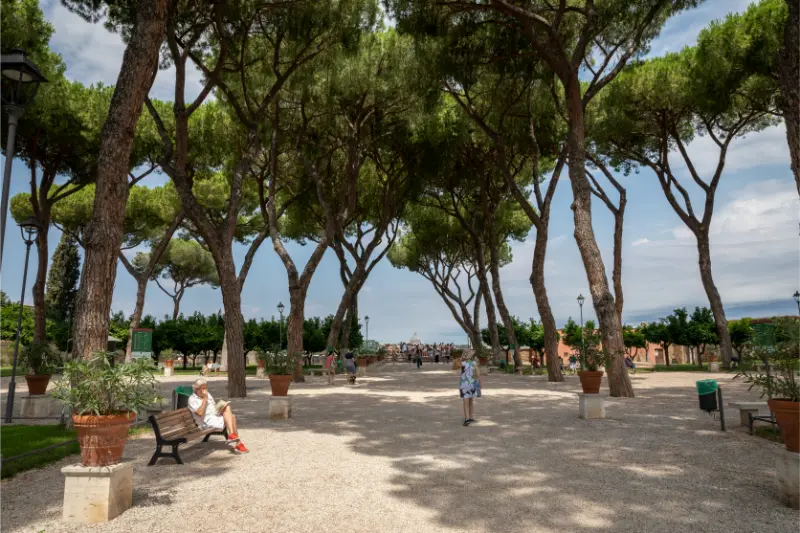
Santi Bonifacio e Alessio Rome: Aventine Basilica, Crypt and Visiting Guide
The Basilica of Santi Bonifacio e Alessio is one of the Aventine’s most rewarding quiet churches. Its medieval courtyard, Romanesque bell tower, crypt and unusual devotional objects provide a strong contrast with the nearby panoramic gardens and the better-known Santa Sabina.
The church is especially memorable because of the legend of Saint Alexius. A preserved wooden staircase is presented as the place beneath which he lived anonymously after returning to his wealthy Roman family, turning architecture itself into part of the devotional story.
| Planning point | Useful detail |
|---|---|
| Location | Piazza di Sant’Alessio, 23, on the Aventine Hill |
| Access | Turismo Roma currently lists daily split opening hours, with longer afternoon hours in summer and earlier closing in winter; schedules can change, so confirm before visiting. |
| Suggested time | 50–75 minutes |
| Best for | medieval Rome, saints’ legends, Aventine walks, quiet churches and panoramic hill itineraries |
Why this place is worth adding to your Rome itinerary
Santi Bonifacio e Alessio earns its place in an itinerary because it adds context rather than just another photo stop. Rome can become exhausting when every hour is built around a headline attraction; a focused museum, church or cultural complex gives you time to understand one theme properly and often reveals a side of the city that the major monuments cannot show.
The best strategy is to place the visit inside a compact neighborhood route. Walking between related sites makes the history easier to understand and reduces time lost to traffic, transfers and long cross-city journeys.
History and context
The basilica has early Christian roots and was originally associated primarily with Saint Boniface. By the late first millennium the cult of Saint Alexius had become central, and the church’s dedication expanded accordingly.
A major rebuilding in the early thirteenth century shaped important medieval features, including the crypt and bell tower. The complex became part of a wider monastic landscape on the Aventine.
Substantial eighteenth-century renovation altered the interior before the Jubilee of 1750, while nineteenth-century work introduced further changes. The result is a layered building in which medieval, Baroque and later elements coexist.
What survives today is the result of several historical phases rather than one frozen moment. That layered character is central to Rome: buildings change function, collections move, religious practices evolve and modern institutions reinterpret older spaces. Reading those layers is more rewarding than searching for a single ‘original’ appearance.
What to see
The medieval courtyard and bell tower
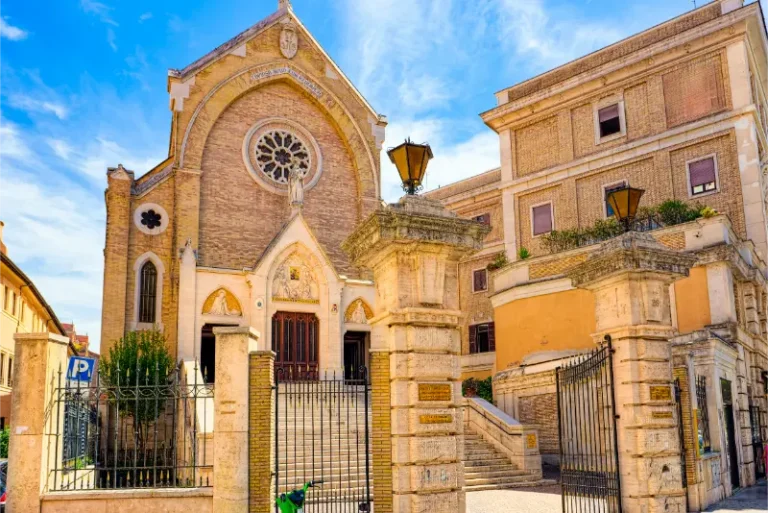
Entry through the courtyard creates a strong sense of separation from the surrounding city. The Romanesque bell tower rises beside later architectural elements and immediately establishes the basilica’s medieval identity.
Pause in the courtyard before entering. It is one of the best places to understand the church as a monastic complex rather than merely a decorated interior.
The staircase of Saint Alexius
Inside, a wooden staircase is preserved in an elaborate display and linked by tradition to the story that Alexius lived beneath the stairs of his family home without being recognized.
Whether approached devotionally or historically, the object is a striking example of how saints’ legends can become embedded in the physical fabric of a church.
The Romanesque crypt
The crypt preserves relics and medieval atmosphere, including traditions connected with Saint Thomas Becket.
If the crypt is accessible, give it time. Changes in floor level, lighting and scale make it feel very different from the renovated upper church and help reveal the building’s chronological layers.
The Aventine panorama and neighborhood
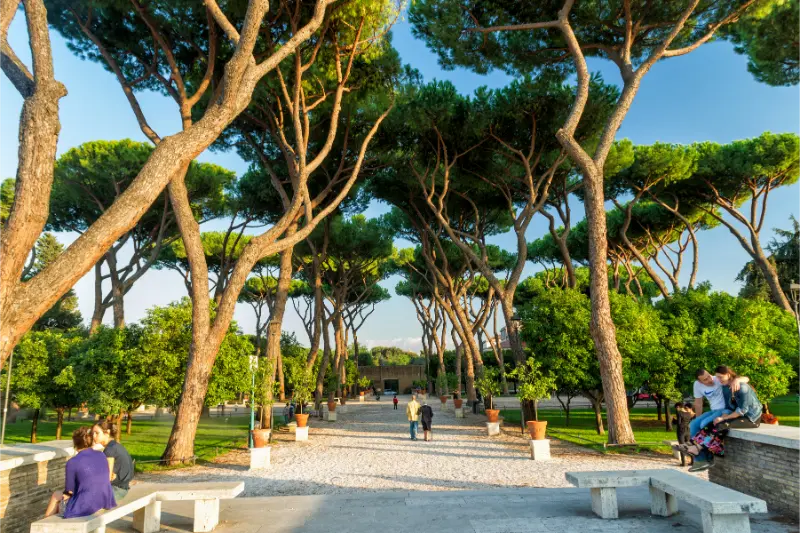
The basilica stands beside some of the Aventine’s best-known gardens and viewpoints, making it easy to integrate into a scenic walk.
Do not visit only for the interior. The surrounding hill, Santa Sabina and the nearby garden are part of the same experience and explain why this monastic district remains so attractive.
How to plan your visit
Santi Bonifacio e Alessio is an active religious site, so sightseeing access can pause for Masses, ceremonies, funerals, maintenance or community activity. Check the official information shortly before leaving and avoid building an inflexible schedule around a church opening time copied months earlier.
Dress and behave for worship: shoulders and knees should be covered, hats normally removed, conversations kept quiet and photography rules respected. If a service begins, move away from the liturgical area or return later.
A little preparation helps. Choose two or three details to look for before entering, then give yourself time to notice the architecture and devotional use of the building instead of treating every chapel as a checklist.
For most travelers, 50–75 minutes is realistic. Leave a modest buffer before your next reservation so a queue, service, security check or temporary closure does not create stress.
Getting there and moving around
The location is Piazza di Sant’Alessio, 23, on the Aventine Hill. In central Rome, walking is often the most reliable final connection. If you use public transport, check the live route on the day because diversions, traffic and strikes can affect buses and trams.
Save the address and one nearby landmark offline. Rome’s historic streets can be confusing even when two places are geographically close, and a short wrong turn can add unnecessary stairs or busy-road crossings.
A practical nearby itinerary
Combine Santi Bonifacio e Alessio with Santa Sabina, the Orange Garden and the Knights of Malta keyhole. Continue downhill toward Circus Maximus or across the Little Aventine toward San Saba if you want a longer walk.
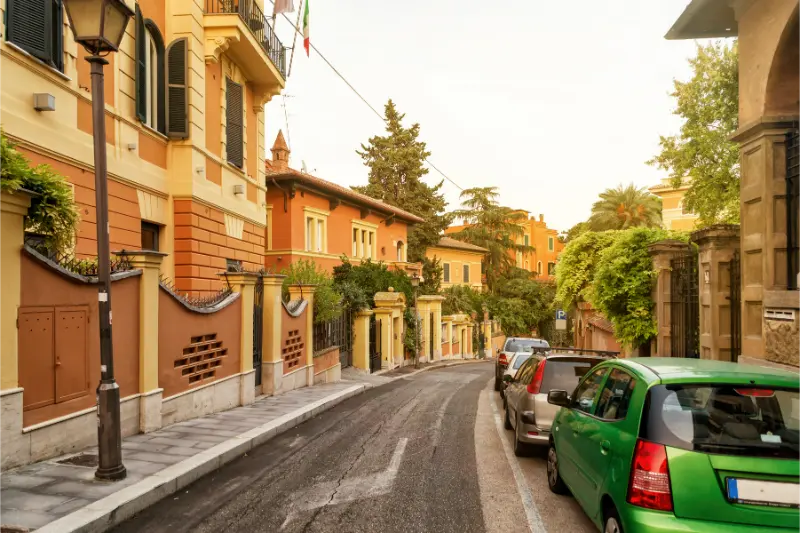
Useful MyRomeTrip guides for the same area are Aventine Hill, Santa Sabina, Circus Maximus and Santa Prisca. Keeping these stops together creates a more coherent day and reduces unnecessary transport.
Practical tips before you go
- Check the official access information on the day or the evening before your visit.
- Wear comfortable shoes because cobblestones, stairs and uneven surfaces are common even in central Rome.
- Keep valuables secure on crowded transport and in busy tourist corridors.
- Carry water in warm weather and use fountains to refill a reusable bottle where appropriate.
- Avoid stacking several timed reservations with no buffer between them.
- Internal links on MyRomeTrip open in the same tab so you can build a compact route without losing your place.
For the latest access details, use the official or municipal visitor information. Opening hours and temporary restrictions are the details most likely to change.
Where to stay for this part of Rome
A central base is usually more valuable than choosing a hotel beside one individual attraction. Before booking, test the real walking route to the nearest useful metro, tram or bus connection and think about where you expect to spend your evenings.
For a first visit, areas around the historic center, Monti, Prati, Trastevere or Termini can all work depending on budget and priorities. Repeat visitors may prefer to stay closer to the specific neighborhood cluster they plan to explore.
Who will enjoy this stop most?
This stop is especially suitable for travelers interested in medieval rome, saints’ legends, aventine walks, quiet churches and panoramic hill itineraries. It is also useful for repeat visitors who want to move beyond Rome’s essential monuments without sacrificing historical depth.
If you only have one or two days in Rome, protect time for your personal must-sees first. Add this stop when it falls naturally on the route rather than crossing the city simply to collect another attraction.
Frequently asked questions
Is the basilica free to enter?
Ordinary church entry is generally free, subject to worship, private ceremonies and temporary closures.

What is the staircase of Saint Alexius?
Tradition identifies it with the place beneath which Saint Alexius lived anonymously after returning to his family home.
Can I visit the crypt?
Access can depend on current church arrangements. Ask on site and respect any restricted areas.
How long should I spend?
Around 50 to 75 minutes is comfortable, especially if you also explore the courtyard and surrounding Aventine area.
Final advice
Santi Bonifacio e Alessio is most rewarding when you arrive with one or two historical questions rather than a long checklist. Notice how the site relates to its neighborhood, which parts belong to different periods and how people still use the space today.
Keep the rest of the itinerary geographically simple. A strong cluster of nearby places, a relaxed meal and enough time to walk usually produces a better day in Rome than racing between attractions on opposite sides of the city.
How this stop changes the way you see Rome
A visit to Santi Bonifacio e Alessio adds value because it changes the scale of the city. After a major monument, a smaller institution or church encourages you to notice street levels, materials, local memory, changing uses and the way historical buildings still function inside ordinary neighborhoods. Those details explain why Rome is not simply an archaeological park but a living city built through continuous adaptation.
Use the stop as a reference point for the rest of the day. Compare crowd levels, architecture and urban space with the next attraction, and notice how quickly the character of Rome changes within a ten-minute walk. This type of comparison is one of the easiest ways to turn a list of sights into a coherent travel experience.
If you are traveling with companions who have different interests, agree on one shared detail to look for—an architectural feature, a historical object, a viewpoint or a story connected with the site. A simple visual goal often keeps a specialist visit engaging for everyone without forcing the group through a long lecture.