Basilica Sotterranea di Porta Maggiore Rome: Underground Mystery and Visiting Guide
Hidden beneath the busy rail approaches near Porta Maggiore is one of Rome’s strangest ancient interiors. The Basilica Sotterranea di Porta Maggiore is not a Christian basilica in the ordinary sense, but a first-century underground hall whose white stucco decoration is filled with mythological, ritual and symbolic scenes. Its purpose is still debated, which is exactly why the site feels so different from Rome’s more familiar temples and baths.
This is a specialist visit rather than a casual walk-in attraction. Access is limited and normally tied to organized openings or guided visits, so planning matters. If you enjoy archaeology, ancient religion or places that still leave room for interpretation, it can become one of the most memorable underground experiences in the city.
Quick facts
| Location | Near Porta Maggiore | Eastern edge of the historic center |
| Date | 1st century AD | Early Imperial period |
| Best for | Archaeology and ancient religion | Limited-access underground site |
| Access | Restricted/organized visits | Check current calendar before going |
Why it is worth visiting
Rome has many underground spaces, but few create this combination of architectural precision and unresolved meaning. The three-aisled plan resembles a basilica, yet the building predates Christianity’s legal public architecture by centuries. Its stucco panels show mythological figures, ritual scenes and motifs that have encouraged interpretations ranging from funerary use to philosophical or mystery-cult associations.
The site also changes the way you think about Roman construction. Instead of seeing ruins open to the sky, you enter an intentionally enclosed environment where light, proportion and decoration were controlled. That intimacy makes the surviving stuccoes easier to read as a visual program rather than as isolated museum objects.
Discovery, date and the mystery of its purpose
The underground complex dates to the early Imperial age and was discovered in the twentieth century during works connected with the railway area. Its plan includes a vestibule and a rectangular hall divided into three naves by rows of pillars. Because the architectural form resembles later basilicas, the modern name can be misleading: it does not mean that the building was created as a Christian church.
Scholars have long debated the function of the space. The refined stucco decoration and symbolic subjects suggest a private environment with ritual or intellectual meaning, and the site is often discussed in connection with Neopythagorean ideas. That interpretation is influential but should not be treated as a simple solved fact. The most interesting way to visit is to notice how much evidence survives while accepting how much remains uncertain.
What the underground hall looks like
The main hall is compact compared with imperial baths or palace complexes, yet its proportions create a surprisingly monumental effect. Rows of supports divide the interior into naves, directing the eye toward the end of the space. The whiteness of the stucco once made the relief decoration stand out through subtle shadows rather than strong color.
Look closely at the relationship between architecture and imagery. The decoration is not simply a border around empty walls; small mythological and symbolic scenes appear across the vaults and surfaces, encouraging a slow reading of the room. A guide is especially valuable because many subjects are easy to overlook in the low light.
The stucco decoration
The reliefs include figures drawn from Greek and Roman myth, winged beings, ritual scenes, animals and decorative motifs. The famous image often associated with Sappho’s leap from the Leucadian cliff is only one part of a much broader program. The scenes have been interpreted through ideas of death, purification, the soul and initiation.
Avoid expecting the visual impact of a brightly painted Pompeian room. The power here is quieter. Fine white stucco depends on line, texture and shadow, and conservation conditions can limit lighting. Give your eyes time to adjust and focus on a few panels rather than trying to identify every figure at once.
Why the term “basilica” can be confusing
In Roman architecture, a basilica is fundamentally a building form, not automatically a Christian church. Public basilicas served civic and legal functions, while the underground structure at Porta Maggiore uses a basilican arrangement on a much smaller and more private scale. Its existence is an important reminder that early Christians later adopted and transformed an architectural vocabulary that already existed.
Understanding this distinction prevents one of the most common visitor misconceptions. The site is fascinating precisely because it belongs to a pre-Christian world of elite culture and ritual experimentation, even though its spatial form looks familiar to anyone who has entered a church.
Porta Maggiore and the surrounding archaeological landscape
After the underground visit, spend time around Porta Maggiore itself. The monumental gate incorporates the arches of ancient aqueducts and sits in one of Rome’s most infrastructure-rich archaeological zones. It is a good companion to our Rome for history lovers guide because it shows the engineering systems that sustained the ancient city.
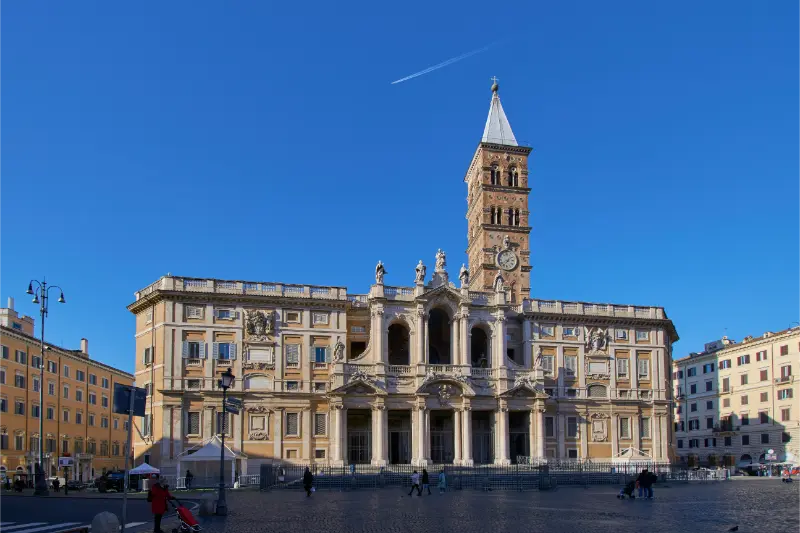
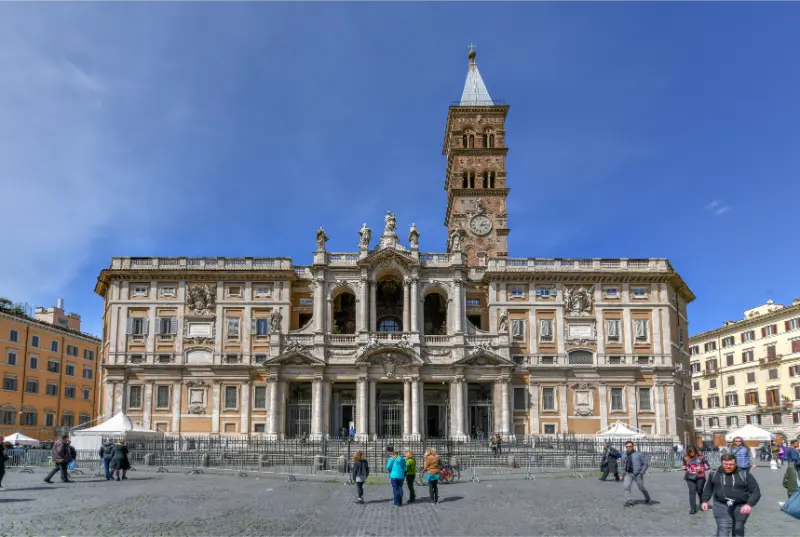
The nearby Esquilino is also useful for understanding modern Rome beyond the postcard center. Combine the visit with the Esquilino neighborhood, Santa Maria Maggiore or a walk toward San Lorenzo if you want a full half day away from the Trevi-Pantheon corridor.
Planning your visit
Do not travel to the site assuming you can buy a ticket at a normal museum desk. Access arrangements are more limited than at major attractions and may depend on specific guided-visit dates. Confirm the meeting point, language and entry conditions when you book.
Because the complex is underground and conservation-sensitive, visitor numbers and movement can be controlled. Arrive early, follow instructions and avoid bringing bulky bags. If you are claustrophobic or have mobility concerns, ask the organizer about stairs, confined spaces and the exact route before paying.
Nearby places to combine with it
- Esquilino for markets, multicultural food and a broader neighborhood walk
- Santa Maria Maggiore for one of Rome’s great basilicas
- Rome for architecture lovers for more unusual buildings and layers
- Rome for history lovers for archaeology-focused itinerary ideas
How to fit it into a Rome itinerary
Basilica Sotterranea di Porta Maggiore works best as a focused stop rather than as the only reason to cross the city. Build it into a neighborhood day so that travel time becomes part of the sightseeing instead of an interruption. The most efficient plan is to pair it with two or three nearby places that share the same area or theme, then leave enough margin for a coffee, a church that catches your eye, or a temporary closure that changes the order of the day.
For a first trip, avoid stacking too many timed entrances around Basilica Sotterranea di Porta Maggiore. Rome rewards walking between major sights, but queues, security checks, heat and uneven pavements make rigid schedules fragile. If you have a fixed booking here, keep the hour before and after relatively light. That approach is especially useful in summer and on weekends, when even short central routes can take longer than expected.
Who will enjoy this place most?
This stop is strongest for archaeology enthusiasts, travelers fascinated by ancient religions and anyone who enjoys limited-access underground sites. It is also a good choice for repeat visitors who already know Rome’s headline monuments and want to understand another layer of the city. Travelers with only one or two days should compare it against their highest priorities, while visitors staying four days or longer can usually include it without sacrificing the Colosseum, Vatican Museums or the historic-center essentials.
Families should judge the visit by attention span rather than by prestige. A place can be fascinating for adults yet feel abstract to younger children if there is little open space or hands-on interpretation. Couples and solo travelers, by contrast, often appreciate the slower pace and the chance to spend time on details that disappear in the busiest attractions.
Photography, clothing and practical comfort
Bring comfortable shoes even if the visit itself is indoors or compact. Rome’s surrounding streets are usually part of the experience, and stone paving can be tiring after several hours. In summer, carry water and plan shaded breaks; in winter, remember that underground or historic interiors can feel cool even when the street is mild.
Photography rules can change by exhibition, restoration phase or event. Do not assume that flash, tripods or commercial equipment are permitted. If photography matters to you, check the current rules before arrival and be ready to enjoy the visit without a camera. For churches or religious spaces nearby, keep shoulders and knees reasonably covered.
Common mistakes to avoid
The first mistake is arriving with old opening information. Smaller Roman sites often have more variable access than the Colosseum or Vatican Museums, so a blog post from several years ago can be misleading. The second is treating the stop as isolated from its neighborhood. The streets around Basilica Sotterranea di Porta Maggiore usually add context and make the trip feel worthwhile even if the interior visit is shorter than expected.
Another mistake is overplanning the same day. A useful Rome itinerary has anchors and flexible spaces, not a reservation every hour. Leave time to walk, eat and change plans. If an entrance is unexpectedly unavailable, switch to the nearby alternatives listed in this guide rather than losing half a day trying to force the original schedule.
A simple half-day plan
- Confirm and attend the scheduled underground visit near Porta Maggiore.
- Walk around Porta Maggiore to study the aqueduct arches and monumental gate.
- Continue toward Esquilino and Santa Maria Maggiore.
- Finish with lunch or an aperitivo in Esquilino or Monti rather than returning immediately to the tourist core.
Official information and last checks
Access changes, so verify the current visit calendar before traveling. A current organizer page is Visite Roma Sotterranea; also check notices from Rome’s archaeological authorities when available.
Final advice
Treat this as a rare archaeological appointment, not as a standard museum. The experience is strongest when you arrive knowing that the mystery is part of the value: the building is beautifully preserved, but its original purpose is not completely settled.
If your schedule matches an available visit, it is an excellent choice for a second or third trip to Rome, or for a first-time visitor with a strong interest in underground archaeology. Pair it with Porta Maggiore and Esquilino so the journey becomes a coherent exploration of eastern Rome rather than a single isolated stop.