Sant’Onofrio al Gianicolo Rome: Tasso, Renaissance Art and Visiting Guide
Sant’Onofrio al Gianicolo sits at the top of a steep lane on the Janiculum, removed from the main tourist flow but close to some of Rome’s finest views. The church is known above all for its connection with the poet Torquato Tasso, who died in the adjoining monastery in 1595, but the site also rewards visitors with Renaissance architecture, frescoes and an unusually tranquil setting.
This is not a monument to rush through between timed tickets. Its appeal comes from atmosphere: the grassy forecourt, portico, hilltop light, literary memory and the gradual transition from the Vatican-Trastevere area to the Janiculum.
| Planning point | Useful detail |
|---|---|
| Location | Salita di Sant’Onofrio, on the Janiculum above the Vatican and Trastevere |
| Access | Sant’Onofrio is an active religious complex. Access to the church, portico, cloister or rooms connected with Torquato Tasso may not always coincide, so check current information before making it the sole purpose of a trip. |
| Suggested time | 45–75 minutes, depending on access to adjoining spaces |
| Best for | Renaissance Rome, Torquato Tasso, literary history, quiet Janiculum walks and travelers seeking lesser-known churches |
Why this place is worth adding to your Rome itinerary
Sant’Onofrio al Gianicolo is most rewarding when it fits the geography of your day. Rome becomes tiring when every attraction requires a cross-city transfer, but this stop sits within a cluster of places that share history, streets and landscape. That makes it useful both for first-time visitors who want a richer route and repeat visitors looking beyond the most photographed monuments.
The strongest reason to visit is context. Major Roman sights can sometimes feel isolated when they are seen only through ticket lines and headline artworks. Smaller churches, archaeological fragments, fountains and parks reveal how the city actually developed: buildings were rebuilt, materials were reused, neighborhoods changed function and older structures remained embedded in everyday life.
History and context
The complex grew from a hermitage founded in the early fifteenth century by Nicola da Forca Palena. Construction of the church began in 1439, and later additions gradually created the ensemble visible today.
The monastery became famous through Torquato Tasso, author of Jerusalem Delivered, who came here near the end of his life and died shortly before he was expected to receive a ceremonial poetic crown. He was buried in the church, turning Sant’Onofrio into an important destination for later writers and admirers.
Decoration continued through the Renaissance and early Baroque periods. The portico and cloister preserve frescoes and memorials, while the complex’s secluded position helped maintain a sense of retreat even as the surrounding Janiculum became a celebrated panoramic promenade.
The visible monument therefore belongs to more than one period. That is typical of Rome and worth embracing. Instead of searching for a single ‘original’ appearance, notice what each phase added and why later communities chose to preserve, alter or reinterpret what came before.
What to see
The forecourt and Renaissance portico
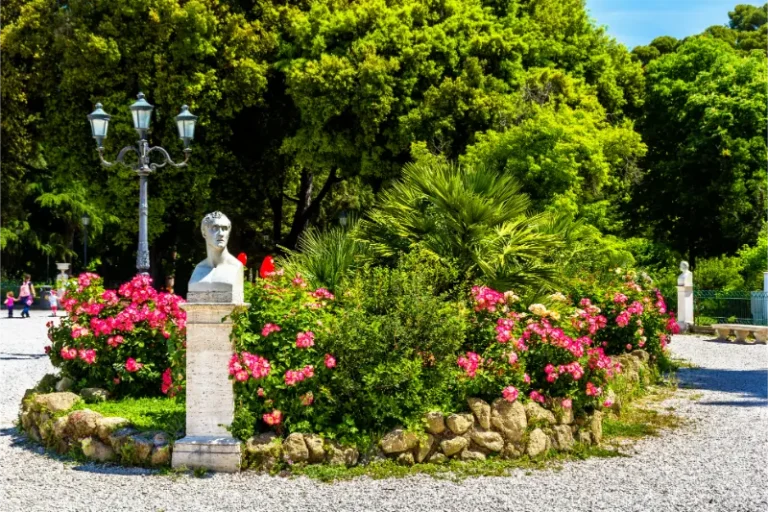
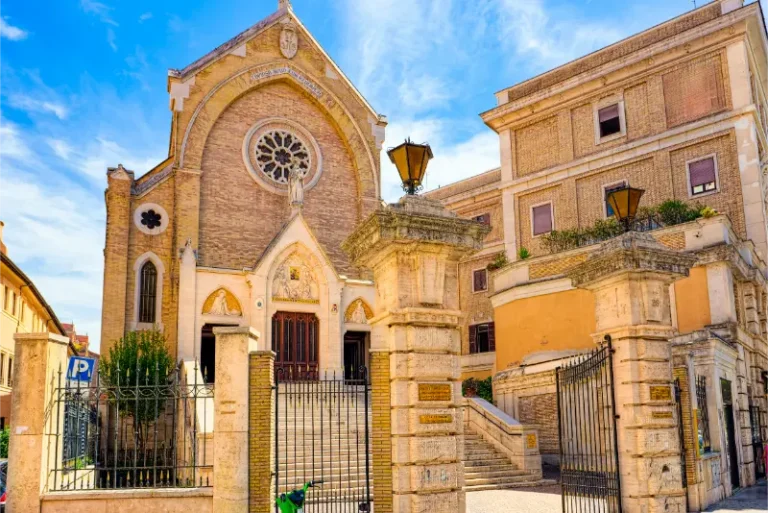
The approach ends in a small green forecourt that immediately changes the pace of the visit. A Renaissance portico frames the church and preserves painted decoration associated with artists active in early-seventeenth-century Rome.
Spend time outside before entering. The setting explains the original eremitic character better than a quick interior visit and makes the transition from busy lower streets especially noticeable.
Torquato Tasso’s tomb and memory
Tasso’s association with Sant’Onofrio made the monastery a literary pilgrimage site. His tomb is inside the church, while spaces in the complex preserve the memory of his final days.
Even if literary history is not your main interest, the story helps explain why generations of travelers came here. Sant’Onofrio belongs to the Romantic and Grand Tour map of Rome as much as to the city’s religious geography.
Frescoes, chapels and quiet details
The church contains works from several periods, and the smaller scale makes it easier to study individual chapels, memorials and painted surfaces than in a huge basilica.
Look for transitions between Renaissance restraint and later decorative additions. The interest lies in accumulation rather than one overwhelming masterpiece.
The Janiculum setting
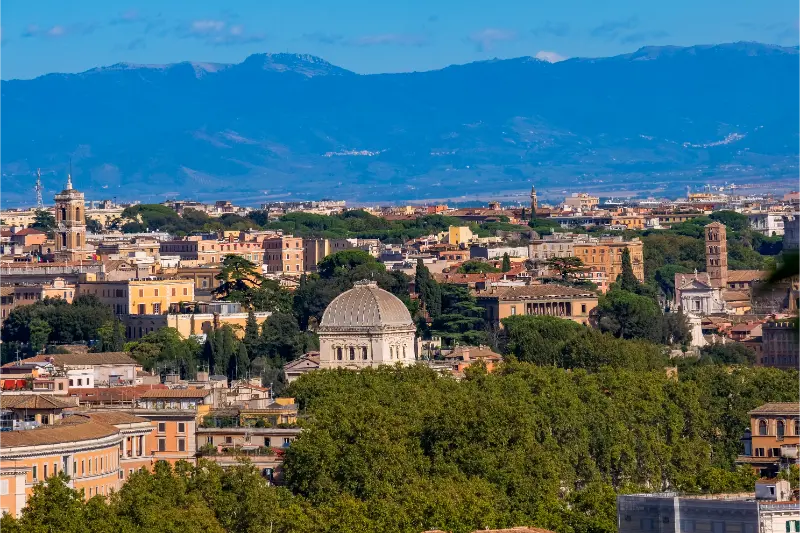
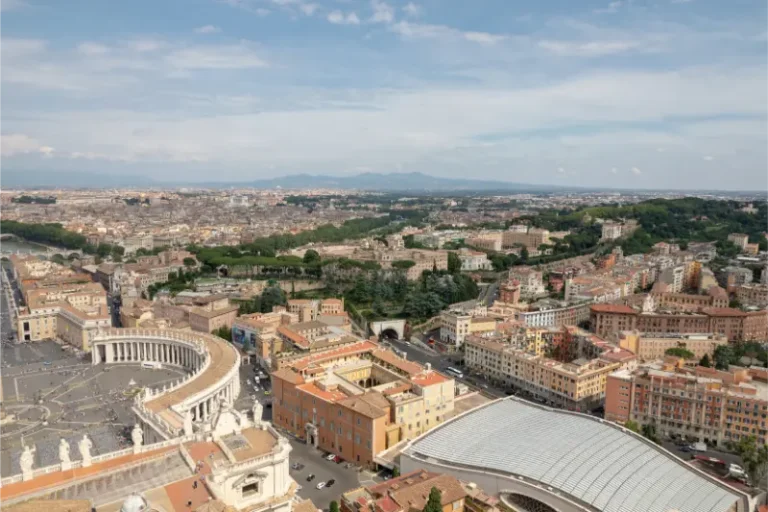
Sant’Onofrio sits on the slope of the Janiculum, close to the Vatican side of the hill. The surrounding walk opens toward viewpoints, memorials and gardens while remaining quieter than the busiest central routes.
Use the church as the start or finish of a Janiculum walk. Approaching on foot gives the hill a narrative structure and makes the change in elevation part of the experience.
How to plan your visit
Because Sant’Onofrio al Gianicolo is an active religious or cultural site rather than a purpose-built tourist attraction, access can change for services, maintenance, ceremonies and special events. Check the official source shortly before visiting and avoid placing an inflexible timed reservation immediately afterward.
Dress and behave for the setting. In active churches, shoulders and knees should be covered, hats normally removed and conversations kept quiet. Photography rules can change from chapel to chapel, so use a silent camera and avoid flash unless signs or staff clearly permit it.
A short amount of preparation improves the visit enormously. Read the basic historical sequence before entering, then choose two or three details to look for rather than trying to memorize every artist and date. Rome’s layered buildings are easier to understand when you compare periods instead of treating the interior as a checklist.
For most travelers, 45–75 minutes, depending on access to adjoining spaces is a realistic amount of time. The goal is not to stretch the visit artificially but to leave enough margin to look closely, deal with a temporary closure or simply sit for a few minutes without watching the clock.
Getting there and moving around
The location is Salita di Sant’Onofrio, on the Janiculum above the Vatican and Trastevere. In central Rome, walking is often the most useful final connection because buses can be affected by traffic and street diversions. If you use public transport, check the current route on the day rather than relying on an old screenshot.

If the doors are closed when you arrive, do not wait indefinitely unless you have confirmed a reopening time. Use the nearby itinerary below and return later if practical. This flexible approach is far less frustrating than building a full day around the assumption that every active church will operate like a museum.
A practical nearby itinerary
Climb from the Vatican or Trastevere side to Sant’Onofrio, continue along the Janiculum toward the Fontanone dell’Acqua Paola and the Garibaldi monuments, then descend toward Trastevere or Villa Sciarra.
Useful MyRomeTrip guides for the same area are Janiculum Hill, Trastevere, Villa Sciarra and Museo della Repubblica Romana. Keeping these stops together reduces transport time and makes the historical relationships much easier to understand.
Practical tips before you go
- Check current access on the official website or municipal tourism page shortly before leaving.
- Respect worship and private prayer; sightseeing should stop during services unless visitors are explicitly invited to remain.
- Wear comfortable shoes: even central Rome involves cobblestones, slopes, stairs and uneven surfaces.
- Carry water in warm weather and avoid scheduling the most exposed outdoor walking at midday in summer.
- Keep valuables secure in crowded transport and around major nearby attractions.
- Use internal links and an offline map to keep the day geographically compact rather than crossing Rome repeatedly.
- Leave a small buffer before your next timed ticket; ceremonies, queues, traffic and temporary closures are normal parts of a Rome itinerary.
For the latest access information, use the official or municipal visitor information. External opening times are the part of a Rome guide most likely to change, so verifying them near your travel date is more reliable than relying on a timetable copied far in advance.
Where to stay for this part of Rome
You do not need to choose a hotel beside every attraction, but location matters if you prefer walking. For a first trip, a central base that reduces daily transfers is usually more valuable than saving a small amount on a room far outside the areas you plan to explore. Repeat visitors can be more adventurous and choose a neighborhood that matches evening plans, food preferences or transport needs.
Before booking, open the property on a map and test the real walking route to the transport stop or district you expect to use. Rome has hills, rivers, railway lines and large archaeological zones that can make two places look closer on a map than they feel on foot.
Who will enjoy this stop most?
This stop is especially good for travelers interested in renaissance rome, torquato tasso, literary history, quiet janiculum walks and travelers seeking lesser-known churches. It is also useful for visitors who have already seen Rome’s essential monuments and want places where history can be read without the pressure of a major-ticket attraction.
First-time visitors with only one or two days should still protect time for the Colosseum, Roman Forum, Pantheon, Trevi area and Vatican according to their priorities. The better strategy is to add this place when it lies naturally on the route rather than replacing a must-see solely for the sake of finding something ‘hidden’.
Frequently asked questions
Why is Sant’Onofrio famous?
It is especially associated with the poet Torquato Tasso, who died in the monastery in 1595 and was buried in the church.
Is the climb difficult?
The approach is steep in places. Comfortable shoes are useful, and travelers with limited mobility should check the best current access route.
How much time should I allow?
Allow roughly 45 to 75 minutes, plus extra time if you combine the church with a Janiculum walk.
Is it worth visiting without seeing Tasso-related rooms?
Yes. The church, portico, atmosphere and hilltop setting still make it a worthwhile stop, but specialist spaces can add depth when accessible.
Final advice
Sant’Onofrio al Gianicolo rewards curiosity more than speed. Give the main historical layer a few minutes of attention, then look for the later additions that changed how the place was used. That habit—reading Rome as a sequence rather than a single period—is one of the best ways to make lesser-known sites memorable.
Keep the rest of the day simple. One strong nearby cluster, a relaxed meal and enough time to walk between places usually creates a better Rome experience than stacking attractions from opposite sides of the city. Check current access, arrive with context and leave room for the unexpected discoveries that make Rome worth exploring on foot.