San Saba Rome: Medieval Basilica, Frescoes and Little Aventine Guide
San Saba is one of Rome’s best medieval churches for travelers who enjoy quiet places more than headline monuments. Set on the so-called Little Aventine, between the Aventine and Celian hills, the basilica preserves a Romanesque portico, reused ancient columns, medieval frescoes and a Cosmatesque floor within a peaceful residential district.
Its history is unusually international. The early community was connected with Eastern monks associated with the monastery of Saint Sabas in the Holy Land, and the site later passed through Benedictine, Jesuit and other religious administrations. That long history is visible in the building’s layered fabric.
| Planning point | Useful detail |
|---|---|
| Location | Piazza Gian Lorenzo Bernini, 20, on the Little Aventine between Aventine and Celio |
| Access | San Saba is an active parish church. Turismo Roma publishes Mass times and recommends confirming current conditions because schedules may change. |
| Suggested time | 45–65 minutes |
| Best for | Medieval architecture, quiet neighborhoods, Cosmatesque decoration and an off-the-beaten-path Aventine extension |
Why this place is worth adding to your Rome itinerary
San Saba is most rewarding when it fits the geography of your day. Rome becomes tiring when every attraction requires a cross-city transfer, but this stop sits within a cluster of places that share history, streets and landscape. That makes it useful both for first-time visitors who want a richer route and repeat visitors looking beyond the most photographed monuments.
The strongest reason to visit is context. Major Roman sights can sometimes feel isolated when they are seen only through ticket lines and headline artworks. Smaller churches, archaeological fragments, fountains and parks reveal how the city actually developed: buildings were rebuilt, materials were reused, neighborhoods changed function and older structures remained embedded in everyday life.
History and context
An oratory existed on the site in late antiquity, traditionally connected with Saint Silvia, mother of Gregory the Great. By the early medieval period, monks from the Eastern Mediterranean had established a community here.
The basilica took on much of its Romanesque character in the Middle Ages. The portico, bell tower, reused columns and floor decoration reflect the architectural language seen in other Roman churches away from the grand papal basilicas.
Later ownership and restoration introduced new elements without erasing the medieval core. The church became connected with the German-Hungarian College in the sixteenth century and today remains an active parish in a district whose twentieth-century housing gives the ancient basilica an unexpectedly local setting.
The visible monument therefore belongs to more than one period. That is typical of Rome and worth embracing. Instead of searching for a single ‘original’ appearance, notice what each phase added and why later communities chose to preserve, alter or reinterpret what came before.
What to see
The portico and façade
The church is preceded by a portico that immediately establishes a medieval atmosphere. Ancient and medieval fragments are displayed around the entrance, reminding visitors that Roman churches often became repositories for material found on or near their sites.
Pause before entering and study the irregularity of the stone, columns and openings. San Saba is more rewarding when you notice reused material and repairs rather than expecting perfect stylistic unity.
The nave and ancient columns
Inside, three naves are divided by columns of different stones and capitals. The varied supports create a rhythm typical of medieval Rome, where spolia from older buildings was reused practically and symbolically.
Walk down one side aisle and back along the other instead of looking only from the center. The changes in column color, capital shape and wall surface are easier to see from close range.
Cosmatesque floor and medieval frescoes
The floor includes characteristic geometric marble work, while surviving frescoes preserve fragments of the church’s medieval decorative program. Neither survives as a completely untouched ensemble, but together they make the interior historically rich.
Look at the floor before the chapels. Cosmatesque work is easy to miss when visitors focus only on paintings at eye level, yet it was a major part of how sacred space was organized and experienced.
The Little Aventine neighborhood
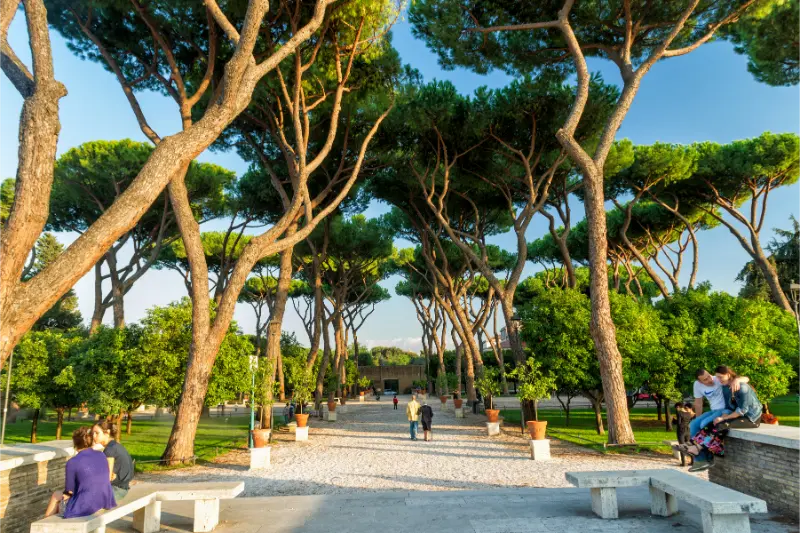
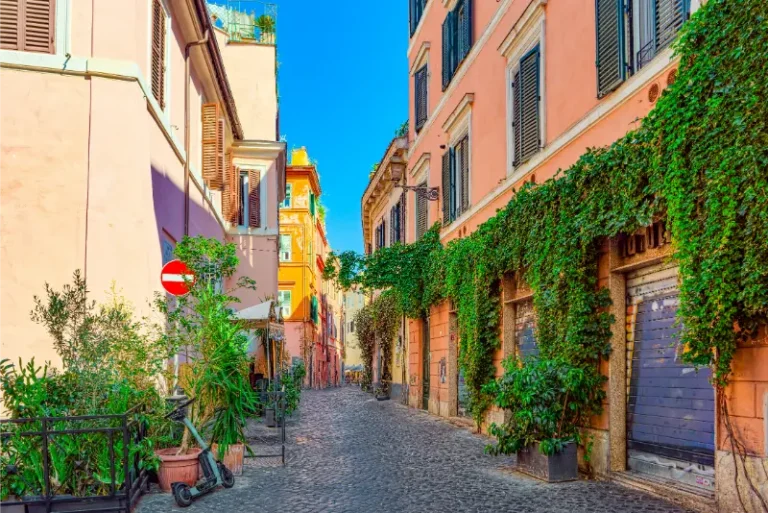
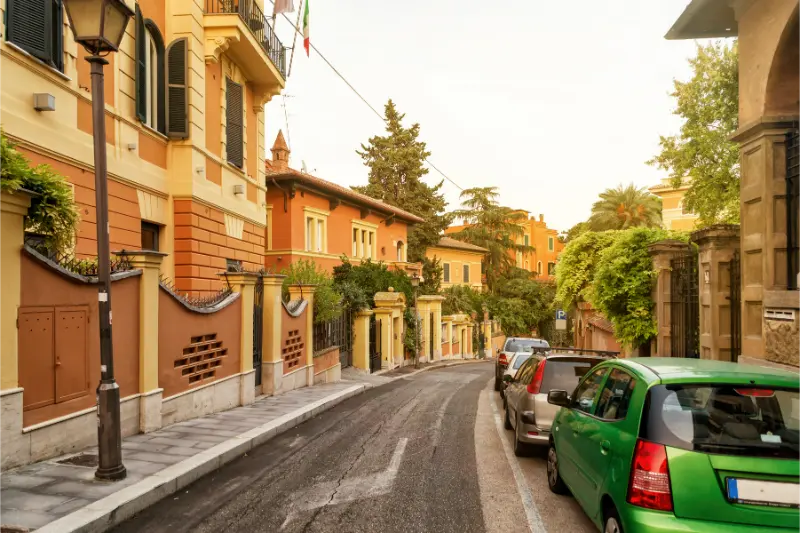
San Saba also works as a neighborhood destination. The streets around Piazza Bernini are calmer than the central Aventine viewpoints and show a residential Rome that many short trips never reach.
Combine the basilica with a walk rather than arriving and leaving by taxi. The value of the area lies partly in the transition between monumental Rome, twentieth-century housing and pockets of greenery.
How to plan your visit
Because San Saba is an active religious or cultural site rather than a purpose-built tourist attraction, access can change for services, maintenance, ceremonies and special events. Check the official source shortly before visiting and avoid placing an inflexible timed reservation immediately afterward.
Dress and behave for the setting. In active churches, shoulders and knees should be covered, hats normally removed and conversations kept quiet. Photography rules can change from chapel to chapel, so use a silent camera and avoid flash unless signs or staff clearly permit it.
A short amount of preparation improves the visit enormously. Read the basic historical sequence before entering, then choose two or three details to look for rather than trying to memorize every artist and date. Rome’s layered buildings are easier to understand when you compare periods instead of treating the interior as a checklist.
For most travelers, 45–65 minutes is a realistic amount of time. The goal is not to stretch the visit artificially but to leave enough margin to look closely, deal with a temporary closure or simply sit for a few minutes without watching the clock.
Getting there and moving around
The location is Piazza Gian Lorenzo Bernini, 20, on the Little Aventine between Aventine and Celio. In central Rome, walking is often the most useful final connection because buses can be affected by traffic and street diversions. If you use public transport, check the current route on the day rather than relying on an old screenshot.
If the doors are closed when you arrive, do not wait indefinitely unless you have confirmed a reopening time. Use the nearby itinerary below and return later if practical. This flexible approach is far less frustrating than building a full day around the assumption that every active church will operate like a museum.
A practical nearby itinerary
Start at the Baths of Caracalla or Circus Maximus, walk up toward San Saba, then continue to the main Aventine for Santa Sabina and the Orange Garden. This creates a logical hill route with very little backtracking.
Useful MyRomeTrip guides for the same area are Aventine Hill, Santa Sabina, Baths of Caracalla and Circus Maximus. Keeping these stops together reduces transport time and makes the historical relationships much easier to understand.
Practical tips before you go
- Check current access on the official website or municipal tourism page shortly before leaving.
- Respect worship and private prayer; sightseeing should stop during services unless visitors are explicitly invited to remain.
- Wear comfortable shoes: even central Rome involves cobblestones, slopes, stairs and uneven surfaces.
- Carry water in warm weather and avoid scheduling the most exposed outdoor walking at midday in summer.
- Keep valuables secure in crowded transport and around major nearby attractions.
- Use internal links and an offline map to keep the day geographically compact rather than crossing Rome repeatedly.
- Leave a small buffer before your next timed ticket; ceremonies, queues, traffic and temporary closures are normal parts of a Rome itinerary.
For the latest access information, use the official or municipal visitor information. External opening times are the part of a Rome guide most likely to change, so verifying them near your travel date is more reliable than relying on a timetable copied far in advance.
Where to stay for this part of Rome
You do not need to choose a hotel beside every attraction, but location matters if you prefer walking. For a first trip, a central base that reduces daily transfers is usually more valuable than saving a small amount on a room far outside the areas you plan to explore. Repeat visitors can be more adventurous and choose a neighborhood that matches evening plans, food preferences or transport needs.
Before booking, open the property on a map and test the real walking route to the transport stop or district you expect to use. Rome has hills, rivers, railway lines and large archaeological zones that can make two places look closer on a map than they feel on foot.
Who will enjoy this stop most?
This stop is especially good for travelers interested in medieval architecture, quiet neighborhoods, cosmatesque decoration and an off-the-beaten-path aventine extension. It is also useful for visitors who have already seen Rome’s essential monuments and want places where history can be read without the pressure of a major-ticket attraction.
First-time visitors with only one or two days should still protect time for the Colosseum, Roman Forum, Pantheon, Trevi area and Vatican according to their priorities. The better strategy is to add this place when it lies naturally on the route rather than replacing a must-see solely for the sake of finding something ‘hidden’.
Frequently asked questions
Is San Saba free to visit?
Ordinary access to the active church is generally free. Special activities or restricted areas can follow different arrangements.
What is the Little Aventine?
The name is commonly used for the quieter rise between the main Aventine and Celian areas where the San Saba district developed.
What should I see inside?
Focus on the medieval frescoes, Cosmatesque floor, reused columns and the relationship between the portico and nave.
How long do I need?
Around 45 to 65 minutes is enough for the church, but allow more time if you are walking onward across the Aventine.
Final advice
San Saba rewards curiosity more than speed. Give the main historical layer a few minutes of attention, then look for the later additions that changed how the place was used. That habit—reading Rome as a sequence rather than a single period—is one of the best ways to make lesser-known sites memorable.
Keep the rest of the day simple. One strong nearby cluster, a relaxed meal and enough time to walk between places usually creates a better Rome experience than stacking attractions from opposite sides of the city. Check current access, arrive with context and leave room for the unexpected discoveries that make Rome worth exploring on foot.