Mausoleum of Cecilia Metella Rome: Appian Way Visiting Guide
The Mausoleum of Cecilia Metella is one of the most recognizable monuments on the Appian Way: a massive cylindrical Roman tomb standing above the ancient road, later incorporated into a medieval fortified complex. Its survival is not an accident. Size, strategic location and reuse helped preserve the structure while many other tombs along the Via Appia became fragments.
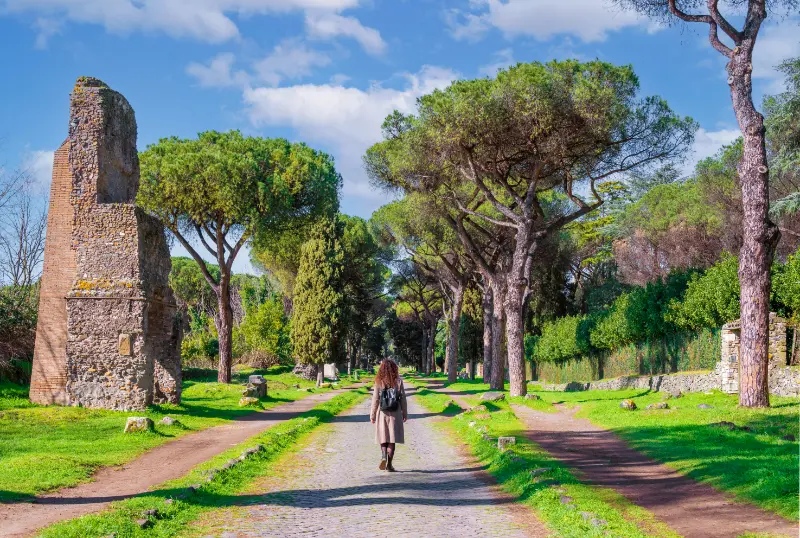
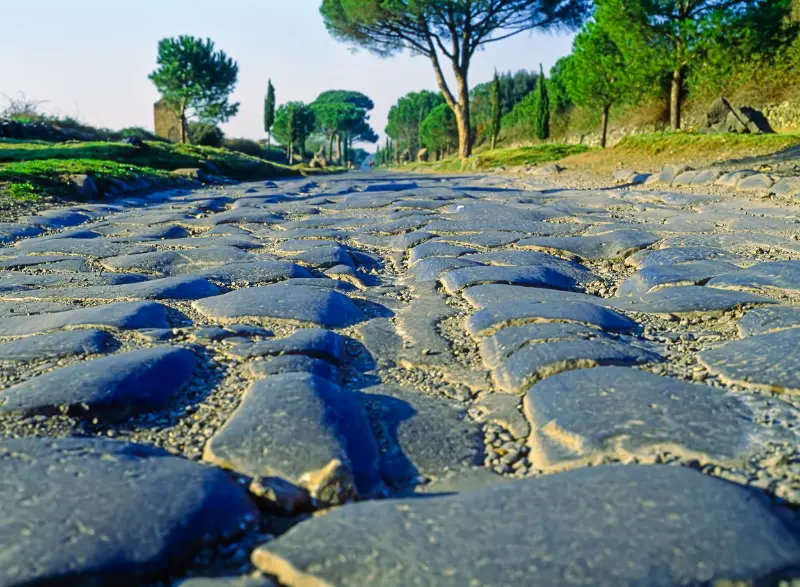
A visit works best as part of a broader Appian Way itinerary. The mausoleum gives the route a clear destination and provides a tangible example of how elite Roman funerary monuments lined roads outside the city. Nearby ruins, basalt paving and countryside atmosphere make this one of the strongest places to experience ancient Rome beyond the central archaeological zone.
Who was Cecilia Metella?
Cecilia Metella belonged to a wealthy and politically connected Roman family in the late Republic or early Augustan period. The surviving inscription identifies her as the daughter of Quintus Caecilius Metellus Creticus and wife of a Crassus. We know relatively little about Cecilia herself, which is a useful reminder that monumental survival does not always equal biographical survival.
The tomb’s scale communicated family status to everyone traveling the Appian Way. Roman funerary monuments were not hidden cemeteries in the modern sense; important tombs lined approaches to the city where they would be seen. Architecture maintained memory in public space.
Architecture of the mausoleum
The monument consists of a square concrete base supporting a large cylindrical drum faced in travertine. A marble frieze with garlands and ox skulls—bucrania—helped give rise to the local medieval name “Capo di Bove.” Even stripped of much of its original decoration, the tomb still feels extraordinarily solid.
Look at the relationship between the cylinder and later battlements. The medieval additions can initially make the building seem like a castle rather than a Roman tomb. That visual confusion is historically productive: the monument survived precisely because later owners found new uses for it.
The Caetani fortress and medieval reuse
In the Middle Ages, the powerful Caetani family incorporated the mausoleum into a fortified complex with walls, towers and a church dedicated to San Nicola. The position allowed control over the road, transforming a funerary monument into a strategic stronghold. Rome is full of ancient buildings reused as churches or houses, but Cecilia Metella offers one of the clearest examples of a tomb becoming part of a fortress.
Opening hours in 2026
The Appia Antica Archaeological Park currently lists the Mausoleum of Cecilia Metella as open Tuesday to Sunday. Seasonal closing times apply: 18:30 in March and October, 19:15 from April through September, and 16:30 from November through February, with opening at 9:00. Last entry is generally thirty minutes before closing.
Hours can change for maintenance, events or operational reasons, so verify the official Appia Antica Park information shortly before visiting. Monday is normally the closing day for this ticketed site even though the Appian Way itself remains accessible as a road and landscape.
Tickets from July 2026
From 1 July 2026, the park introduced updated ticketing. The current daily ticket for Cecilia Metella and the Capo di Bove complex is €8 full price, with reduced and free categories under national rules. A €12 park ticket is also available for multiple Appia Antica sites over seven days, subject to the official conditions and reservations for certain locations.
At the time of writing, the Capo di Bove complex is temporarily closed for restoration, even though it is named in the combined ticket. That is exactly why current official checks matter on the Appian Way: archaeological sites can close temporarily while the surrounding road and other monuments remain visitable.
How to get there
The mausoleum lies several kilometers southeast of the historic center. Public buses can bring you toward the Appian Way, and the 118 is often useful depending on your starting point and current route changes. Metro plus bus combinations are another option. Because Rome bus routes can be disrupted by works or events, use live ATAC information on the day rather than memorizing one connection weeks in advance.
Cycling is popular on the Appian Way, but ancient basalt can be rough and traffic conditions vary by section. Walking gives you more time to notice tomb fragments, walls and landscape. Read the Rome transport guide and Appian Way guide before choosing the method that fits your mobility and schedule.
How long to spend
Allow 45 to 60 minutes for the mausoleum complex itself, then at least two or three additional hours for a meaningful Appian Way walk. If you visit Villa dei Quintili as well, the outing can fill most of a day. Trying to “do the Appian Way” in one hour usually means spending more time on transport than on the road.
Best time to visit
Morning is ideal in warm weather. Shade is inconsistent along the route, and summer afternoons can be punishing. Spring and autumn provide the most comfortable walking conditions, while winter offers quiet atmosphere but shorter opening hours. Sundays can feel different because traffic restrictions on sections of the road may improve the experience, but always check current local rules.
What to combine with Cecilia Metella
The most natural companions are Capo di Bove when open, the Catacombs of San Callisto or San Sebastiano, and longer walks toward Villa dei Quintili. The Rome Catacombs guide helps you choose a catacomb visit, which is usually guided and should be timed separately from the mausoleum.
Mistakes to avoid
- Treating the mausoleum as a quick photo stop and missing the medieval fortress layers.
- Forgetting that Monday is normally the museum closing day.
- Relying on old ticket information from before the July 2026 changes.
- Walking the Appian Way at midday in summer without enough water and sun protection.
- Assuming every nearby park site is open; restoration closures can affect individual monuments.
Frequently asked questions
Is Cecilia Metella included in an Appia Antica pass?
Yes. The archaeological park currently offers a multi-site park ticket as well as a daily Cecilia Metella/Capo di Bove ticket. Check the official conditions because reservation requirements differ by site.
Can I see the mausoleum without a ticket?
You can see the exterior from the Appian Way, but a ticket is required to enter the managed archaeological monument and explore the complex.
Is it worth visiting if I already saw the Roman Forum?
Yes. The Appian Way presents ancient Rome in a completely different context: funerary architecture, road landscape, countryside and later reuse rather than the dense civic center.
Can I combine it with catacombs?
Yes, and it is one of the best combinations on the Appian Way. Check guided-tour times for the catacombs first, then organize the mausoleum around that fixed appointment.
How much time should I allow from central Rome?
For transport, the mausoleum and a useful stretch of the Appian Way, reserve at least half a day. A fuller archaeological route can occupy most of a day.

Final tips
Cecilia Metella is most memorable when you notice that it is both a Roman tomb and a medieval fortress. Those layers explain its unusual silhouette and survival. Give the surrounding road as much attention as the monument itself: ancient paving, walls, fragments and open landscape are what make this outing fundamentally different from sightseeing in the historic center.
How to fit this stop into a realistic Rome day
A useful Rome itinerary should leave breathing room around Mausoleum of Cecilia Metella Rome. Walking distances on a map can look short while cobblestones, security checks, heat, traffic lights and spontaneous stops make the real day slower. Put this visit beside one or two nearby priorities, then leave a flexible meal or coffee break before the next major reservation. That structure protects the experience if you stay longer than expected and reduces the temptation to rush the final rooms or viewpoints.
If you are visiting in summer, schedule exposed outdoor walking before late morning and use churches or museums during the hottest hours. In winter, remember that daylight is shorter and some archaeological sites close earlier. Spring and autumn are comfortable for walking but can bring heavy demand, so reserve truly capacity-limited attractions first and build flexible free-entry stops around them. Rome rewards geographic planning more than ambitious checklists.
A note on current information
Opening hours, restoration closures, liturgical schedules, ticket prices and security procedures can change after publication. Use this article to understand what the place is and how it fits into a trip, then verify the official website shortly before the visit when a specific time or paid admission matters. That small check is especially important around public holidays, religious celebrations, strikes and major city events.
Also separate permanent facts from temporary conditions. A church’s mosaics or a forum’s history do not change because an entrance moves for restoration; a museum can remain worth visiting even when one room is closed. Flexible expectations help you respond to real conditions without feeling that the day has failed because a single detail differs from an older guide.
Reading the site with more context
One way to get more from Mausoleum of Cecilia Metella Rome is to separate what survives physically from what historians reconstruct. Rome’s monuments rarely reach us in their original form: stone was reused, floors rose, churches or houses occupied older structures, and restorations introduced new materials. A reconstruction drawing can therefore be more useful than a long list of dates. First identify the surviving walls, columns, pavement or decoration; then use the reconstruction to imagine the missing volume. This prevents the common mistake of treating every later alteration as damage rather than part of the site’s history.
It also helps to compare scale. Notice how wide a doorway is relative to a person, how high a wall stands above the present street, or how far a complex extends beyond the most photogenic fragment. Those observations turn ruins and historic interiors into spaces rather than objects. If you are traveling with children or someone who is less interested in art history, ask one concrete question—what was this room for, who could enter, or why was this location chosen? A single question often creates more engagement than reading every label.
Finally, leave a few minutes at the end without taking photographs. Rome encourages constant documentation, but memory often forms when you stop moving. Look back toward the entrance, notice the sound of the surrounding neighborhood and identify one detail you would recognize if you returned years later. That small pause is especially valuable in sites beside the busiest tourist corridors, where the contrast between the monument and the modern city is part of the experience.