Capitoline Hill Rome: Campidoglio, Views, Churches and Visiting Guide
The Capitoline Hill is small compared with the Palatine, but historically and visually it is one of the most important hills in Rome. Ancient temples once dominated the summit; today the hill is defined by Michelangelo’s Piazza del Campidoglio, the Capitoline Museums, Palazzo Senatorio and the neighboring Basilica of Santa Maria in Aracoeli. It also gives you one of the easiest free viewpoints over the Roman Forum.
Because the hill sits between Piazza Venezia and the Forum, it is often crossed without being properly visited. That is a mistake. Even if you do not enter the museums, allow time to approach the Campidoglio, walk around the rear terraces, look over the Forum and understand how modern civic Rome occupies the same high ground that carried enormous symbolic weight in antiquity.
Quick facts
| Main square | Piazza del Campidoglio |
| Designer associated with square | Michelangelo |
| Major museum | Capitoline Museums |
| Free viewpoint | Terraces behind the piazza |
| Typical visit | 45 minutes outdoors; 2–3 hours with museums |
Approaching the Campidoglio
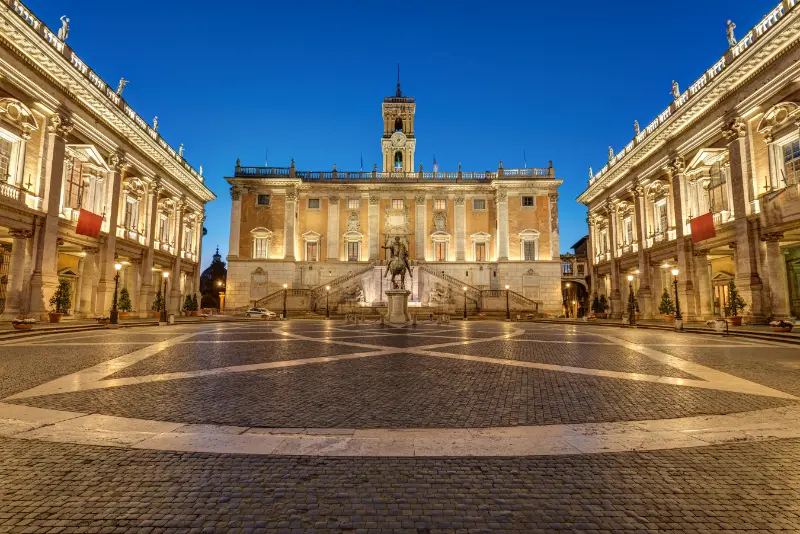
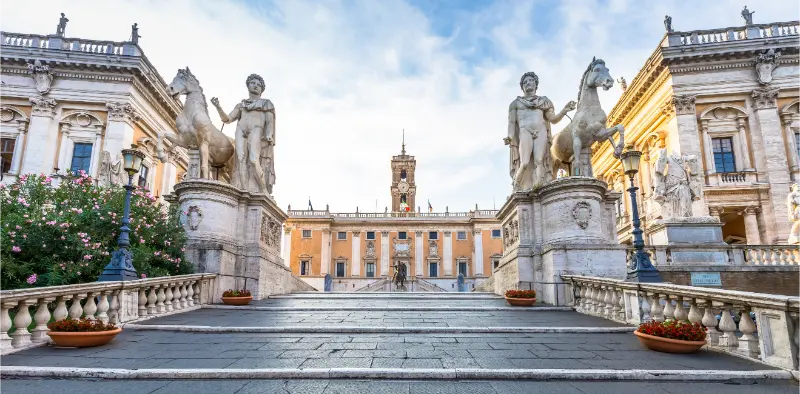
The most theatrical approach is from Piazza Venezia via the broad Cordonata staircase. Rather than feeling like a steep medieval stairway, it was designed as a gentle ceremonial ascent. At the top, Piazza del Campidoglio opens suddenly, framed by palaces and organized around a powerful geometric design.
Take a full circuit of the piazza before entering any building. The paving pattern, facades and orientation were designed to create a formal civic space, and the experience is lost if you simply photograph the central statue and move on. Looking back down the Cordonata also reveals how deliberately the hill addresses the later city rather than the Roman Forum behind it.
Piazza del Campidoglio and Palazzo Senatorio
The square is one of Rome’s clearest examples of Renaissance urban design. Palazzo Senatorio closes the far side and remains connected with Rome’s municipal government, while the museum palaces define the lateral edges. The effect is controlled and symmetrical even though the site incorporates structures from different historical periods.
For visitors, the important idea is continuity. This is not an archaeological zone separated from modern life; it is still a civic center. That makes the Capitoline Hill a useful bridge between ancient Rome, medieval Rome, Renaissance Rome and the contemporary city.
Capitoline Museums
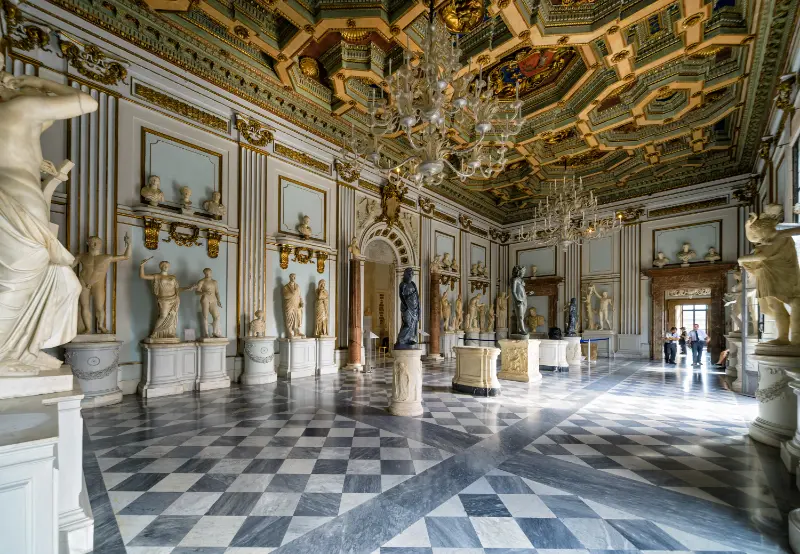
The Capitoline Museums deserve a separate visit if you enjoy sculpture, Roman history or city museums. Their collections include some of the works most closely associated with the visual identity of Rome. Because the museums connect multiple buildings and underground passages, allow significantly more time than the compact hilltop setting suggests.
If you have only one hour, do not force the museum into the schedule. Enjoy the outdoor hill and return when you can give the collections at least two hours. Our dedicated Capitoline Museums guide explains current tickets, major works and how to structure the visit without museum fatigue.
Santa Maria in Aracoeli
Beside the Campidoglio, the Basilica of Santa Maria in Aracoeli offers a completely different atmosphere. Its long staircase rises from the Vittoriano side, while the interior contains medieval and later layers that contrast sharply with Michelangelo’s formal piazza next door.
The basilica is a place of worship, so dress and behave accordingly. Opening can be affected by services. If you approach from the Campidoglio rather than climbing the full external staircase, the connection between church, civic hill and ancient topography becomes easier to understand.
Best views over the Roman Forum
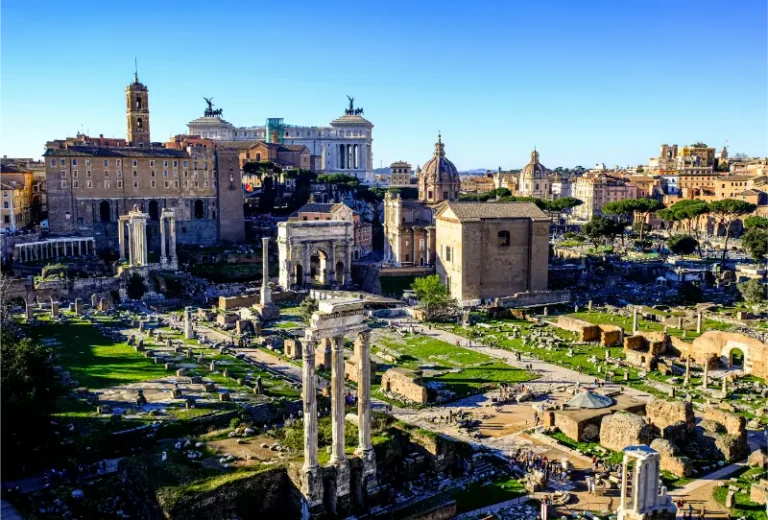
Walk behind the buildings on the Forum side of the hill to find free viewpoints over the ruins. These terraces are especially useful before or after a Forum visit because you can identify the Via Sacra, temples and Palatine slopes from above. The light changes quickly, and evening can be beautiful.
Unlike some panoramic viewpoints, these terraces do not require a long climb beyond reaching the hill itself. They are therefore an excellent option for travelers who want a strong ancient-Rome view without committing to another ticket. Keep railings clear and be considerate when the viewpoint is crowded.
How to build a half-day route
A compact route can begin at Piazza Venezia, climb the Capitoline Hill, visit the museums or Aracoeli, pause at the Forum viewpoint and then descend toward the Roman Forum or Jewish Ghetto. This sequence minimizes backtracking and keeps most of the day within a small area.
If you have a timed Colosseum or museum reservation, put that fixed time at the center of the schedule. The outdoor parts of the Capitoline Hill can then expand or contract depending on crowds and weather. This is one of the best examples of why Rome itineraries work better by neighborhood than by isolated attraction lists.
Families, accessibility and practical comfort
The Cordonata is broad and relatively gentle compared with many staircases, but there are still slopes and uneven surfaces around the hill. Families can use the piazza as a short open-air break between indoor visits. Children who are tired of museums often respond better to the viewpoint and large-scale architecture than to another gallery.
Reduced-mobility visitors should check the museum’s current accessible entrances if entering the collections. Outdoors, routes from Piazza Venezia and the Forum side differ in gradient, so choose the approach that suits your group rather than following the most photogenic staircase automatically.
Common mistakes
One mistake is assuming that ‘Capitoline Hill’ means only the Capitoline Museums. The outdoor piazza, Forum views and Aracoeli are significant even without a museum ticket. Another is descending immediately after reaching the square and missing the rear viewpoints.

Do not also confuse the hill with the Vittoriano. They sit beside each other but represent different periods and experiences. Visiting both can work well, but give each site its own purpose instead of treating the entire area as one monument.
Frequently asked questions
Is Capitoline Hill free?
The outdoor hill, Piazza del Campidoglio and public viewpoints are free. The Capitoline Museums require a ticket.
How long do I need?
About 45–60 minutes outdoors, or two to three hours more if you visit the museums.
Where is the best Forum view?
Walk behind the Campidoglio buildings toward the Roman Forum side for elevated public viewpoints.
Is Santa Maria in Aracoeli on the same hill?
Yes. The basilica stands beside the Campidoglio complex.
What should I combine with Capitoline Hill?
Piazza Venezia, the Roman Forum, Jewish Ghetto and Teatro di Marcello all fit naturally.
Plan the rest of your Rome trip
Continue with the Capitoline Museums, Santa Maria in Aracoeli and our Roman Forum guide.
A practical way to fit this into your itinerary
If you are visiting the Forum later in the day, use the Capitoline viewpoint first as an orientation lesson. Seeing the valley from above helps temples and basilicas make more sense once you enter the archaeological area. If you have already visited the Forum, the viewpoint works in reverse by helping you reconstruct the route you walked.
For photography, morning emphasizes the architecture of the piazza while later light can be more dramatic over the Forum. Avoid planning around a single ‘perfect’ time. The hill is central enough that you can return easily if weather or crowds are unfavorable.
What makes this stop worth your time
The Capitoline Hill is worth more attention because it compresses Rome’s history into a very small space. Ancient sacred ground, medieval church, Renaissance design, modern municipal government and archaeological museums all coexist on the same summit.
It is also one of the most efficient stops in Rome: even a short visit produces strong architecture and views, while a longer visit can expand into one of the city’s major museum experiences.
Final planning tips before you go
Before setting out, check the day’s weather, transport conditions and any official notices that could affect access. Rome rewards flexible planning: keep one or two priorities fixed, but avoid filling every hour. Leave enough time to walk between nearby sights, refill water, sit down for a proper break and change the route if crowds or heat make the original plan less enjoyable. For this stop in particular, comfortable footwear and a charged phone are more useful than an over-detailed timetable, because the surrounding streets and viewpoints often become part of the experience.
If you are visiting Rome for the first time, place this experience inside a neighborhood-based itinerary rather than crossing the city only to tick it off. Combine it with the related places linked in this guide, then move on when your attention starts to fade. Repeat visitors can do the opposite: slow down, read more of the interpretation, photograph details and compare the site with other periods of Roman history. That difference in pace is often what turns a famous stop into a memorable one.
It is also worth checking how this stop fits with meal times and the return journey to your accommodation. A central attraction may need no transport at all, while an archaeological or neighborhood visit can involve a longer walk than the map suggests. Save the address of your next destination, keep a backup route, and avoid committing to a distant reservation immediately afterward. A small buffer makes the day more resilient when entrances, church services, roadworks or simple fatigue change the pace.