Palatine Museum Rome: Collections, Nero Frescoes, Tickets and Visiting Guide
Palatine Museum is the best indoor place to connect Palatine ruins with sculpture, frescoes, mosaics and the long history of the hill. It is easy to pass a site like this while concentrating on the Colosseum or the largest Forum ruins, but a focused stop adds a layer of Roman history that the headline monuments cannot provide on their own. This guide explains what the place was, what survives, what to look for and how to fit it into a realistic visit in 2026.
The practical advice below is written for an independent visit. Opening patterns, conservation closures and ticket products can change, especially for smaller archaeological interiors. Use this article to understand the site, then confirm the latest conditions on the official page before leaving your hotel.
Palatine Museum at a glance
| Location | on the Palatine Hill inside the Forum–Palatine archaeological area |
| Why see it | the best indoor place to connect Palatine ruins with sculpture, frescoes, mosaics and the long history of the hill |
| Time to allow | 45–75 minutes, ideally within a half-day Palatine visit |
| Access | Included with ticket types that cover the Palatine Museum/SUPER sites; current PArCo information should be checked on the day of travel |
| Best strategy | Combine it with nearby monuments and understand the surrounding urban landscape rather than treating it as an isolated photo stop |
Why Palatine Museum is worth seeing
The main reason to stop at Palatine Museum is that it fills a gap in the story of ancient Rome. Famous monuments show imperial scale; smaller sites often explain how government, religion, infrastructure or daily movement actually worked. Here, the crucial idea is the best indoor place to connect Palatine ruins with sculpture, frescoes, mosaics and the long history of the hill. Once you understand that function, the surviving walls, columns, paving or underground spaces become evidence rather than anonymous ruins.
Rome rewards visitors who compare neighboring sites. A temple beside a basilica, a prison beside a triumphal route, or a Renaissance garden above an imperial palace can reveal more than any monument considered alone. Keep looking outward while you visit: where is the Capitoline, where is the Forum floor, which road passes the site, and what later structure occupies the same ground? Those questions make the city readable.
History of Palatine Museum
The Palatine Museum is much more than a shelter from sun or rain. It provides the objects and images that the open ruins cannot. The Palatine was occupied long before it became the imperial hill, and excavation has revealed traces ranging from early Rome to aristocratic Republican houses, Augustan residences and the vast palaces of later emperors. A museum is essential because portable finds, fresco fragments and sculpture give those building phases color and human scale.
The museum occupies a building created from the former convent of the Visitation, itself constructed over ancient remains. In the twentieth century archaeologist Alfonso Bartoli developed the Antiquarium Palatino as excavations expanded across the hill. Collections were moved and reorganized more than once, including transfers connected with the Second World War and later modern redisplays.
Today the route is arranged across two floors. The ground floor focuses on the history of the hill from its earliest occupation through the Republican period and the rise of the Principate. The upper floor presents major imperial material, with especially important rooms dedicated to Augustus and to the decorative culture of Nero.
One of the museum’s strongest sections contains paintings and decorative material from the Domus Transitoria, Nero’s first great palace. This is particularly valuable when the original archaeological spaces are closed or access is restricted. Rather than thinking of the museum as separate from the Palatine, use it as the interpretive center that helps you read the houses and palaces outside.
Why the museum changes the outdoor ruins
Outside, walls often survive without their marble revetment, painted plaster, statues or furnishings. Indoors, those missing materials return. Once you have seen fine wall painting and portrait sculpture, a plain brick room on the hill no longer feels “empty”; you begin to reconstruct the lost decorative layer mentally.
A good bad-weather strategy
The museum is useful in rain or extreme heat, but do not save it only as an emergency. Its shorter opening hours can make it easier to miss than the outdoor Palatine. If it matters to you, check the daily schedule first and fit the open-air ruins around it, not the reverse.
What to see on site
The early Palatine displays

Start with the lower-floor material because it prevents the common mistake of treating the Palatine only as an imperial palace. Objects from earlier periods show that the hill mattered in Rome’s foundation traditions and Republican urban development.
Augustan rooms
The Augustan displays connect sculpture and architectural decoration with the moment when a private aristocratic residence became the nucleus of imperial power. Pair them with the House of Livia and House of Augustus area outside.
Domus Transitoria paintings
The Neronian paintings are a highlight. Their delicate architecture, mythological references and rich colors help reconstruct spaces that survive below later palace levels and may not be accessible on the day of your visit.
Originals from the Neronian Cryptoporticus
Decorative stucco associated with the Cryptoporticus has been moved for conservation, while reproductions can be seen in the corridor itself when that route is open. Seeing the original material in the museum adds detail that is difficult to appreciate underground.
Tickets, opening hours and access in 2026
The PArCo currently publishes Palatine Museum visiting information and lists the museum among sites included with Forum Pass SUPER and Full Experience products. A current PArCo museum page lists daily opening from 9:30 to 15:30, but always recheck because museum hours can be shorter than the wider archaeological park.
For the wider archaeological area, For the Roman Forum and Palatine, the official PArCo currently lists the archaeological area as opening at 9:00. For the period from 29 March to 30 September 2026, the published schedule gives last admission at 18:15 and park closure at 19:15; closing times become earlier later in the year. Ticket products differ in whether they include the Colosseum and SUPER interiors. Always check the official PArCo opening-times and ticket page for your exact date. For this specific site, also check the official PArCo page or ticket information because interior access can differ from the park’s general opening hours.
How to combine it with nearby sights
A logical route combines this stop with Palatine Hill guide, House of Livia guide, Domus Tiberiana guide, Roman Forum guide. These are not random recommendations: they create a compact cluster in which each monument explains a different function or historical layer. Move through them geographically instead of crossing the archaeological area repeatedly.
If you have only two hours for the Forum or Palatine, choose a limited number of focused stops and one elevated overview. If you have half a day, add a museum or SUPER interior, take a short break, and allow time to look back over areas you have already crossed. The second view is often when the plan of ancient Rome finally becomes clear.
A practical route step by step
Start by locating Palatine Museum from a wider viewpoint. Do not begin with a close-up. Identify the nearest hill, major street or neighboring public building. Then approach the surviving structure and spend five minutes on the overall plan before reading labels. Next, choose two details from this guide and find them in person. Finally, turn around and connect the site visually with the next monument on your route.

This sequence sounds simple, but it prevents the most common failure of an archaeological visit: collecting names without spatial understanding. Roman architecture was designed around approach, elevation, processions and sightlines. A monument’s relationship to the Forum square or palace court can be as informative as the fragment standing in front of you.
How to plan the stop inside a larger Rome itinerary
Do not treat a small ancient monument as if it were a stand-alone half-day attraction. Rome works best in geographic clusters. On the Forum and Palatine, move in one direction and connect buildings that shared streets, sightlines or palace functions. This reduces backtracking on uneven ground and makes the history easier to remember. A focused stop of twenty minutes can be more rewarding than an hour spent repeatedly checking a map.
Best time of day
Early morning is usually best for orientation, cooler temperatures and quieter paths. Late afternoon can give stronger side light on brick, marble and carved details, but the archaeological park closes earlier in autumn and winter. In summer, shade is limited. Carry water, use sun protection and avoid scheduling the most exposed Palatine or Forum walking during the hottest part of the day if you are sensitive to heat.
Photography without losing the context
Take one wide photograph first, including a recognizable neighboring structure or the line of the hill. Then make one or two detail images. This simple sequence produces a far more useful visual record than a series of tight photos that become impossible to identify later. A modest phone zoom is helpful for inscriptions and decoration behind barriers, but never cross ropes or climb ancient masonry for an angle.
Accessibility and footwear
The Forum and Palatine combine modern paths with slopes, steps, cobbles and uneven ancient surfaces. The PArCo provides accessible routes, lifts in selected zones and accessibility information, but not every ruin or underground interior is step-free. Check the official accessibility map if mobility is a concern. For everyone else, shoes with good grip are more valuable than heavy hiking footwear; smooth soles can be uncomfortable on worn stone after rain.
How much historical detail do you really need?
You do not need to memorize every emperor and reconstruction date. Before arriving, learn three things: what the place was for, which phase created most of what you see, and what neighboring monument helps explain it. Once those anchors are clear, inscriptions, materials and later alterations become meaningful rather than overwhelming. This approach is especially effective in the Forum, where hundreds of years of rebuilding overlap in a small space.
Common mistakes to avoid
- Assuming that the tallest surviving ruin was automatically the most important building in antiquity.
- Using an old screenshot for hours or access rules instead of checking the official site shortly before the visit.
- Trying to see every monument in one pass and ending up remembering none of them clearly.
- Ignoring ground levels, podiums and foundations because they look less dramatic than columns or arches.
- Following a map so closely that you stop looking at relationships between roads, hills and neighboring buildings.
- Wearing slippery shoes or carrying too much gear on an archaeological route with uneven surfaces and limited shade.
FAQ about Palatine Museum
Is the Palatine Museum worth visiting?
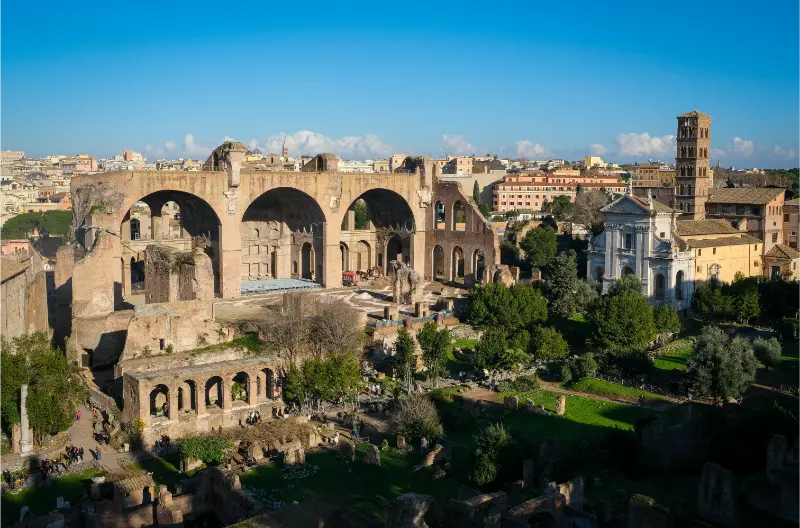
Yes, especially if the open ruins feel difficult to interpret. The museum gives you sculpture, paintings, mosaics and chronological context that make the palace remains much easier to understand.
How long should I allow?
Around 45–75 minutes works well for most visitors. Archaeology enthusiasts may want longer, while a focused visit can concentrate on the Augustan and Neronian rooms.
Is it included in Forum Pass SUPER?
The official PArCo lists the museum among sites included with Forum Pass SUPER and several Full Experience tickets. Check the current product details before purchase.
What is the highlight?
There is no single answer, but the material from Augustus and the paintings from Nero’s Domus Transitoria are particularly useful because they directly connect with major ruins on the hill.
Should I visit the museum before or after the Palatine?
For a first visit, seeing it midway through the Palatine works well. You will recognize some places already, and the displays will then improve the second half of your walk.
Is Palatine Museum worth it?
Yes—especially if your goal is to understand ancient Rome rather than simply photograph its largest landmarks. Palatine Museum rewards a slower look because it has a clear historical role: the best indoor place to connect Palatine ruins with sculpture, frescoes, mosaics and the long history of the hill. Give it enough time to identify the main surviving features and connect them with the surrounding city.
Before you go, check the official visitor information, download or save a map and decide whether your ticket needs SUPER access. Once inside, keep the day realistic. Ten well-understood monuments will give you a stronger memory of Rome than thirty labels seen at a run.