
Keats-Shelley House Rome: Literary Museum at the Spanish Steps
The Keats-Shelley House is one of Rome’s smallest famous museums and one of its most emotionally specific. The house stands directly beside the Spanish Steps, in the rooms where the English Romantic poet John Keats spent the final months of his life and died in 1821. Today it preserves books, manuscripts, portraits, letters and memorabilia related not only to Keats but also to Percy Bysshe Shelley, Lord Byron and the wider Romantic tradition.
It is easy to walk past because the surrounding Piazza di Spagna is so visually dominant. Yet the contrast is exactly what makes the visit memorable: outside are crowds, luxury shops and one of Europe’s most photographed stairways; inside are quiet rooms connected to illness, poetry, friendship and literary memory. For readers, writers and travelers interested in the Grand Tour, it adds a completely different layer to the Spanish Steps.
Quick facts
| Address | Piazza di Spagna 26, Rome |
| Typical opening | Monday–Saturday; Sunday closed |
| Typical visit | 45–75 minutes |
| Best for | Literature, Romantic poetry and Grand Tour history |
| Location | Immediately beside the Spanish Steps |
Why John Keats came to Rome
Keats traveled to Italy in 1820 after his health deteriorated, hoping that a warmer climate might help. He stayed in the house by the Spanish Steps with his friend, the painter Joseph Severn. Keats died there in February 1821 at only twenty-five. The physical connection between poet and place gives the museum an intimacy that cannot be replicated by a general literary exhibition.
The rooms therefore require a different mindset from an art museum. You are not visiting because the building is monumental. You are visiting because a specific life ended there and because later admirers chose to preserve that memory. Knowing this before entering helps explain why modest spaces and personal objects can carry unusual emotional weight.
Opening hours and tickets
Turismo Roma and the Italian Ministry of Culture list the house as open Monday to Saturday and closed Sunday. Published hours commonly include a midday break, while institutional listings have sometimes simplified the schedule. Because the house is independently managed and hosts events, use the official Keats-Shelley House website for the exact hours and ticket price on your date rather than treating an older timetable as permanent.
This is a museum where checking the same week is sensible. Small institutions can close for private events, conservation or special programming more easily than huge state museums. You normally do not need to build an entire day around the ticket, but literature fans traveling in high season may prefer to confirm admission in advance.
What you will see inside
The collection includes manuscripts, letters, early editions, portraits and objects associated with Keats, Shelley and other Romantic writers. Books are central to the identity of the museum: this is a memorial house and literary library as much as an exhibition. Visitors who already know a few poems will naturally connect more quickly, but you do not need specialist knowledge to understand the story.
The rooms also preserve the atmosphere of an early nineteenth-century residence near Piazza di Spagna. Do not expect every object to have belonged personally to Keats. Memorial museums often combine authentic place, later collecting and interpretive reconstruction. Read labels carefully so the emotional power of the setting does not blur the distinction between original possession and later commemoration.
Keats, Shelley and Byron in the Roman imagination
The museum’s name signals a broader Romantic network. Shelley lived elsewhere in Italy and died in 1822; Byron also became deeply associated with Italy. Rome was part of a larger landscape in which British and other northern European writers encountered classical ruins, Catholic ritual, climate, politics and the artistic legacy of the Grand Tour.
That context matters because it turns the museum from a single tragic biography into a window on how foreigners experienced Italy in the nineteenth century. Travelers today still arrive with powerful expectations of Rome. Comparing those expectations with Romantic-era travel can be surprisingly relevant, even if the practical realities of tourism are completely different.
The Spanish Steps before and after the museum
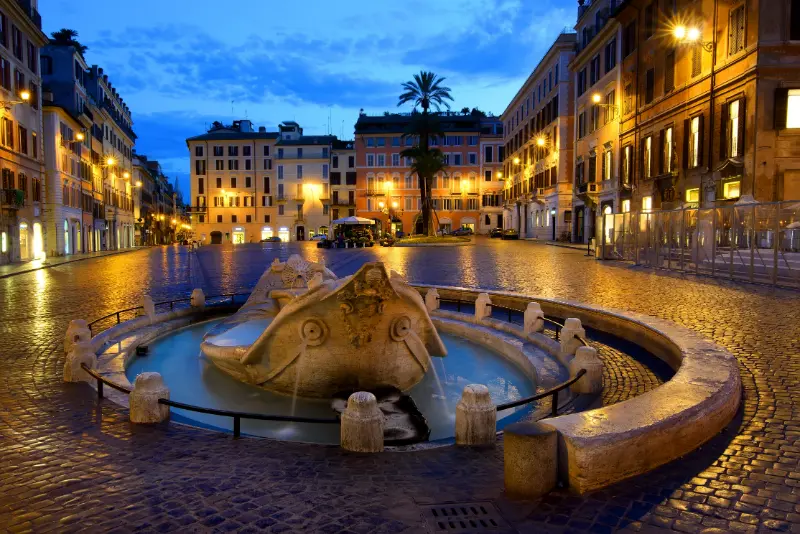
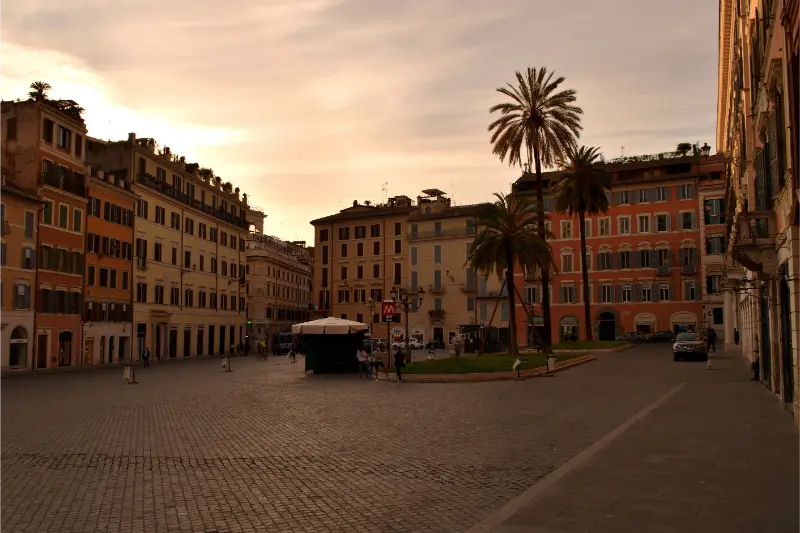
Visit Piazza di Spagna before entering so you understand the extraordinary location. Look at the fountain, the steps, the facades and the movement of people. Then enter the house and allow the noise to fall away. When you return outside, the square often feels different because it is no longer only a postcard setting.
From here you can continue into Campo Marzio, walk toward Piazza del Popolo or climb toward the Pincian and Villa Borghese. A literary visit therefore fits naturally into one of central Rome’s best walking areas.
How long to spend
Forty-five to seventy-five minutes is enough for most visitors. Readers who want to examine books and letters closely can stay longer, while someone accompanying a literature enthusiast may be ready in thirty minutes. The small size is an advantage: the museum can enrich a central walk without taking over the day.
Do not schedule the visit with only ten spare minutes before another timed reservation. Small rooms can feel crowded when groups overlap, and the most meaningful parts reward patience. A coffee afterward is a better buffer than another immediate queue.
Who will love it most
English-language literature readers are the obvious audience, especially admirers of Keats, Shelley and Byron. It is also excellent for teachers, students, writers, book collectors and travelers interested in how Rome became part of the cultural imagination of northern Europe. The museum can make a strong personal stop for anyone who prefers biographies to monumental chronology.
Children will respond very differently depending on age and interest. A teenager studying Romantic poetry may find the house unusually meaningful, while a young child may see only small rooms and books. For family itineraries, keep the visit short and follow it with an outdoor reward such as Villa Borghese.
Photography, respect and atmosphere
Because this is a small memorial museum, quiet behavior matters. Follow current rules on photography, flash and filming. Avoid turning the room associated with Keats’s final days into a staged social-media backdrop. A respectful photograph of the setting is different from blocking other visitors for repeated poses.
The museum’s emotional character is strongest when you allow some silence. You do not need to read every text panel. Pick one letter, portrait or quotation to remember, then look out toward the Spanish Steps and think about the contrast between the poet’s final isolation and the public square outside.
Best time to visit
Morning is good if you want a quieter Piazza di Spagna before the central shopping streets fill. Late afternoon can work well when you have spent the day walking in Campo Marzio. Sunday is normally not an option because the museum is closed, so check your itinerary carefully if your central Rome day falls at the weekend.
In hot weather, the house is a useful indoor pause, but do not assume that a small historic property will feel like a giant climate-controlled gallery. Dress comfortably and keep your bag light. In winter, the museum is particularly atmospheric and easy to pair with nearby churches and cafés.
Common mistakes to avoid
The first mistake is expecting a large museum. The second is arriving without checking the current small-institution schedule. The third is visiting only because it appears on a list of “hidden gems” when you have no interest in literature. The house is special because of its story; without curiosity about that story, many other Rome museums will offer more visual impact.
Another mistake is seeing Piazza di Spagna and the museum as separate attractions. They are historically and emotionally linked. Give yourself a few minutes outside both before and after the visit.
A literary half-day in central Rome
Start at the Spanish Steps, visit the Keats-Shelley House, then walk north along Via del Babuino toward Piazza del Popolo. Continue up to the Pincian terrace and into Villa Borghese. This route combines literature, urban design and landscape without unnecessary transport.
Alternatively, walk south through Campo Marzio toward the Pantheon and Piazza Navona, paying attention to plaques, palaces and old streets rather than only headline monuments. Our historic center walking guide provides a framework you can adapt.
Planning notes for literature travelers
Consider reading one Keats poem before the visit rather than trying to study the entire Romantic movement. “Ode to a Nightingale,” “Ode on a Grecian Urn” or one of the sonnets is enough to give the rooms a personal reference point. The museum becomes more memorable when one text is already in your mind.
A literary day can continue with the Protestant Cemetery, where Keats and Shelley connections deepen, although the cemetery is in Testaccio and requires transport from Piazza di Spagna. If you prefer a walk-only plan, stay in the center and think of the museum as a lens on the Grand Tour rather than the first stop in a specialist pilgrimage.

Frequently asked questions
Where is the Keats-Shelley House?
It is at Piazza di Spagna 26, immediately beside the Spanish Steps.
How long does the visit take?
Most visitors need around 45–75 minutes.
Is the museum open on Sunday?
The standard published schedule lists Sunday as closed. Check the official website for your exact date.
Do I need to love poetry to enjoy it?
No, but an interest in biography, literary history or the Grand Tour will make the small collection much more meaningful.
Is it worth visiting?
For literature lovers, absolutely. For everyone else, it depends on interests and trip length. The museum is small enough that it does not demand a major sacrifice, and its position beside the Spanish Steps makes it one of Rome’s easiest specialist museums to add to a central walk.