
Celio Rome Guide: Ancient Churches, Quiet Streets and Colosseum Views
Celio, the Caelian Hill, sits immediately southeast of the Colosseum yet feels much quieter than the monument suggests. Ancient churches, archaeological layers, tree-lined spaces and residential streets make it one of the most rewarding central areas for travelers who like history without constant crowds.
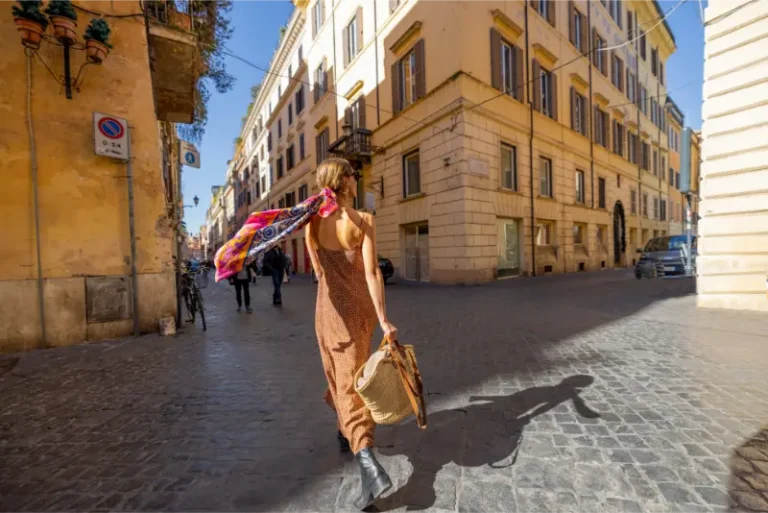
The contrast is striking: one end opens toward the Colosseum, while a few minutes uphill can feel secluded. Stone walls, convent complexes, villas and old lanes give Celio a contemplative atmosphere that differs from both the busy historic center and modern residential districts.
At a glance
| Area type | Historic/residential Rome neighborhood |
|---|---|
| Best for | Best for history lovers, couples, repeat visitors, photographers and first-time travelers who want ancient Rome nearby but prefer a quieter evening atmosphere |
| Main strength | Case Romane del Celio and the surrounding local streets |
| Getting around | Walking plus public transport, depending on the exact section |
| Stay here if | You want the neighborhood’s character to shape your trip, not just your hotel address |
Why explore this neighborhood
The contrast is striking: one end opens toward the Colosseum, while a few minutes uphill can feel secluded. Stone walls, convent complexes, villas and old lanes give Celio a contemplative atmosphere that differs from both the busy historic center and modern residential districts.
Rome changes dramatically from one district to the next. In Celio, the value is not simply a list of attractions; it is the way major sights, residential streets and everyday services sit together. Build in unstructured time. A coffee stop, a market visit or a slow evening walk can reveal more about the area than trying to collect every minor landmark.
What to see and do
Case Romane del Celio
The underground Roman houses beneath the church complex of Santi Giovanni e Paolo reveal layers of domestic and religious history beneath the hill. Give yourself enough time to look beyond the obvious façade or photo angle. The surrounding streets often provide the context that makes the stop memorable, and they are usually where the neighborhood feels most distinct from central Rome.
Santo Stefano Rotondo
The circular early Christian church is architecturally distinctive and one of the most unusual sacred spaces in Rome. Give yourself enough time to look beyond the obvious façade or photo angle. The surrounding streets often provide the context that makes the stop memorable, and they are usually where the neighborhood feels most distinct from central Rome.
Villa Celimontana
A green garden near the center of the hill provides shade and a welcome break between archaeological and church visits. Give yourself enough time to look beyond the obvious façade or photo angle. The surrounding streets often provide the context that makes the stop memorable, and they are usually where the neighborhood feels most distinct from central Rome.
Clivo di Scauro
This atmospheric ancient street and its arches create one of the hill’s most evocative transitions between monuments. Give yourself enough time to look beyond the obvious façade or photo angle. The surrounding streets often provide the context that makes the stop memorable, and they are usually where the neighborhood feels most distinct from central Rome.
Colosseum edge

From the western side of Celio, the Flavian Amphitheatre is only minutes away, making the neighborhood exceptionally convenient for early ancient-Rome sightseeing. Give yourself enough time to look beyond the obvious façade or photo angle. The surrounding streets often provide the context that makes the stop memorable, and they are usually where the neighborhood feels most distinct from central Rome.
A practical walking route
Start near the Colosseum, climb gently toward Clivo di Scauro and the Case Romane, continue to Santo Stefano Rotondo, then pause in Villa Celimontana. From there you can descend toward San Giovanni or return to the Colosseum side for dinner in Monti.
Keep the route flexible rather than treating it as a timed tour. Rome’s pavements, crossings, hills and summer heat can make short map distances feel longer. A good rule is to choose three essential stops and treat everything else as a bonus. This leaves room for an unexpected church, a bakery, a small square or simply a shaded bench.
Where to eat and how to read the local food scene
Celio has fewer restaurants than Trastevere or Monti, which helps preserve its calm. For a wider choice, walk toward the Colosseum, San Giovanni or Monti. If you stay on the hill, a small local restaurant near your accommodation can be more convenient than crossing the center after a long day.
For a more reliable meal, compare several nearby menus before sitting down. A restaurant does not need to be famous to be good, and a long menu in five languages is not automatically a problem, but it is worth checking whether the cooking has a clear Roman identity. Lunch is often the easiest time to try a neighborhood trattoria, while dinner reservations make sense on weekends.
Where to stay
Celio is excellent for travelers who want to be close to the Colosseum without sleeping on a heavily commercial street. Accommodation supply is smaller than in major hotel districts, so book early for attractive properties. Check the exact slope and elevator situation if mobility is a concern.

Before booking, open the property on a map and test the walking route to the transport stop you would actually use. In Rome, a difference of 700 meters can mean cobbles, stairs or a significant hill. Read recent reviews specifically for street noise, air-conditioning, elevator access and room size; those details often matter more than a generic star rating.
Getting around
Colosseo on Metro B is the main rapid-transit reference on the western side, while buses serve routes around the hill. San Giovanni offers additional connections farther east. Within Celio, walking is the best way to appreciate the topography and small monuments.
Do not plan the trip around a single transport mode. Rome works best when you combine walking, Metro where useful, buses for cross-neighborhood journeys and occasional taxis when they save a difficult connection. Contactless payment and digital tools can simplify many journeys, but keep a small backup plan in case of service changes or a crowded vehicle.
Who should stay here?
Best for history lovers, couples, repeat visitors, photographers and first-time travelers who want ancient Rome nearby but prefer a quieter evening atmosphere. It is less ideal for nightlife or for visitors who need a huge choice of restaurants directly outside the hotel.
What are the drawbacks?
The hill’s calm means fewer late-night services and less transport immediately at every corner. Some streets are steep or cobbled. In return, you get an unusually peaceful central district with direct access to some of Rome’s deepest historical layers.
Combine it with nearby Rome
Use this neighborhood as part of a wider cluster rather than crossing the city repeatedly. Helpful related guides include Colosseum guide, Case Romane del Celio guide, Santo Stefano Rotondo guide and St John Lateran guide. Grouping nearby sights by area saves time and usually creates a better day than jumping between distant headline attractions.
Practical tips
- Check the exact address: neighborhood names are often used loosely by accommodation websites.
- Plan for walking: comfortable shoes matter even when public transport is nearby.
- Carry water: especially from late spring through early autumn.
- Keep valuables secure: crowded transport and major sights require normal big-city awareness.
- Reserve only what needs reserving: leave part of the day flexible for neighborhood discoveries.
- Look beyond dinner: breakfast bars, bakeries and markets reveal local routines.
- Use the neighborhood at different times: early morning and evening often feel completely different from midday.
- Check accessibility: historic buildings may have steps, small lifts or uneven entrances.
- Do not overpack the itinerary: two major attractions plus a neighborhood walk is often enough for a satisfying day.
- Verify variable details: transport, opening hours and temporary closures can change, so check official sources before a time-sensitive visit.
A suggested half-day plan
Begin with the neighborhood’s most important sight or green space while you are fresh. Follow with a slow walk through residential streets, stop for coffee or lunch, then choose one secondary attraction rather than three. Finish in a square, park or restaurant area where you can sit down. This rhythm works particularly well in Rome because the city rewards transitions between monuments as much as the monuments themselves.
If this area is your accommodation base, reverse the logic on another day: leave early for a major attraction elsewhere, then return before dinner and spend the evening locally. That is one of the advantages of staying outside the most intensively touristed blocks—you can experience a part of Rome after the day-trippers and tour groups have moved on.
Is this neighborhood worth adding to a first trip?
For a short first visit, the answer depends on location and interests. If one of the area’s main sights is already on your list, spending another hour in the surrounding streets is usually worthwhile. If your schedule is only two days and the neighborhood lies away from your planned route, save it for a longer stay. Rome is better when you see fewer districts properly rather than turning the city into a transport exercise.
Frequently asked questions
Is Celio close to the Colosseum?

Yes. The western edge of the neighborhood begins immediately beside the Colosseum area.
Is Celio a good place to stay?
Yes for travelers seeking a central but quieter base, especially if ancient Rome is a priority.
What should I see in Celio?
Case Romane del Celio, Santo Stefano Rotondo, Villa Celimontana and the historic streets around Santi Giovanni e Paolo.
Is Celio hilly?
Yes. It is one of Rome’s ancient hills, so expect slopes and some uneven surfaces.
How much time do I need in Celio?
Two to four hours works well for a focused walk, while a slower half day allows time for churches, underground sites and the park.
Final thoughts
Celio, the Caelian Hill, sits immediately southeast of the Colosseum yet feels much quieter than the monument suggests. Ancient churches, archaeological layers, tree-lined spaces and residential streets make it one of the most rewarding central areas for travelers who like history without constant crowds. The best way to appreciate it is to avoid treating it as a collection of pins on a map. Choose a few anchors, walk between them slowly and let the neighborhood’s daily rhythm become part of the experience.