Ponte Cestio Rome: Tiber Island Bridge to Trastevere
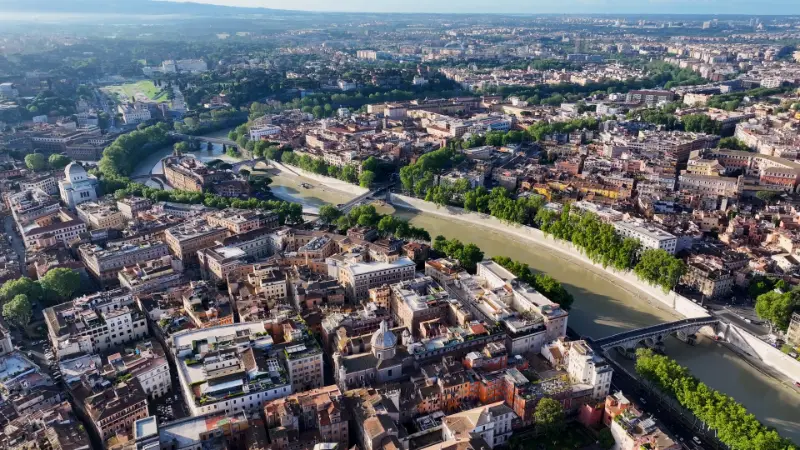
Ponte Cestio Rome is worth more than a quick crossing. Ponte Cestio is the western half of the classic two-bridge route across Tiber Island. It is less visually famous than Ponte Fabricio, but it is essential to understanding how the island has functioned as a stepping point between the historic center and Trastevere for more than two thousand years.
This guide focuses on what you can actually see on the ground, how the bridge fits into the surrounding neighborhoods and how to combine it with nearby sights without wasting time. Because bridges are working pieces of the city rather than closed museum objects, the most useful visit usually combines history, architecture and a short walking route.
Ponte Cestio Rome at a glance
| Date / period | around 46 BC, substantially rebuilt in the late 19th century |
| Connects | Tiber Island with Trastevere |
| Character | ancient crossing reconstructed with historic materials |
| Ticket | Free public crossing or outdoor viewpoint |
| Best for | Architecture, river history, photography and walking routes |
Why this bridge matters
Ponte Cestio is the western half of the classic two-bridge route across Tiber Island. It is less visually famous than Ponte Fabricio, but it is essential to understanding how the island has functioned as a stepping point between the historic center and Trastevere for more than two thousand years.
Rome is often experienced as a sequence of individual monuments, but the bridges reveal the city as a connected system. Roads, neighborhoods, pilgrimage routes, markets and political centers all depended on where people could cross water. Looking at a bridge in that wider context makes even a ten-minute stop more meaningful.
For a broader comparison, open our guide to the bridges of Rome. It helps place Ponte Cestio within the larger sequence of Tiber and Aniene crossings.
History: from first crossing to modern Rome
The bridge was first built around 46 BC, probably in the final decades of the Roman Republic, making it almost contemporary with Ponte Fabricio on the opposite side of the island.
Late Roman emperors restored the crossing in the fourth century, and the bridge acquired different names over time as political and religious landmarks around the island changed.
The construction of the modern Tiber embankments required a major rebuilding in the late nineteenth century. The channel was widened and the bridge was reconstructed with three large arches while reusing original travertine where possible.
Rome’s official tourism service provides a useful historical reference for the monument; see the official Turismo Roma page before your visit if you want to check municipal information or accessibility notes.
The most important lesson from this history is continuity. A Roman bridge may have been repaired, a papal bridge may incorporate older foundations, and a modern bridge may preserve an ancient route. In Rome, asking whether something is “original” is often less useful than asking which historical layers are still visible and why the crossing remained important.
Architecture and details to look for
Today the bridge is broader and more regular than its ancient predecessor, so it should not be read as an untouched Roman monument.
Its value lies in continuity: the alignment, materials and relationship with Tiber Island preserve the logic of the ancient crossing even though the visible structure reflects later engineering.
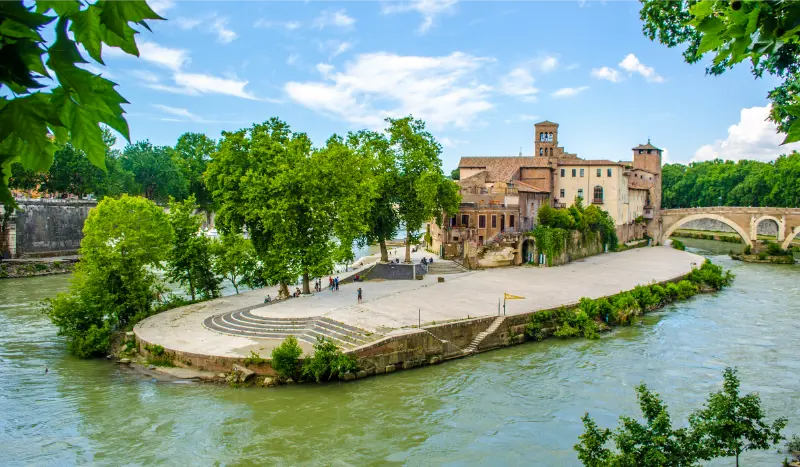
From the parapets you get close views of the island’s western tip and a useful perspective on the high flood walls that reshaped the river in modern Rome.
Do not rush to the center and leave. First look at the bridge from the approach, then from the parapet, and finally from the riverbank or a neighboring bridge. Each position explains something different: the urban axis, the structure itself and the relationship between arches, current and embankments.
When possible, compare the upstream and downstream sides. Rome’s bridges often look surprisingly different depending on the background: one direction may frame domes and palaces, while the other reveals flood walls, islands, archaeological remains or a more ordinary working city.
Best views and photography
Late afternoon works especially well from the Trastevere bank, where warm light can catch the stone of the bridge and the buildings of Tiber Island. For a wider composition, walk a little south along the river before looking back.
For phone photography, use a normal or slightly zoomed lens before reaching for an ultra-wide setting. Wide lenses exaggerate the river and can make the bridge feel smaller than it is. A modest zoom often creates a stronger relationship between the arches and the surrounding skyline.
If the bridge carries traffic, take photographs only from the sidewalk and do not step into the road for a symmetrical composition. Rome offers enough alternative viewpoints that no picture is worth creating a safety problem.
A simple walking route
- Step 1: Approach from Tiber Island after crossing Ponte Fabricio.
- Step 2: Pause near the center to compare both sides of the island.
- Step 3: Continue into Trastevere and turn toward Piazza in Piscinula or Santa Cecilia.
- Step 4: Return through the neighborhood or make a loop north to Ponte Sisto.
This route is deliberately compact. The goal is to use the bridge as a connector between existing sights rather than adding a separate transport-heavy excursion. If you are already nearby, the crossing usually costs very little time and gives the surrounding neighborhood more historical coherence.
What to see nearby
Tiber Island: the logical starting point for the crossing. Read our Tiber Island guide to connect the bridge with a larger itinerary.
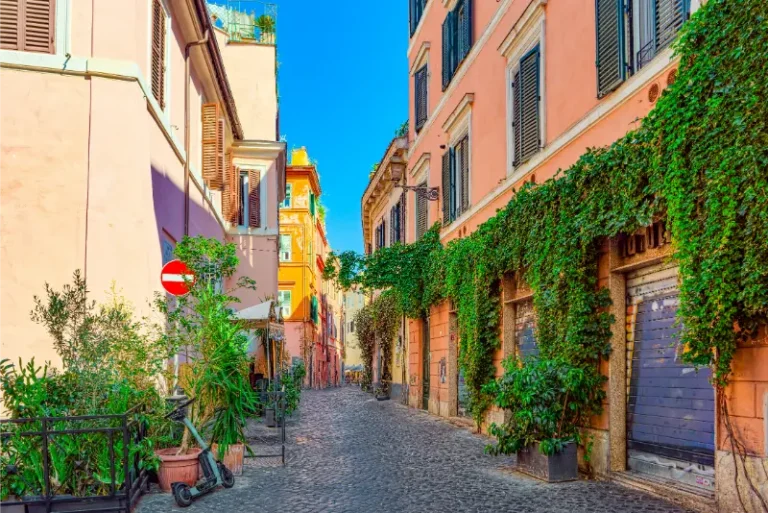
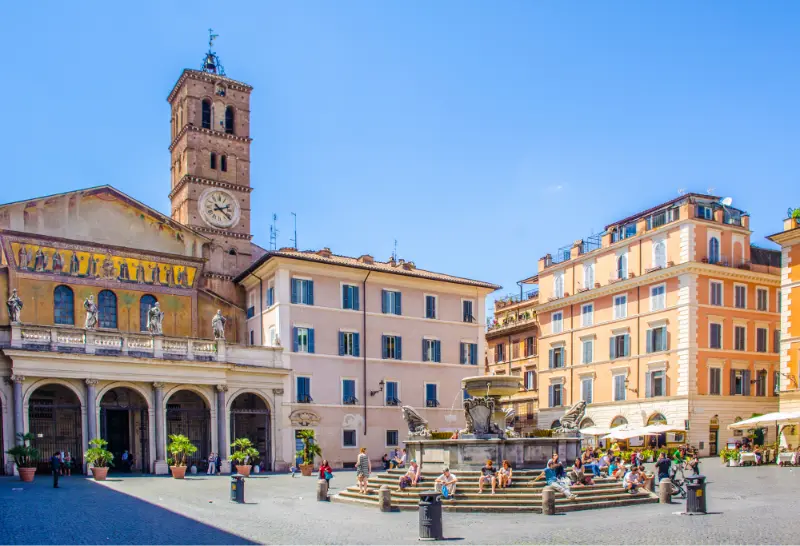
Trastevere: lanes, churches and evening atmosphere. Read our Trastevere guide to connect the bridge with a larger itinerary.
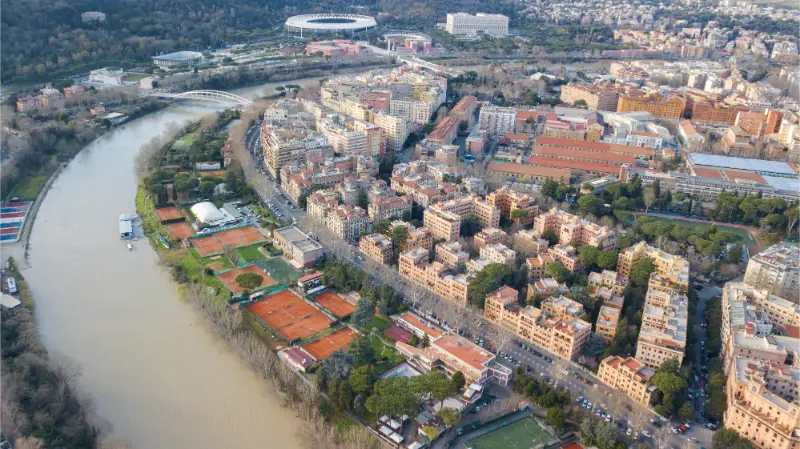
Ponte Sisto: another excellent pedestrian river crossing. Read our Ponte Sisto guide to connect the bridge with a larger itinerary.
If you have only one day in central Rome, avoid trying to collect every bridge. Choose one or two crossings that naturally fit the sights you are already visiting. The river becomes much more enjoyable when it is part of the route rather than another checklist.
Practical visiting advice
Ponte Cestio is free and functions as an ordinary public bridge. The best reason to seek it out is not a single monument on the bridge but the complete sequence Jewish Ghetto → Ponte Fabricio → Tiber Island → Ponte Cestio → Trastevere.
No reservation is normally needed for the bridge itself. Comfortable shoes matter more than any ticket because the best experience usually involves approaching from one neighborhood, crossing, and continuing on foot on the opposite bank.
Public transport can change because of roadworks and special events, so check live directions on the day rather than relying on a fixed bus number written months earlier. In the historic center, walking is often simpler than boarding transport for a distance of only a few stops.
Best time to visit
Early morning is the best choice for architecture and uncluttered photographs. Late afternoon and the hour around sunset are better for atmosphere, especially when the river catches reflected light and the city begins to illuminate.
Midday is perfectly workable if the bridge is simply part of your route, but hard summer sun can flatten stone details. In July and August, use the crossing as a short stop and save longer riverside walks for cooler hours.
Accessibility and families
Most central bridge crossings are level or gently sloped, but the approaches to the river embankments often involve stairs. Travelers using wheelchairs or strollers should distinguish between crossing the bridge and descending to the lower riverside path. The bridge itself may be straightforward even when the riverbank is not.
With children, turn the crossing into a visual task: find inscriptions, count arches, identify the island or castle, and compare old stone with modern embankments. A five-minute observation challenge can make infrastructure more engaging than a long historical explanation.
Common mistakes to avoid
- Treating the bridge only as a shortcut and never looking back from the opposite bank.
- Assuming every visible element belongs to the bridge’s original construction period.
- Stopping in cycle lanes or road space for photographs.
- Walking down to the river without checking where the nearest stairs or ramps return to street level.
- Trying to visit too many bridges instead of building one coherent neighborhood route.
Frequently asked questions
Is Ponte Cestio free to visit?
Yes. The bridge or public viewpoint can be experienced without an admission ticket. Nearby museums, churches or archaeological areas may have their own rules and opening times.
How much time should I allow?
Allow about 15–30 minutes if you are stopping specifically for the bridge, or 60–90 minutes when it forms part of a neighborhood walk with nearby sights.
Is it worth visiting on a first trip to Rome?
It has ancient origins, but the structure visible today was heavily reconstructed when the Tiber riverbanks were redesigned in the nineteenth century. Think of it as an ancient route preserved through a modern rebuilding.
Can I combine it with other bridges?
Yes. The most satisfying approach is usually a loop: cross one bridge, explore the opposite bank, and return by another crossing. This creates better views and avoids retracing the same streets.
What is the best season?
Spring and autumn are especially comfortable for riverside walking. Winter can be excellent for clear light and fewer crowds, while summer is best early in the morning or toward evening.
Do I need a guided tour?
No. A self-guided visit works very well because the bridge is part of the public city. A guide becomes more valuable if your interest is specialized Roman engineering, Baroque sculpture or the history of the Tiber floods.
Final tip
Do not visit Ponte Cestio as an isolated object. Approach it from one neighborhood, cross slowly, and continue into another. That simple movement reproduces the reason the bridge exists and turns historical information into something you can understand spatially.
Rome rewards this kind of connected sightseeing. A bridge, street, church and archaeological fragment often explain one another far better than they do when visited as separate attractions.