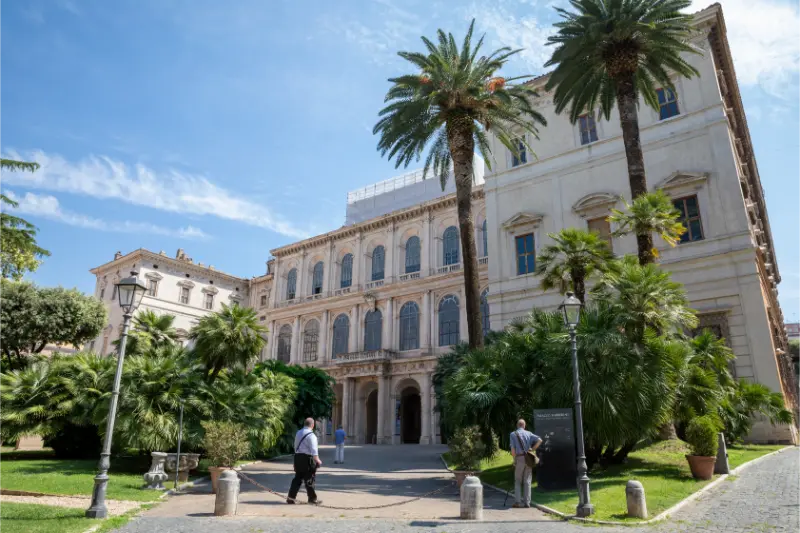
Palazzo Barberini Rome: Caravaggio, Raphael and Visiting Guide
Palazzo Barberini is one of the best art museums in central Rome for travelers who want masterpieces without the scale and pressure of the Vatican Museums. The palace houses part of the Gallerie Nazionali di Arte Antica and combines paintings by Caravaggio, Raphael and other major artists with a building shaped by some of the defining architects of Baroque Rome.
Its location near Piazza Barberini, the Quirinal and Via Veneto makes it easy to add to a central itinerary. If Caravaggio is your main interest, pair this museum with our Caravaggio in Rome route; if you are comparing collections, see our best museums in Rome guide.
The palace before the paintings
The Barberini family rose to extraordinary power in seventeenth-century Rome, most famously through Pope Urban VIII. The palace reflects that ambition. Carlo Maderno, Gian Lorenzo Bernini and Francesco Borromini all contributed to its development, which means the building itself is a lesson in Baroque architecture before you look at a single painting.
Notice the staircases. Bernini’s grand square staircase and Borromini’s helicoidal staircase embody very different spatial ideas within the same palace. Even if architecture is not your main interest, walking both helps you understand why Baroque Rome cannot be reduced to ornate decoration; movement through space was part of the design.
Allow time for the building to make an impression before going directly to the best-known paintings. The different staircases are not simply routes between floors; they reveal competing approaches to space, movement and display within an ambitious aristocratic residence. Look back toward the entrance, notice how natural light enters the rooms and pay attention to changes in ceiling height. These details make the collection easier to understand because many works were created for a culture in which architecture, ceremonial life and painting were closely connected. The palace is an attraction in its own right, not just a container for a gallery.
Caravaggio: Judith Beheading Holofernes
Caravaggio’s Judith Beheading Holofernes is one of the museum’s signature works. The scene captures the violent instant of action while using darkness and concentrated light to heighten psychological tension. Stand far enough away first to read the triangular movement between Judith, Holofernes and the maid, then move closer to study expressions and fabric.
This painting works especially well in dialogue with Caravaggio’s church works elsewhere in Rome. The museum setting allows close study, while paintings in San Luigi dei Francesi, Sant’Agostino and Santa Maria del Popolo remain in religious spaces. Seeing both contexts gives a fuller understanding of his Roman career.
Give this painting a few quiet minutes even if the room is busy. First follow the figures’ expressions and gestures, then look at how the light falls on skin, fabric and the edge of the action. Caravaggio concentrates the drama into a small number of decisive details rather than an elaborate background. Seeing the work in person also makes its physical scale and the contrast between light and dark much clearer than in a phone image. If you are visiting with younger children, explain the violent biblical subject beforehand and decide whether this part of the collection is appropriate for them.
Raphael’s La Fornarina
Raphael’s La Fornarina is another major draw. The portrait is famous partly because of the mystery surrounding the sitter and her relationship to the artist, but it is worth looking beyond the romantic story. Study the direct gaze, jewelry, vegetation and the artist’s signature on the arm band. The work is intimate in scale, so it rewards slow viewing rather than a quick photograph.
The ceiling of the Gran Salone
Pietro da Cortona’s vast ceiling fresco, the Triumph of Divine Providence, transforms the grand salon into one of the key Baroque interiors in Rome. Allegorical figures seem to burst beyond painted architectural boundaries, turning the ceiling into a political statement about Barberini power. Spend time looking from different points in the room; the composition is too large to understand from a single position.
Other works worth your attention
The collection extends well beyond its two most famous names. Depending on displays and loans, you can encounter works spanning the Middle Ages to the Baroque. Rather than racing from label to label, choose a few rooms that match your interests — portraiture, sacred painting, Renaissance art or seventeenth-century drama — and give them real attention.
Opening hours and 2026 practical information
The official Gallerie Nazionali Barberini Corsini site lists Palazzo Barberini at Via delle Quattro Fontane 13 and open Tuesday to Sunday from 10:00 to 19:00, with Monday closed. Temporary exhibitions can affect ticket prices and room access. Check the official Palazzo Barberini website shortly before visiting.
The museum participates in Italy’s first-Sunday state museum initiative when scheduled, which can make those days attractive for budget travelers but busier than normal. If quiet viewing matters more than saving the ticket cost, a weekday morning is usually the better choice.
How long to spend
| Visit style | Suggested time |
|---|---|
| Caravaggio + Raphael highlights | 60–75 minutes |
| Comfortable museum visit | 90 minutes–2 hours |
| Art-focused visit | 2.5 hours |
| Museum + nearby walk | Half day |
How to get there
Barberini station on Metro Line A is close to the palace, while buses serve Via del Tritone and nearby streets. From the Trevi Fountain or Spanish Steps, walking is often simplest. The approach involves some uphill streets, so in summer allow extra time and avoid rushing from a midday outdoor sight.
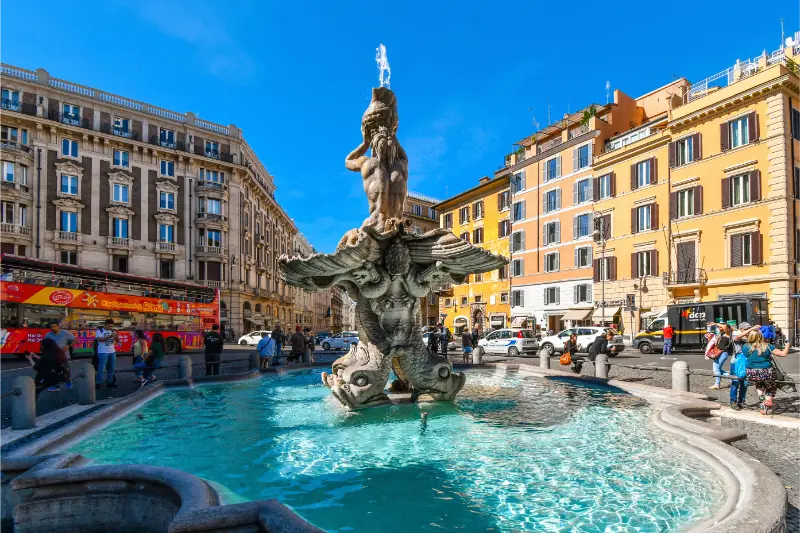
Piazza Barberini makes a useful meeting point before entering the museum. Check the walking route rather than assuming that the nearest metro stop leads directly to the entrance.
What to combine nearby
- Trevi Fountain early or late in the day
- Quirinal Hill and its viewpoints
- Santa Maria della Vittoria for Bernini’s Ecstasy of Saint Teresa
- Spanish Steps and Piazza di Spagna
- Capuchin Crypt if its theme interests you
A strong art route is Palazzo Barberini followed by Santa Maria della Vittoria and then the historic center. If you want more Bernini after the palace, our Bernini in Rome guide helps connect the architect and sculptor’s works across the city.
Palazzo Barberini is most rewarding as the centerpiece of an art-focused morning or afternoon rather than another stop squeezed between major ticketed attractions. Nearby streets lead toward San Carlo alle Quattro Fontane, Santa Maria della Vittoria and the Quirinal area, each with a different architectural story. The roads can be busy and some climbs are more noticeable than the distances suggest. Choose one nearby church, then leave space for coffee or lunch before continuing. If the Trevi Fountain is on the same route, see it at the beginning or end rather than repeatedly crossing the historic center.
Is Palazzo Barberini good on a rainy day?
Yes. Most of the visit is indoors, and the central location makes it easy to pair with churches and cafés without long exposed walks. Keep it in mind as one of the stronger options in our Rome on a rainy day guide.
Common mistakes
- Visiting only two famous paintings and ignoring the palace architecture
- Arriving on Monday
- Assuming temporary exhibition tickets never change
- Skipping the staircases
- Trying to photograph the huge ceiling without first viewing it as a complete composition
Frequently asked questions
Is Palazzo Barberini the same as Galleria Corsini?
No. They are two separate venues within the Gallerie Nazionali di Arte Antica. Palazzo Barberini is near Piazza Barberini; Galleria Corsini is in Trastevere.
Is it worth visiting if I have Galleria Borghese tickets?
Yes if you enjoy art. The collections overlap in period but not in experience, and Palazzo Barberini is less dominated by sculpture and timed-entry pressure.
Do I need to book far ahead?
Usually not as far ahead as the Galleria Borghese or Vatican Museums, but exhibitions and free-admission days can increase demand. Buying online is sensible when your schedule is fixed.
A Baroque architecture mini-route
After Palazzo Barberini, walk to San Carlo alle Quattro Fontane to see Borromini working on an intimate scale, then continue toward Sant’Andrea al Quirinale for Bernini’s architectural approach. The distances are manageable, but check church opening times because midday closures are possible. Seeing these spaces after the palace staircases makes the rivalry and contrast between the two architects much more tangible. Finish at the Trevi area only after the church visits, since the fountain remains accessible much later than interiors with fixed hours.
A slow-looking strategy for the main masterpieces
With famous works such as Judith Beheading Holofernes and La Fornarina, the temptation is to arrive, photograph and leave. A better approach is to spend the first minute without your phone. Look at the direction of the figures’ gazes, the source of light, the relationship between hands and faces, and the way fabric or background controls attention. Then read the label and look again. This simple sequence often produces a much stronger memory than collecting twenty images of paintings you barely saw.
The palace also rewards visitors who treat architecture as part of the collection. Compare Bernini’s broad ceremonial staircase with Borromini’s more fluid spiral stair. Then step into the Gran Salone and look upward before reading anything. The huge ceiling fresco was designed to impress through scale and illusion, so your first physical reaction is part of the intended effect. Only afterward should you decode the Barberini bees, allegorical figures and political message. This order — experience first, explanation second — works especially well in Baroque Rome.
When Palazzo Barberini is the better choice
Choose Palazzo Barberini over a larger museum when you want high artistic quality without committing most of the day. It is particularly effective after a morning at the Trevi Fountain, Spanish Steps or Quirinal because you can shift indoors during the hotter or wetter part of the day. The museum also works well for travelers who have already visited the Galleria Borghese and want more seventeenth-century painting without repeating the same experience. Its combination of architecture, Caravaggio, Raphael and a manageable route makes it one of central Rome’s most efficient serious art stops. If you are traveling with someone who is less interested in painting, the palace itself provides variety: staircases, ceilings, courtyard views and the spatial drama of a seventeenth-century aristocratic residence. Agree on a few shared highlights, then allow separate time in the galleries if needed. This makes Palazzo Barberini unusually easy for mixed-interest couples or families compared with collections where the building contributes little beyond exhibition walls.
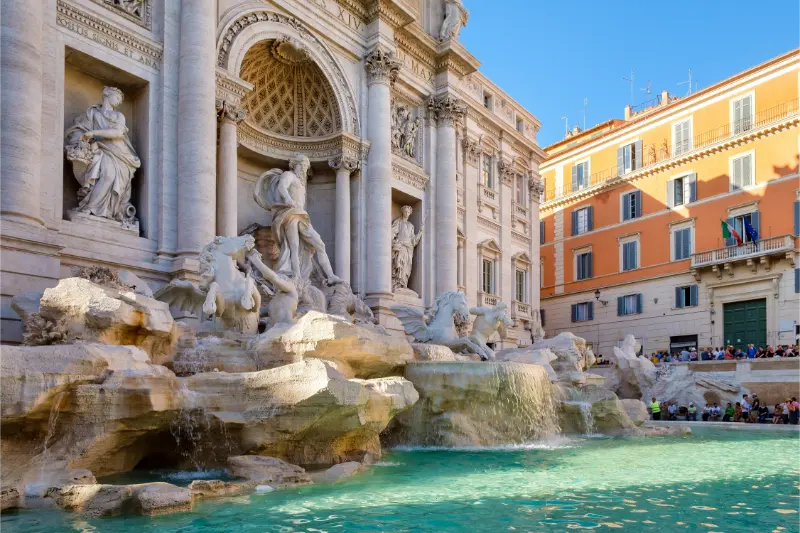
The Trevi Fountain is close enough to visit before or after the museum, but the area can be crowded. Leave space in the schedule for the walk between them.
One last planning tip
For Palazzo Barberini Rome, keep the day geographically simple and verify only the details that can change: opening hours, tickets, temporary closures and transport. Protect enough time to look rather than simply move between pins. A focused visit with one nearby companion sight will usually feel richer than adding two extra attractions across Rome.
Final advice
Palazzo Barberini is ideal when you want a serious art museum without sacrificing half a day. Give the architecture equal weight with the paintings, protect time for Caravaggio and Raphael, and look up in the Gran Salone. Because the palace sits in the middle of central Rome, it can anchor an elegant half-day rather than feeling like a museum isolated from the city around it.