Best Sunset Spots in Rome: 10 Beautiful Places for Golden Hour
Rome is one of those cities where sunset can completely change the character of a place you may already have seen during the day. Warm light catches domes, travertine, umbrella pines and rooftops, while viewpoints that feel ordinary at noon become memorable in the final hour before dark. The best sunset spot depends on whether you want a wide skyline, a close-up monument, a park atmosphere or an easy stop near your existing itinerary.
This guide focuses on public viewpoints and walks rather than paid rooftop venues. For a broader comparison of terraces and elevated sights at any time of day, see our best views in Rome guide. Sunset times change significantly through the year, so check the actual local sunset for your date and aim to arrive early enough to choose a position before the light peaks.
| Sunset spot | Best for | Planning note |
|---|---|---|
| Pincio Terrace | Classic skyline and St. Peter’s dome | Easy with Villa Borghese or Piazza del Popolo |
| Janiculum Hill | Wide west-facing city view | Allow time for the uphill approach |
| Orange Garden | Romantic, compact viewpoint | Popular at golden hour |
| Terrazza Caffarelli / Capitoline area | Domes and central rooftops | Good after Ancient Rome |
| Parco degli Acquedotti | Silhouettes and open sky | Best with time for the return journey |
| St. Peter’s area | Dome and basilica light | Works well after a Vatican day |
1. Pincio Terrace: the easiest classic sunset
The Pincio above Piazza del Popolo is one of the most convenient places to build into a normal sightseeing day. The terrace looks over the square toward Rome’s skyline, with St. Peter’s dome visible in the distance. Rome’s official tourism site specifically highlights the city’s panoramic viewpoints, and the connection with Villa Borghese makes Pincio simple to combine with a museum or park day.
If you are visiting Galleria Borghese, walk through the park toward the terrace rather than taking transport elsewhere for sunset. Arrive before the sun reaches the horizon because the color on the city often begins well in advance. Afterwards, descend to Piazza del Popolo and continue toward Via del Corso or the Spanish Steps. Our Villa Borghese guide helps connect the route.
2. Janiculum Hill: the broadest city panorama
The Janiculum is not one of ancient Rome’s traditional seven hills, but it is one of the city’s most rewarding panoramic areas. From different points along the ridge you can see domes, bell towers and the dense historic center. The terrace near the Garibaldi monument is the obvious gathering point, while the Fontanone dell’Acqua Paola offers another striking setting nearby.
The main planning issue is the climb. If you have already spent the day walking in Trastevere, allow enough energy for the uphill route or use transport for part of the journey. The reward is a view that feels more expansive than the compact Orange Garden. Combine it with our Janiculum Hill guide and finish with dinner in Trastevere.
3. Orange Garden on the Aventine: romantic and compact
The Giardino degli Aranci, or Orange Garden, is one of the easiest sunset stops for couples and first-time visitors. Its terrace frames the city toward St. Peter’s, while the shaded garden creates a calmer atmosphere than the traffic-heavy center. The nearby Aventine streets, Santa Sabina and the famous keyhole make the area worth visiting even before golden hour.
Because the viewpoint is compact, it can feel busy around sunset. Arrive early, enjoy the garden itself and do not focus only on securing a place at the wall. The light across the roofs is often attractive even away from the front line. See our Aventine Hill guide for a fuller route.
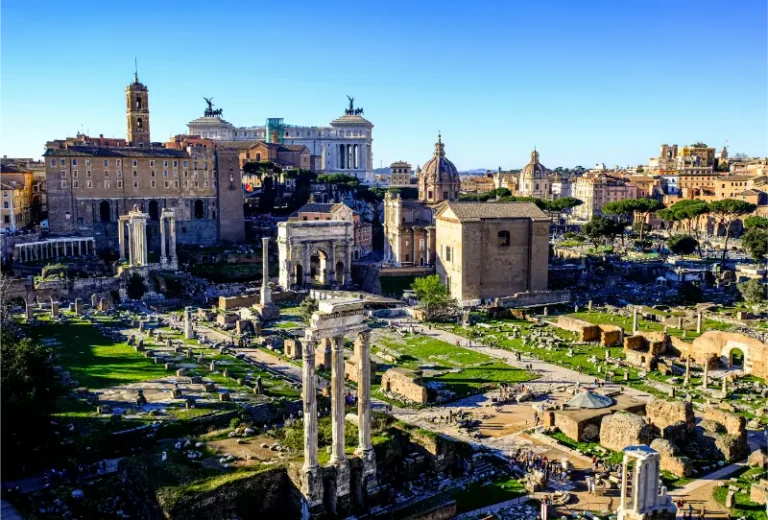
4. Capitoline Hill and the Forum viewpoints
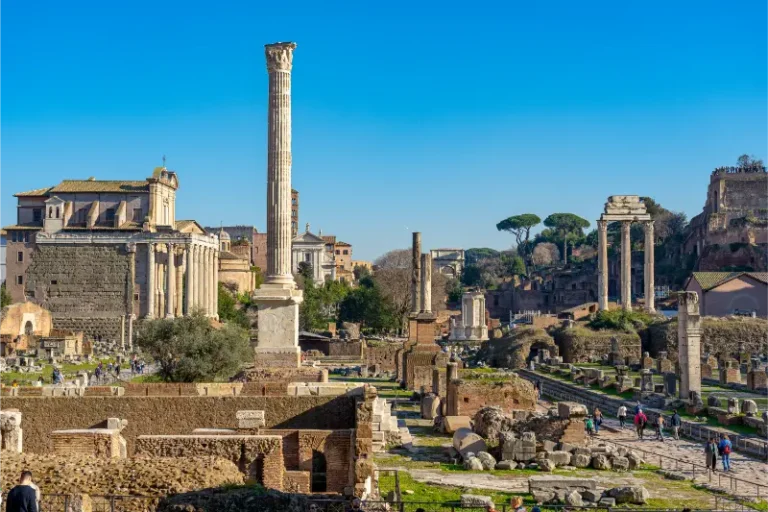
The Capitoline area is particularly useful when sunset falls soon after a day in Ancient Rome. Instead of crossing the city, stay around Piazza del Campidoglio and the streets overlooking the Roman Forum. From elevated points behind the Capitoline buildings, the ruins become layered against the city as the light softens.
This is less about watching the sun drop on an unobstructed horizon and more about seeing archaeology change color. It works well after the Roman Forum or Capitoline Hill. In summer, when sunset is late, you can take a long dinner break before returning for evening light.
5. Parco degli Acquedotti: silhouettes and open space
For a different atmosphere, the Park of the Aqueducts offers long lines of ancient arches, grass and broad sky instead of a dense rooftop panorama. At low sun, the aqueducts create dramatic silhouettes and the park feels far removed from the monumental center. It is one of the strongest options for travelers interested in photography.
The trade-off is location. You need to plan the metro and walk, and you should not remain in unfamiliar parts of the park after dark without knowing your route. Go with enough daylight to orient yourself, then return toward the station before it becomes difficult to see paths. Our Parco degli Acquedotti guide covers access and daytime planning.
6. St. Peter’s Square and Via della Conciliazione
Sunset around St. Peter’s is less about height and more about monumental light. The basilica façade, dome and colonnades take on warmer tones, while the long axis of Via della Conciliazione can create strong compositions as the sky changes. This is a natural ending to a Vatican day because it requires no additional cross-city transfer.
If you have visited the Vatican Museums, give yourself a break before the final walk rather than treating sunset as another deadline. Security or religious events can affect access to the square. For a broader plan, use our St. Peter’s Basilica guide and Prati guide.
7. Ponte Umberto I and the Tiber bridges
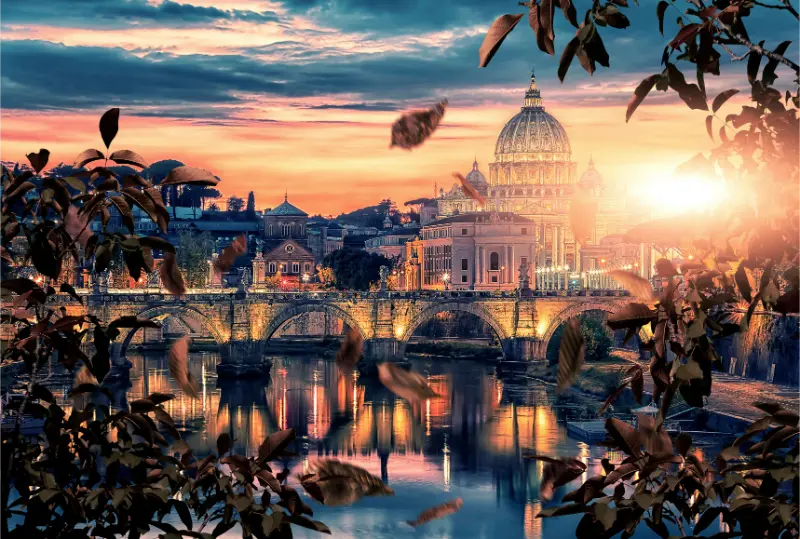
Some of Rome’s most photogenic sunset views are not from hills at all. Bridges along the Tiber can frame St. Peter’s dome, Castel Sant’Angelo, river reflections and warm façades. Ponte Umberto I is popular with photographers because of the view toward the dome, while bridges around Castel Sant’Angelo provide a closer monumental composition.
These locations are ideal when your evening is already in the historic center. They also work on days when a long climb is unappealing. Keep pedestrian traffic in mind and do not block narrow sidewalks or cycle paths while taking photographs. Continue afterward toward Piazza Navona or the Pantheon.
8. Spanish Steps and Trinità dei Monti
The Spanish Steps area can be extremely busy, but late light from the upper level near Trinità dei Monti creates a useful view over the rooftops and down toward the shopping streets. It is not the city’s widest sunset panorama, yet it is convenient and easy to combine with a central itinerary.

Treat it as an atmospheric stop rather than a dedicated photography expedition. Respect restrictions on sitting on the monumental staircase and keep the route moving when crowds are heavy. Our Spanish Steps guide explains what else to see around Piazza di Spagna.
9. Giardino del Quirinale area and central high points
The Quirinal is one of Rome’s historic hills, and streets around the palace naturally sit above parts of the center. The views are less open than at Janiculum or Pincio, but the combination of warm façades, long streets and evening light can be excellent while moving between Trevi and the upper city.
This is a good fallback if clouds make a dedicated sunset trip uncertain. Instead of traveling to a distant viewpoint, continue sightseeing and watch for light between buildings. Rome’s golden hour is often most rewarding when it appears unexpectedly on a street corner.
10. Castel Sant’Angelo and the riverside
Castel Sant’Angelo works beautifully around sunset because the cylindrical fortress, statues on the bridge and river create several layers. If terrace access is available during your visit, the upper levels add a panoramic perspective; even from the riverbank, the monument catches evening light impressively.
This location is especially convenient after the Vatican or Prati. The bridge can be crowded, so walk a short distance along the river for alternative angles. Our Castel Sant’Angelo guide covers the interior and terrace if you want to make it a full visit.
How to photograph a Rome sunset without overcomplicating it
The best photographs usually come from arriving early and staying a little after the sun disappears. Golden hour warms the buildings, while blue hour can separate illuminated domes from the sky. A phone is enough for most travelers if you keep the lens clean, avoid extreme digital zoom and expose for the bright sky rather than the darkest foreground.
If photography is a central part of the trip, build one viewpoint into a day rather than chasing a different sunset every evening. Weather can change quickly, and a cloudy sky may still produce strong color. See our Rome photography guide for light, composition and practical advice.
Sunset planning mistakes to avoid
- Arriving exactly at the published sunset time instead of 30–45 minutes earlier.
- Crossing the entire city for a viewpoint when an excellent one is already near your itinerary.
- Choosing an isolated park without planning the return route after dark.
- Blocking paths or monument entrances for photographs.
- Assuming sunset will be visible just because the afternoon is sunny.
- Leaving immediately when the sun drops and missing the often-beautiful blue hour.

Frequently asked questions
What is the best sunset spot in Rome?
For a first visit, Pincio is the easiest combination of view, central location and access. Janiculum gives a wider panorama, the Orange Garden feels more intimate, and Parco degli Acquedotti is strongest for silhouettes and photography.
Is sunset at the Orange Garden free?
The garden is a public park, but opening hours can vary seasonally. Check current local information if your visit is close to closing time, especially in winter.
Where can I see St. Peter’s dome at sunset?
Pincio, Janiculum, the Orange Garden and several Tiber bridges can all include the dome in the view, though the exact angle and light depend on season and weather.
Final advice
Do not build your entire Rome day around sunset. Choose a viewpoint that fits naturally with the sights you are already visiting, arrive early and enjoy the transition into evening. The most memorable part is often not the instant the sun disappears, but the half hour when the city slowly changes color.