
Campo de’ Fiori Rome: Market, History, Food and Evening Atmosphere
Campo de’ Fiori changes personality several times in the same day. In the morning it is associated with market stalls and deliveries; by afternoon it becomes a busy passage between the Pantheon, Piazza Navona and the Jewish Ghetto; in the evening bars and restaurants bring a younger, louder atmosphere. That constant transformation is the main reason the square is worth understanding rather than just photographing.
It is also unusual among Rome’s famous historic squares because it is not dominated by a church. Instead, the central figure is the dark statue of philosopher Giordano Bruno, whose execution here in 1600 gives the piazza a much more complex history than its colorful market image suggests.
The market at Campo de’ Fiori
Campo de’ Fiori has hosted commercial activity for centuries. Today the market is most relevant in the morning and daytime, with stalls that may sell produce, flowers, spices, packaged foods and tourist-oriented products. The exact mix can vary, so travelers expecting a purely local food market should arrive with realistic expectations.
For fresh-food culture that feels more neighborhood-focused, also consider the market in Testaccio, covered in our Testaccio guide. Campo de’ Fiori is valuable less because it is Rome’s ‘best’ market and more because commerce, history and tourism overlap in such a central location.
Giordano Bruno and the darker history of the square
The statue in the center commemorates Giordano Bruno, the philosopher who was executed by burning in Campo de’ Fiori in 1600 after condemnation for heresy. The nineteenth-century monument faces toward the Vatican and has become a symbol associated with free thought and the conflict between authority and intellectual freedom.
Knowing this history changes the mood of the square. What looks like a cheerful market plaza is also a site of punishment and public spectacle. Rome often layers ordinary daily life directly on top of difficult history, and Campo de’ Fiori is one of the clearest examples.
Best time to visit
Come in the morning if the market is your priority. Late afternoon is better for combining the square with a walk through surrounding streets, while evening is energetic and can be noisy. If you are staying nearby, note that the nightlife atmosphere may continue later than you expect, especially on weekends and in warmer months.
Where to walk from Campo de’ Fiori
The square sits in an exceptionally walkable part of the center. Piazza Navona is only a few minutes away, while the Pantheon lies beyond it. In the opposite direction, you can reach the Jewish Ghetto and the Tiber without using public transport.
- Piazza Farnese: a calmer monumental square immediately nearby.
- Via Giulia: one of Rome’s most elegant Renaissance streets and a pleasant alternative to the busiest pedestrian flows.
- Jewish Ghetto: continue toward Largo di Torre Argentina and the Portico d’Ottavia area.
- Trastevere: cross the river for an evening continuation, ideally after the market has finished.
Food around Campo de’ Fiori
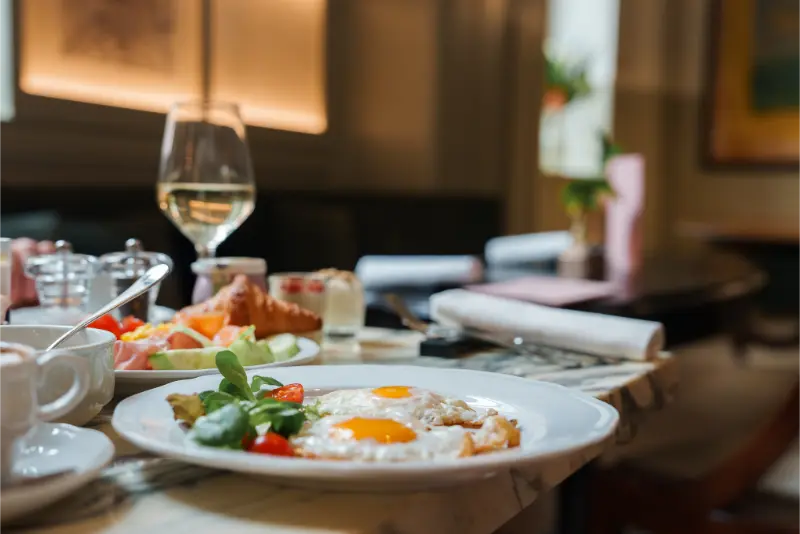
The immediate square mixes genuine long-standing businesses with highly tourist-oriented restaurants. Do not judge only by whether a place is full. Check the menu, prices and recent reviews, and walk one or two streets away if you want a calmer meal. Bakeries, pizza by the slice and simple Roman dishes are easy to find in the surrounding area.
Use our what to eat in Rome guide to recognize traditional dishes before ordering. For travelers who want to experience food rather than simply eat beside a famous square, nearby streets often offer better value and atmosphere.
Campo de’ Fiori at night
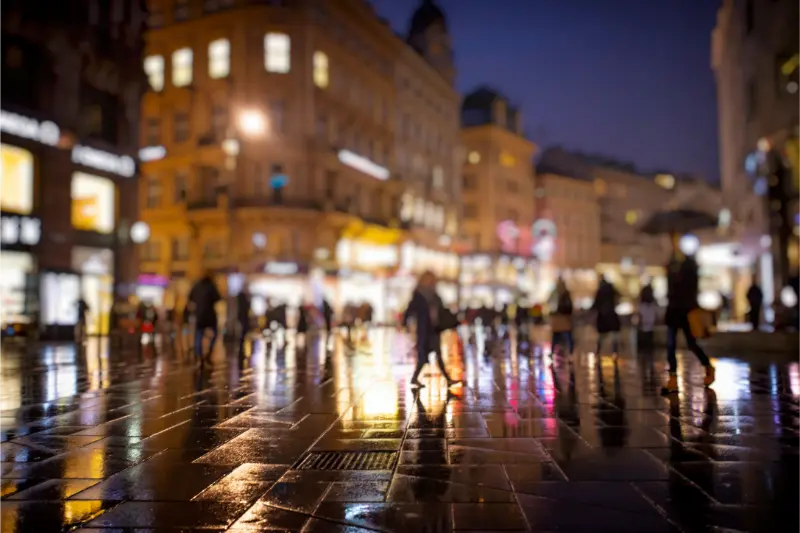
After the market disappears, tables, bars and groups of people take over. The square becomes one of central Rome’s livelier nightlife zones. Some visitors love the energy; others find it less romantic than the illuminated Pantheon or Piazza Navona. If you prefer quiet evenings, visit Campo de’ Fiori before dinner and move elsewhere later.
Is it a good area to stay?
The location is excellent for first-time sightseeing because many central landmarks are within walking distance. The trade-off is noise. Rooms facing busy streets or the square can be less suitable for light sleepers. Compare the area with Trastevere, Monti, Prati and the Pantheon zone in our where to stay in Rome guide.
Campo de’ Fiori with children
Families may enjoy the market in the morning, but the evening bar scene is less useful with young children. The square itself is open and relatively easy to cross, though delivery vehicles, crowds and cobblestones require attention. Pair the stop with a short walk to Piazza Navona rather than making it a long standalone activity.
Photography tips
- Morning is best for market color and vendor activity.
- Use the Giordano Bruno statue as a strong central silhouette.
- Step into a side street and photograph the square through the narrow urban frame.
- At night, expose for the illuminated façades rather than the brightest bar signs.
- Avoid photographing vendors closely without sensitivity; the market is a workplace, not a stage set.
How long do you need?
Thirty minutes is enough to understand the square, while a longer visit makes sense if you are shopping, eating or exploring nearby streets. The best use of Campo de’ Fiori is as a link in a larger route rather than a destination that occupies half a day.
A perfect central-Rome route
Start at the Pantheon, walk to Piazza Navona, continue to Campo de’ Fiori and Piazza Farnese, then finish in the Jewish Ghetto or cross the Tiber toward Trastevere. The route is compact, varied and especially good in late afternoon when the monuments begin to shift into evening light.
Common mistakes to avoid
- Expecting the modern market to feel completely untouched by tourism.
- Choosing accommodation on the square without considering nightlife noise.
- Ignoring the Giordano Bruno monument and the darker history of the site.
- Eating at the first terrace without checking prices or menu quality.
- Visiting only at one time of day and assuming the square always has the same atmosphere.
Final tip
Visit Campo de’ Fiori twice if you are staying nearby: once in the morning and once after sunset. The contrast explains more about central Rome than a long history lecture. This is a square that changes function with the hours, and that everyday flexibility is precisely what has kept it alive.
Market shopping: what is actually worth buying?
Treat the market as a place to browse rather than a guaranteed source of artisanal souvenirs. Fresh produce can be useful if you are staying in an apartment, while packaged spices and foods vary widely in authenticity and value. Compare prices and do not assume that every product is locally made. For gifts, specialty food shops in the surrounding streets may offer clearer labeling and better packing for travel.
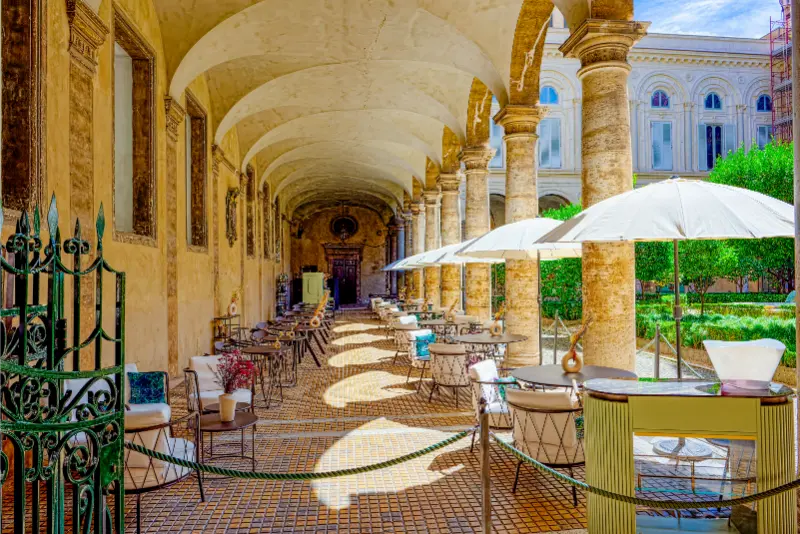
The square and accommodation noise
Campo de’ Fiori looks idyllic on a map because it is close to almost everything, but the same centrality creates noise. If you are considering a hotel or apartment here, read recent reviews specifically for street noise, window insulation and late-night activity. A room one or two blocks away can preserve the walkable location while giving you a better night’s sleep.
Via Giulia and the quieter side of the area
A few minutes west, Via Giulia offers a different rhythm: long Renaissance perspectives, palaces and quieter stretches that feel far removed from the market crowds. Combine the two and you get a more complete picture of this part of Rome. The contrast is especially pleasant in late afternoon when Campo de’ Fiori is becoming busier.
Getting there
There is no metro station directly on the square, which is one reason walking works so well. Buses and trams serve surrounding corridors, but from the Pantheon, Piazza Navona or Jewish Ghetto the distance is short enough that transit usually adds complexity. If you are carrying luggage, use a taxi to your accommodation rather than trying to drag suitcases across long sections of cobblestones.
Why Campo de’ Fiori belongs in a Rome itinerary
The square is not as architecturally grand as Piazza Navona and not as historically overwhelming as the Forum. Its value comes from continuity of use. Commerce, memory, nightlife and ordinary movement share the same space. That makes it a good reminder that Rome is not only an open-air museum; its historic center still changes function hour by hour.
Safety and late-evening atmosphere
Campo de’ Fiori is busy rather than inherently threatening, but the combination of nightlife, alcohol and dense crowds means normal city awareness is useful. Keep phones and wallets secure, especially when the square is packed, and know your route back to the hotel before staying late. Solo travelers may prefer to leave by a well-lit main street rather than wandering randomly once bars begin closing.
A useful stop for apartment travelers
If you are staying in a vacation rental, the morning market and surrounding food shops can be practical for fruit, bread and simple ingredients, though prices in such a central district are not necessarily the city’s lowest. Buying a few breakfast items can still save time and make an apartment stay feel more local. Check what is genuinely fresh and compare with neighborhood supermarkets if you are shopping for several days.
How Campo de’ Fiori differs from Testaccio Market
Campo de’ Fiori is historic, central and deeply connected to tourism; Testaccio Market is more useful if you want a neighborhood food-market experience and lunch under one roof. Neither needs to ‘win’. They serve different purposes. Visiting both gives you a better sense of how market culture changes between the monumental center and a residential district.