Piazza Farnese Rome: Palazzo Farnese, Fountains and Renaissance Atmosphere
Piazza Farnese sits only moments from Campo de’ Fiori, yet the atmosphere changes immediately. Campo de’ Fiori is commercial, noisy and shaped by its market; Piazza Farnese is formal, spacious and dominated by one of the great Renaissance palaces of Rome. That contrast is exactly why the square deserves more than a quick pass.
The main visual anchor is Palazzo Farnese, now the French Embassy, framed by two large granite-basin fountains. You can appreciate the square without entering any building, making it an excellent low-cost stop between the Pantheon/Navona area and Trastevere.
Piazza Farnese at a glance
| Area | Regola district, beside Campo de’ Fiori |
| Best for | Renaissance architecture, quiet evening walks and history |
| Suggested time | 30–60 minutes; longer with nearby sights |
| Cost | Free public square; palace access is separate and limited |
| Best moment | Early morning or evening |
Why it deserves a separate stop
Piazza Farnese is one of the clearest places to read Renaissance power through urban space. The palace was not designed as an isolated object; the open piazza in front of it magnifies the façade and creates ceremonial distance.
It also gives travelers a useful lesson in pacing. Rome’s famous squares do not all need fountains by Bernini or crowds of street performers. Some work because of proportion, architecture and relative calm.
History and context
The square developed with the construction of Palazzo Farnese in the sixteenth century for Cardinal Alessandro Farnese, later Pope Paul III. Antonio da Sangallo the Younger, Michelangelo, Vignola and Giacomo della Porta all contributed to the palace over time.
The granite basins in the square came from ancient Rome and were adapted as fountains in the seventeenth century by Girolamo Rainaldi. Their reuse is a classic Roman pattern: ancient material gains a new civic and decorative function in a later city.
What to see and notice
Palazzo Farnese façade
Stand far enough back to read the entire façade instead of photographing only the entrance. Michelangelo’s modifications, the powerful cornice and the regular window rhythm give the building an authority that explains why it became a model for later palaces.
The two granite fountains
The matching fountains use ancient granite basins traditionally linked with the Baths of Caracalla. Their scale and symmetry reinforce the relationship between the square and palace. At night the water and stone can feel especially atmospheric.
Santa Brigida
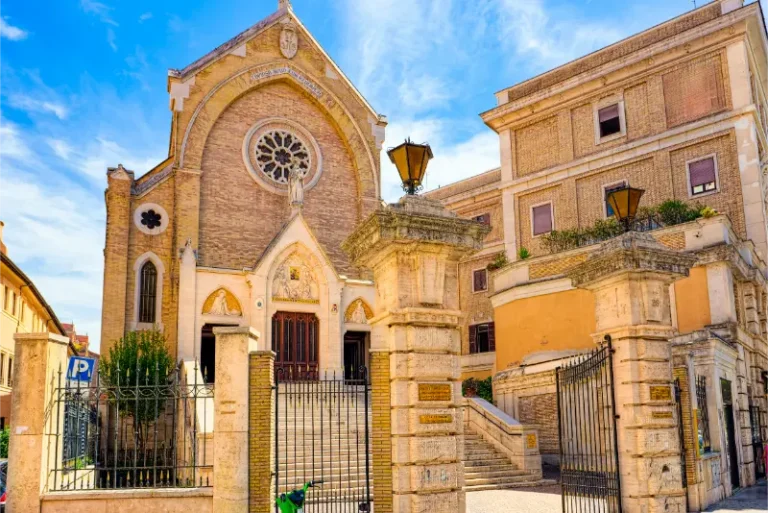
On the square is the church and house associated with Saint Bridget of Sweden. It adds a different religious layer to a space otherwise dominated by aristocratic and diplomatic architecture. Check current access if you want to enter rather than assuming tourist hours.
The contrast with Campo de’ Fiori
Walk the few steps between the two squares and pay attention to how quickly Rome changes. One is associated with market life and nightlife; the other with a controlled Renaissance composition. Seeing them together is more instructive than viewing either in isolation.
Side streets toward the Tiber
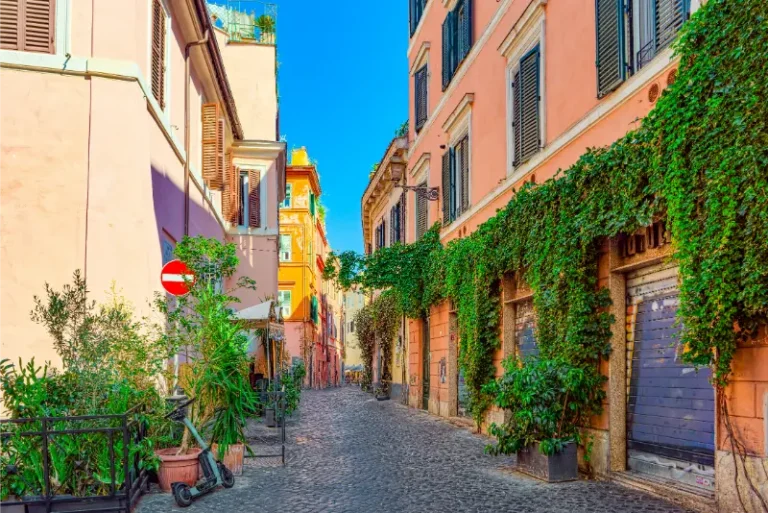
The surrounding lanes lead toward Via Giulia, Ponte Sisto and the river. These are ideal for a slow walk because they preserve a smaller scale than the major boulevards and make it easy to continue into Trastevere.
A practical walking route
Use Piazza Farnese as the calm center of a compact walking loop.
- Start in Campo de’ Fiori and observe the busy market-square character.
- Walk into Piazza Farnese and stand centrally to study the palace façade and fountains.
- Circle the square slowly, noting Santa Brigida and the surrounding palaces.
- Continue toward Via Giulia for a Renaissance-street extension, or head west toward Ponte Sisto.
- Cross the river into Trastevere if you want to turn the walk into an evening plan.
The route is especially good in late afternoon because you can move from architecture into aperitivo and dinner without relying on transport.
When to go
Early morning gives the square an almost architectural-model clarity, with fewer people and little restaurant activity.
Evening is the most atmospheric time, especially when combined with Campo de’ Fiori and Ponte Sisto. The exterior of Palazzo Farnese is always visible, but interior access follows separate institutional arrangements and should never be assumed.
How to combine it with nearby Rome
The easiest pairing is Campo de’ Fiori. Add Ponte Sisto and Trastevere for a longer walking sequence.
If you want a Renaissance theme, continue to Via Giulia and Santa Maria della Pace on the other side of the Navona area.
Practical tips that make the visit better
Do not plan the visit around entering Palazzo Farnese unless you have confirmed a specific tour or event. It is an active embassy, not a normal walk-in museum.
The square has little shade in the center, so in summer use the perimeter and visit early or late.
Because Campo de’ Fiori is so close, restaurant menus and tourist pricing vary widely. Walk a few streets before choosing where to eat.
The area is best explored on foot. Taxis can bring you nearby, but the surrounding street network is where much of the experience happens.
Common mistakes to avoid
- Assuming Palazzo Farnese is freely open like a museum.
- Spending only seconds in the square while moving between Campo de’ Fiori and Trastevere.
- Ignoring the ancient origin of the fountain basins.
- Visiting at midday in midsummer with no shade plan.
- Treating Campo de’ Fiori and Piazza Farnese as the same type of urban space.
A simple itinerary around this stop
For one hour, see Campo de’ Fiori, Piazza Farnese and the first stretch of Via Giulia. This creates a strong contrast of market, palace square and Renaissance street.
For an evening, add Ponte Sisto and Trastevere. The route is almost entirely about public space, so it remains useful even when museums and churches are closed.
Palazzo Farnese without an interior visit
Even when you cannot enter Palazzo Farnese, the exterior deserves careful viewing. Look at the rusticated corners, the central balcony, Michelangelo’s cornice and the disciplined window arrangement. A palace façade was a statement of family status, and the square gives it room to work as intended.
The French Embassy periodically supports cultural openings and programs, but these are not equivalent to normal museum hours. Treat any opportunity to enter as a special event and verify it directly rather than building a trip around an old tour description.
Photography and atmosphere
The best wide photographs come from the far side of the square, but keep perspective: the palace is broad and the fountains sit forward in the space. A phone’s ultra-wide lens can distort the proportions dramatically.
At night, focus less on perfect photographs and more on atmosphere. The sound of the fountains and the quieter square create a natural pause before crossing the river.
Official information and current access
Turismo Roma explains the sixteenth-century development of Piazza Farnese, the palace, Santa Brigida and the reused granite basins on the official Turismo Roma page for Piazza Farnese.
Opening conditions, security arrangements, religious services, restoration work and special events can change with little notice. Check the official source shortly before your visit rather than relying on an old screenshot or a timetable copied by a third-party site.
FAQ
Is Piazza Farnese free?
Yes. The square is public and free to visit.
Can you visit Palazzo Farnese?
Interior access is limited and organized separately because the building houses the French Embassy. Check current official programs before planning around entry.
How close is Campo de’ Fiori?
Only a very short walk away, which makes the two squares natural to visit together.
What are the fountains made from?
They incorporate large ancient granite basins later adapted as fountains.
How long do you need?
Thirty minutes is enough for the square itself; allow an hour or more if you continue into Via Giulia or Campo de’ Fiori.
Planning this stop well
Rome rewards geographic planning. Before leaving your hotel, group this stop with places that sit in the same part of the city and keep only one or two timed reservations in the day. Moving repeatedly between distant neighborhoods wastes energy and makes delays feel more stressful than they need to be.
Allow a margin for churches, security controls, temporary closures and simple discoveries. A doorway, small exhibition or street scene may deserve ten minutes you did not schedule. Building that flexibility into the day produces a more realistic itinerary than trying to hit every saved map pin.
For lunch and dinner, read current menus and recent information rather than following a years-old recommendation blindly. Rome’s restaurant scene changes, while the best choice also depends on where you happen to be when you are hungry. Walking a few streets away from the most famous square often improves both atmosphere and value.
Carry a refillable bottle, sun protection in warm months and a compact layer in cooler seasons. Central Rome involves more outdoor time than many travelers expect, even on museum-heavy days, because the streets and squares between attractions are part of the experience.
If accessibility is important, verify the exact route rather than judging from distance alone. Cobblestones, steps, steep ramps, security barriers and historic thresholds can make a short walk more demanding than a longer modern street. Official accessibility information should take priority over general travel descriptions.
Is it worth adding to your Rome itinerary?
Piazza Farnese is ideal for travelers who appreciate architecture and urban history more than headline attractions. It adds texture to a central walk without requiring a ticket or reservation.
Its greatest value comes from comparison: visit it immediately before or after Campo de’ Fiori and Rome’s ability to shift mood within a few meters becomes obvious.