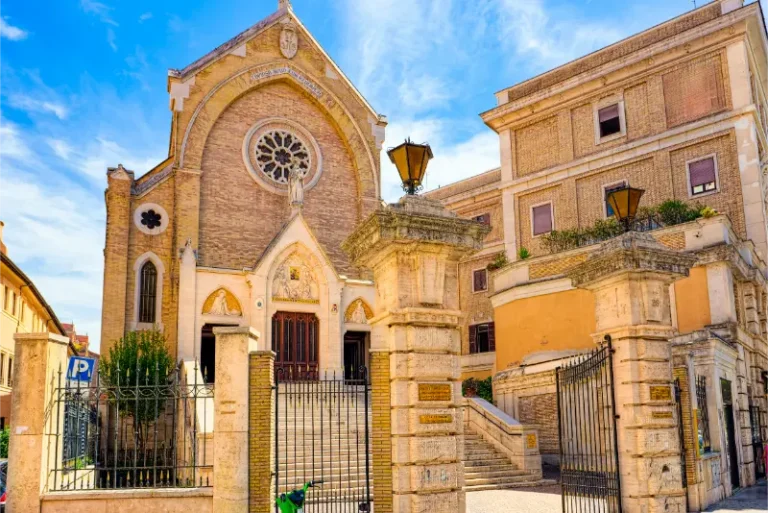
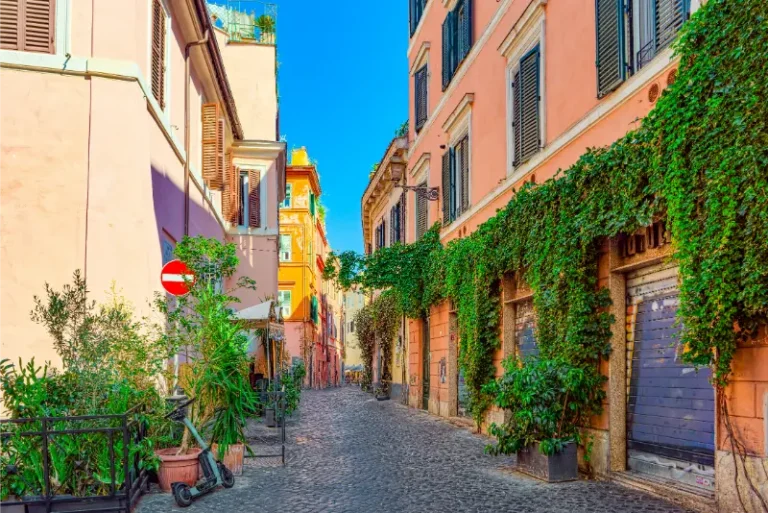
Via Nazionale Rome: Shopping, Architecture and a Walk from Repubblica to the Center
Via Nazionale is one of central Rome’s most useful urban corridors: a broad nineteenth-century avenue running from the Piazza della Repubblica area toward the historic center, lined with shops, hotels, public buildings and cultural venues. It does not have the postcard intimacy of Via Margutta or the luxury identity of Via dei Condotti, but it is far more useful than many visitors realize.
The street makes an excellent practical walk between Piazza della Repubblica, Palazzo Esposizioni Roma and the Quirinale/Piazza Venezia area. Rather than rushing along it as a transfer, you can use the avenue to understand the expansion of Rome after 1870 and to combine shopping with several worthwhile cultural stops.
Via Nazionale at a glance
| Area | Central Rome, from Piazza della Repubblica toward the historic center |
| Best for | shopping, architecture, practical walking and cultural stops |
| Suggested time | 45–75 minutes to walk; 2–4 hours with museums or exhibitions |
| Cost | Free to walk; museums and shows vary |
| Best moment | Late morning for shops or early evening for an urban stroll |
Why this place is worth your time
Via Nazionale is valuable because it joins places that many travelers already plan to visit. If your hotel is near Termini or Repubblica, this street can become the spine of a sightseeing route rather than a corridor you repeatedly cross by taxi.
Architecturally, it represents a different Rome from the Baroque center. The scale, façades and institutional buildings belong to the period when the city had to function as the capital of a newly unified state. That makes the avenue a useful counterpoint to medieval lanes and ancient ruins.
History and context
The modern avenue developed during the great urban transformations that followed the designation of Rome as capital of Italy. New streets were cut or enlarged to connect the railway station and expanding residential districts with the political and administrative center.
Via Nazionale became a showcase for the new capital, with hotels, ministries, banks, theaters and commercial premises. Its broad alignment and substantial façades reflect late nineteenth-century ideas about movement, representation and modern city life.
The street still performs that role today. It is a working avenue rather than a preserved museum district: buses, shoppers, office workers and tourists all use it. That mixture is part of its appeal, even if it means the atmosphere is busier than in pedestrian-only parts of the historic center.
What to see and notice
The view from Piazza della Repubblica
Start at Piazza della Repubblica. The axis of Via Nazionale was deliberately emphasized by the arrangement of the square and Fontana delle Naiadi, so the beginning of the walk makes more sense when you first look back at the curved exedra-like façades.
This is also the best point to understand the contrast between the ancient Baths of Diocletian behind you and the new-capital avenue ahead.
Palazzo Esposizioni Roma
Palazzo Esposizioni Roma at Via Nazionale 194 is the street’s strongest cultural anchor. The monumental white building hosts major exhibitions, film programs and cultural events, and its schedule changes throughout the year.
Do not assume you need to enter every time. Even from outside, the building demonstrates how cultural institutions were given a monumental presence along the avenue. If a current exhibition interests you, add at least 90 minutes.
Palazzo Koch and institutional Rome
Via Nazionale includes imposing institutional architecture associated with the growth of modern Rome. Palazzo Koch, the historic headquarters of the Bank of Italy, is one of the most notable façades. It is primarily a working institution, so treat it as an architectural stop rather than assuming general tourist access.
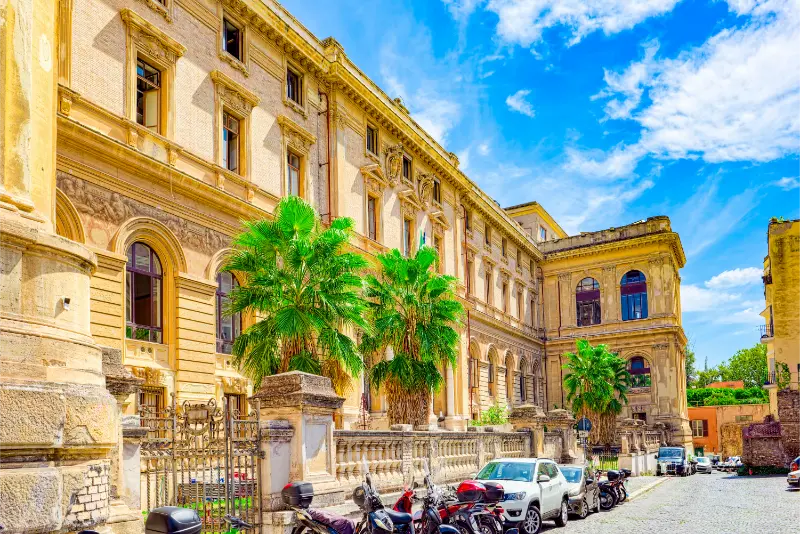
Looking at these buildings helps explain why the street feels different from shopping roads developed around aristocratic palaces: this is also a civic and administrative landscape.
Shopping and everyday services
Via Nazionale mixes chain stores, clothing shops, pharmacies, cafés and practical services. It is useful if you need something functional—an extra layer of clothing, toiletries or travel basics—without going to a suburban mall.
The shopping is less exclusive than Via dei Condotti and more compact than wandering the entire Tridente. That makes it a good option for travelers who want one straightforward shopping stop during a sightseeing day.
A practical way to visit
The easiest route is downhill from Piazza della Repubblica toward the historic center, with optional detours rather than constant zigzagging.
- Begin at Piazza della Repubblica and look back at the Fontana delle Naiadi before entering Via Nazionale.
- Walk at street level, noticing the late nineteenth-century façades rather than focusing only on storefronts.
- Stop at Palazzo Esposizioni Roma if a current exhibition matches your interests.
- Use side streets for a detour toward the Quirinal Palace and the Quattro Fontane area.
- Continue toward Piazza Venezia and the Vittoriano, or turn into the historic center before the final stretch.
Walking downhill generally feels easier, especially in warm weather. Reverse the route if you want to finish near Termini for an evening train or airport transfer.
Best time to go
Late morning is best if shopping matters, because most businesses are fully open and you can still avoid the heaviest evening traffic. Museum visitors should plan around the exhibition venue’s current opening day rather than the street itself.
Early evening gives the avenue a strong city atmosphere and is useful before dinner. Summer midday can feel exposed and noisy, so use indoor cultural stops and cafés as deliberate breaks rather than trying to power through.
How to get there and move around
Repubblica Metro is the simplest access at the upper end, while numerous buses use Via Nazionale and nearby streets. Because central traffic can be slow, walking is often the most predictable way to continue toward the historic center.
If you are carrying luggage, consider whether you really want to walk the full avenue from Termini. Our Rome train stations guide covers the practical transport context; for sightseeing without bags, the route is straightforward.
How to combine it with nearby Rome
At the top, combine the street with the Baths of Diocletian and Santa Maria degli Angeli. Around the middle, detour toward the Quirinale or remain on Via Nazionale for Palazzo Esposizioni.
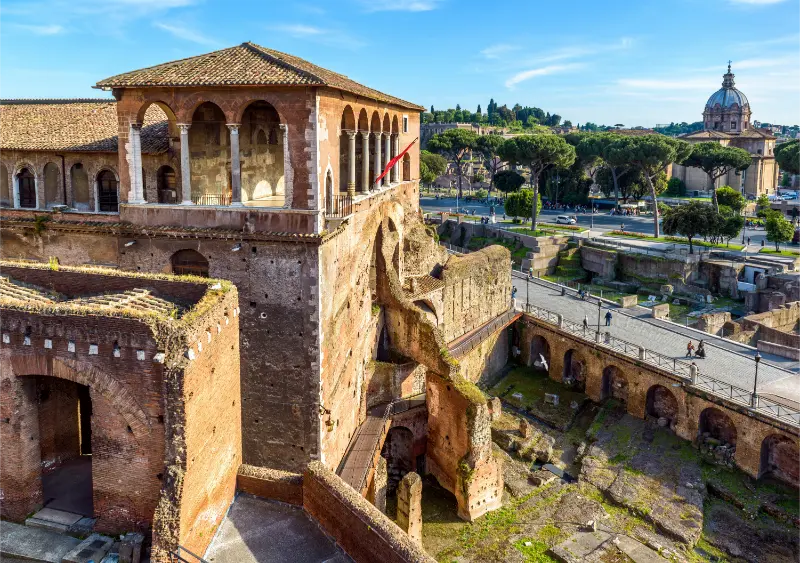
At the lower end, it is easy to continue toward Piazza Venezia and the Vittoriano. This makes Via Nazionale especially efficient on a day that already connects Termini with ancient or central Rome.
Practical tips
- Walk downhill if heat or mobility is a concern.
- Check Palazzo Esposizioni schedules before building the day around an exhibition.
- Do not expect a pedestrian street; traffic is part of the avenue and crossings matter.
- Use shops here for practical purchases, then save luxury browsing for the Tridente if that interests you.
- Keep internal sightseeing plans flexible because temporary exhibitions can change the best stops.

Think of Via Nazionale as a useful urban spine. Its value comes from combining movement, architecture, shopping and culture rather than from one single “must-see” landmark.
Photography and atmosphere
Wide architectural photographs work best from safe corners and crossings where you can show the avenue’s scale. Palazzo Esposizioni is particularly photogenic from across the street, but never step into traffic for symmetry.
Evening light softens the pale façades, while shop windows add color. For a more historical feeling, focus on upper stories and architectural details rather than modern signage.
Accessibility and comfort
Pavements are generally broad by historic-center standards, but slopes, crossings, street furniture and busy traffic can still make the walk tiring. Travelers with limited stamina can use buses or the metro to shorten the route.
Individual museums and shops have their own accessibility arrangements. If step-free access is essential, check the official venue page before arrival rather than assuming a historic façade has a convenient entrance.
Common mistakes to avoid
- Treating Via Nazionale only as the fastest line between Termini and Piazza Venezia.
- Expecting the quiet atmosphere of a pedestrian medieval street.
- Visiting Palazzo Esposizioni without checking whether the current exhibition interests you.
- Trying to shop and visit multiple museums on the same tight schedule.
- Ignoring side-street detours toward the Quirinale and Quattro Fontane.
How it fits into a first-time Rome itinerary
For first-time visitors, Via Nazionale is best on an arrival or departure day, or as the connector between the National Roman Museum area and Piazza Venezia. It adds context without requiring a new reservation.
If you already have a dense historic-center day, do not force it in simply to check another street off a list. Its greatest advantage is efficiency when your route naturally passes through the area.
Where to stay nearby
Hotels around Via Nazionale are well placed for Termini, the metro and walking into the center. This is a practical choice for travelers with early trains or airport connections who still want to reach major sights on foot.
The trade-off is atmosphere: traffic can be heavier than around the Pantheon or quiet residential neighborhoods. Request a room away from the street if noise is a concern and compare real walking times to your priority sights.
Official information and current conditions
Turismo Roma groups Via Nazionale with the Piazza della Repubblica and Termini area and describes the avenue as an important shopping and cultural axis. See the official area page.
Opening times for shops and cultural venues change independently. Always check the official venue site for exhibitions, ticketing and closures shortly before your visit.
Frequently asked questions
Is Via Nazionale worth walking?
Yes, especially if you are already moving between Termini/Repubblica and the historic center. The walk combines useful shopping, late nineteenth-century architecture and cultural venues.
How long is the visit?
Allow about an hour for a relaxed walk without indoor stops. Add 90 minutes or more for a major exhibition.
Is Via Nazionale good for shopping?
It is good for mainstream shopping and practical purchases. For luxury fashion, Via dei Condotti and the Tridente are more specialized.
Is it walkable with children?
Yes, but it is a busy traffic avenue. Keep younger children close at crossings and use indoor breaks on hot days.
Final thoughts
Via Nazionale is not Rome at its most picturesque, and that is exactly why it adds something different. It is a functioning capital-city avenue built around movement, commerce and public culture.
Use it when it serves your route, slow down enough to notice the architecture, and add one strong cultural stop. Done that way, the walk becomes much more than a transfer from Termini to the center.