
Rome with Dogs: Pet-Friendly Transport, Parks and Practical Tips
Rome can be enjoyable with a dog, but it requires more planning than a normal city break. The historic center has long walking days, stone paving, summer heat, crowded public transport and many museums and churches where pets cannot enter. On the positive side, Rome also has large parks, outdoor cafés, public drinking-water fountains and neighborhoods where daily life happens in the street.
The key is to build the itinerary around what your dog can realistically do. That may mean alternating outdoor sightseeing with rest, arranging one person to enter a museum while another stays outside, or choosing accommodation near a major park. The trip should not force the animal through hours of heat and crowds simply because a human itinerary says the Colosseum, Vatican and Trevi Fountain must all happen in one day.
Quick facts
| ATAC dogs | Small/medium dogs allowed with ordinary ticket, leash and basket muzzle |
| Bus limit | Maximum two dogs per bus under current ATAC rules |
| Metro | Dogs use first and last cars under ATAC conditions |
| Guide dogs | Admitted free under ATAC rules |
| Best strategy | Base near a park and schedule indoor attractions selectively |
Public transport rules for dogs in 2026
ATAC’s official animal-transport rules state that small and medium dogs may travel after payment of an ordinary ticket, with leash and basket muzzle and in suitable hygienic condition. The rules limit buses to a maximum of two dogs and direct dogs to the first and last cars of metro trains. Guide dogs accompanying blind or visually impaired people travel free.
Cats, birds and other small animals can travel in suitable containers within the published size limits. Rules can be updated, so check ATAC again shortly before travel, especially if your dog is large or if you plan to rely heavily on public transport. Carry the muzzle even if your dog rarely uses one at home; it is part of the stated transport condition.
Is Rome walkable with a dog?
Yes, but the answer depends on the dog, weather and neighborhood. Central Rome is very walkable for people, yet cobblestones, hot pavement and crowds can make the same route tiring for animals. A 20,000-step tourist day is not automatically a sensible dog day. Break the center into smaller zones and use quiet side streets when possible.
Early morning is the best time for famous outdoor sights. Trevi Fountain, Spanish Steps and Piazza Navona are far easier before peak crowds, and summer temperatures are safer. Return to accommodation or a shaded park during the hottest hours instead of trying to complete a rigid checklist.
Best parks and green spaces
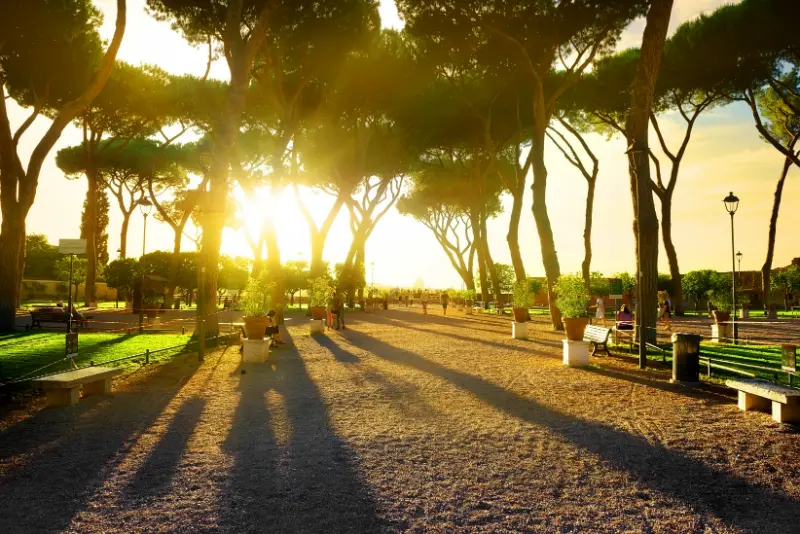
Villa Borghese is the most practical large park for many visitors because it borders the central tourist area. Villa Doria Pamphilj offers much more space and a stronger escape from central crowds, while Parco degli Acquedotti provides a dramatic open landscape but requires a longer trip from the historic center. See our best parks and gardens in Rome guide to compare them.
Do not assume every lawn or garden has identical rules for dogs off leash. Follow local signs and fenced-area regulations. Even when an open space looks informal, keep control around runners, children, cyclists and wildlife. Carry waste bags and water, and avoid letting a dog drink from decorative fountains.

Rome’s nasoni and water
Rome’s public drinking fountains, known as nasoni, are useful on long walks. The water is potable, but hygiene matters when sharing space. Fill a portable dog bowl rather than letting an animal put its mouth directly on the spout. Our Rome drinking water guide explains how the fountains work.
In summer, carry more water than you think you need. Shade can disappear quickly in large archaeological areas and on bridges. If pavement is too hot for your hand to rest on comfortably, reconsider the walk. Heatstroke risk is more important than completing another sightseeing stop.
Museums, churches and archaeological sites
Most major museums, churches and controlled archaeological attractions do not function as ordinary pet-friendly spaces, apart from legally recognized assistance animals under applicable rules. That means Vatican Museums, Borghese Gallery and many indoor highlights require a plan. Do not arrive assuming you can carry a small dog through security simply because it fits in a bag.
Couples or families can alternate short visits, but that works only at attractions where waiting outside is comfortable. Solo travelers with a dog need to be more selective and may prefer outdoor-focused itineraries, pet-sitting arranged through a trusted provider, or accommodation that offers a verified service.
Choosing pet-friendly accommodation
“Pets allowed” is not enough information. Ask whether there is a size limit, cleaning fee, number-of-pets limit and whether the animal can remain alone in the room. Confirm elevators if your dog struggles with stairs. In old Roman buildings, a third-floor room without a lift is far more inconvenient with a dog than it appears on a booking map.
Location is equally important. Staying near Villa Borghese, Villa Doria Pamphilj or a quiet residential street can be worth more than staying directly beside Trevi Fountain. A five-minute toilet walk at 7:00 every morning changes how you experience the neighborhood. Use our where to stay guide to compare areas, then verify the property’s current pet policy directly.
Restaurants and cafés with a dog
Outdoor tables are often the easiest solution, but individual businesses decide how they manage pets and indoor access. Ask politely rather than assuming. A small well-behaved dog may be welcomed in many casual settings, while a busy fine-dining room may be unsuitable even if not formally prohibited.
Reserve when a specific restaurant matters and mention the dog. This avoids arriving to find that the only pet-suitable tables are full. Our Rome restaurant guide explains meal times and reservation habits; adapt those tips by adding the pet question before you book.
Taxis and private transfers
Pet acceptance can vary between taxi drivers and booking services, especially for larger dogs. If an airport transfer is essential, arrange it in advance and specify the animal’s size and carrier. Do not wait until the taxi arrives to reveal a large dog and then risk missing a flight or train.
For local journeys, public transport rules are clearer because ATAC publishes them. A taxi can still be more comfortable in extreme heat or with luggage, but confirmation matters. Keep a towel or protective mat if your dog is wet or muddy.
Summer heat and winter weather
Summer is the most difficult season for a dog in Rome. Pavement becomes hot, shade is inconsistent and midday queues can be dangerous. Shift the schedule earlier and later: long walk at sunrise, rest indoors around midday, another walk after temperatures fall. Avoid leaving a dog tied outside an attraction while you queue inside.
Winter is easier for many dogs, although rain and wet cobblestones create different challenges. Carry a small towel and choose accommodation where drying a dog is realistic. Spring and autumn are usually the most flexible seasons, but warm spells can still occur.
Crowds, safety and identification
Use a secure collar or harness and a tag with a phone number that works internationally. Keep a recent photo of the dog on your phone. Crowded metro platforms, fireworks, church bells and scooters can startle animals that are normally calm. A short lead is safer than an extendable lead in the historic center.
Italy’s pet-health and entry requirements depend on where you are traveling from. Those rules can change and are not the same as local transport policy. Check official EU/Italian veterinary travel requirements well before departure, especially for microchip, rabies vaccination and documentation.
A dog-friendly day in Rome
Start early in Villa Borghese, walk to the Pincian terrace and Piazza del Popolo before crowds peak, then continue through Campo Marzio with a coffee stop. Return to accommodation for midday rest. In the evening, choose a riverside or neighborhood walk and a restaurant where you have already confirmed a suitable table.
This day still feels distinctly Roman without forcing the dog into controlled indoor attractions. On another day, arrange pet care for the Vatican or Colosseum if those sights matter to you. Separating “dog day” and “major museum day” is often less stressful than trying to combine both.

Common mistakes
The biggest mistake is treating a dog as if it can follow a human tourist schedule unchanged. The second is forgetting the basket muzzle required by ATAC rules. The third is booking a “pet-friendly” hotel without asking about fees, size or whether the dog may stay alone.
Also avoid relying on random online claims that a specific attraction allows dogs. Rules at museums, churches and archaeological sites can change. Check the official venue before making a journey specifically for pet access.

Frequently asked questions
Can dogs ride the Rome metro?
Under current ATAC rules, small and medium dogs can ride with an ordinary ticket, leash and basket muzzle, using the first and last cars. Check the latest ATAC conditions before travel.
Do dogs need a ticket on Rome buses?
Yes, except guide dogs covered by ATAC’s free-travel rule. The published rules require an ordinary ticket for other dogs.
What is the best central park for visitors with dogs?
Villa Borghese is usually the most convenient because it is close to Piazza del Popolo and the Spanish Steps.
Can I take a dog into the Vatican Museums?
Ordinary pets should not be assumed to have access to major controlled museums. Verify assistance-animal rules separately and arrange another plan for pets.
Is Rome a good city break with a dog?
It can be, especially in mild weather and with a park-based itinerary. The trip becomes harder if your priority is spending every day inside museums and archaeological sites. Choose accommodation carefully, respect transport rules and let the dog’s comfort shape the schedule rather than forcing the animal into a standard first-time itinerary.