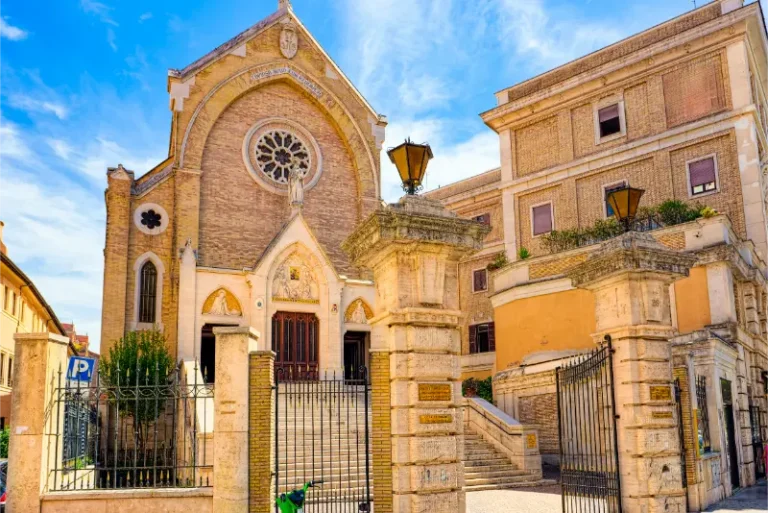
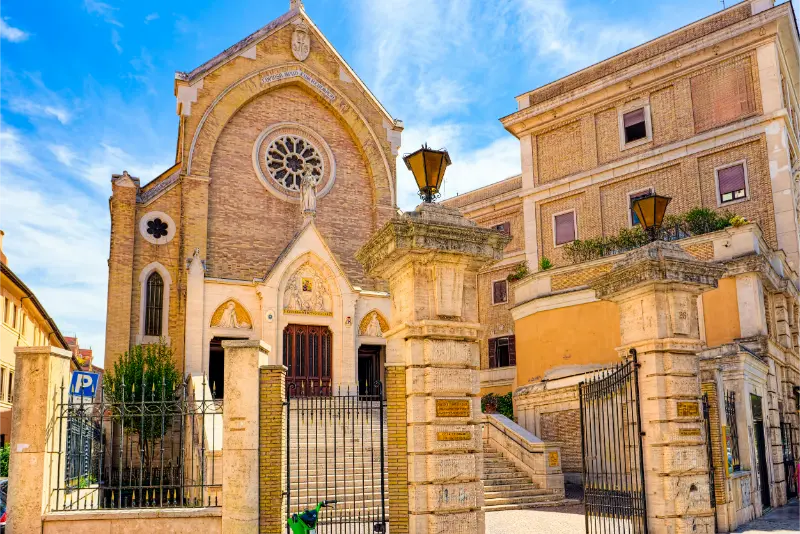
Sant’Eligio degli Orefici Rome: Raphael Church, Goldsmiths and Visiting Guide
Sant’Eligio degli Orefici is one of the most important small Renaissance churches in Rome for anyone interested in Raphael as an architect. Hidden near Via Giulia, it was created for the goldsmiths and silversmiths’ guild and dedicated to Saint Eligius, their patron. Its compact Greek-cross plan and hemispherical dome make it feel more like an architectural idea brought to life than a conventional neighborhood basilica.
The church also tells a social story. Rome’s professional guilds were not merely economic organizations; they sponsored chapels, charitable activity and religious institutions that expressed collective identity. Sant’Eligio turns that history into space. Because current visiting requires prior arrangement, it is best suited to travelers willing to plan a specialist stop rather than those expecting spontaneous sightseeing.
| Planning point | Useful detail |
|---|---|
| Location | Via di Sant’Eligio 8/A, near Via Giulia |
| Access | Turismo Roma lists weekday visits from 10:00 to 13:00 by prior reservation; verify before travel because arrangements can change. |
| Cost | Confirm any current conditions when reserving; the church is not a conventional walk-in museum. |
| Suggested time | 35–50 minutes |
| Best for | Raphael architecture, Renaissance Rome, guild history and specialist art itineraries |
Why Sant’Eligio degli Orefici is worth visiting
Sant’Eligio degli Orefici works best when you treat it as part of Rome rather than as a box to tick. Its value comes from the way art, architecture, worship and the surrounding streets reinforce one another. Because it is less crowded than the city’s headline monuments, you can usually spend more time observing materials, inscriptions and spatial details instead of following a fixed tourist flow.
For travelers building a deeper itinerary, Sant’Eligio degli Orefici also provides useful contrast. Rome’s major basilicas show imperial scale and papal ceremony; smaller churches often reveal guilds, foreign communities, confraternities, neighborhood devotion and the practical history of local worship. That human scale is one reason these sites become memorable after the first trip.
History and context
In the early sixteenth century, the goldsmiths and silversmiths received permission to establish their own headquarters near Via Giulia, then part of Pope Julius II and Bramante’s ambitious vision for a renewed administrative center of Rome.
Raphael was asked to design the church. Construction stretched over decades and involved other architects, including Baldassarre Peruzzi and members of the Sangallo circle. Structural problems and Tiber flooding required later repairs, reminding visitors that even celebrated Renaissance buildings were practical worksites subject to failure and revision.
Flaminio Ponzio carried out important restoration and designed the façade in the early seventeenth century. Despite later interventions, the compact interior still communicates the centralized spatial ideal associated with High Renaissance architecture.
What to see
The Greek-cross plan
Once inside, stand near the center and understand the plan before looking at individual frescoes. The arms of the cross are relatively balanced, producing a centralized space rather than the long processional nave typical of many churches.
This geometry helps explain why the building is important in Raphael’s architectural career. It belongs to a broader Renaissance fascination with centrally planned sacred architecture inspired by antique and idealized forms.
The dome and spatial proportions
The hemispherical dome rises above the central supports and gives the small church surprising vertical presence. Light entering from the drum and lantern helps unify the interior.
Walk a few steps in each direction and notice how little the spatial hierarchy changes. In a longitudinal basilica, the altar dominates a long axis; here, the center itself becomes architecturally powerful.
Guild identity and Saint Eligius
The dedication to Saint Eligius reflects the professional identity of the goldsmiths. This was not a generic church that happened to receive guild patronage; its institutional purpose was tied directly to the craft community.
Look for symbols, inscriptions and objects that connect the sacred program with metalworking and patronage. The church becomes more meaningful when read as the headquarters of a profession that supplied luxury objects to courts, churches and wealthy Roman families.
Frescoes and later restoration
The interior contains sixteenth-century frescoes and later interventions that survived periods of damage. They show how the building continued to be used and repaired rather than preserved as an untouched Raphael monument.
This continuity is valuable. Renaissance architecture often reaches us through layers of maintenance, reconstruction and reinterpretation, and Sant’Eligio makes that process visible on an intimate scale.
How to plan your visit
According to Turismo Roma, visits are possible Monday to Friday from 10:00 to 13:00 by prior reservation. Treat those details as something to reconfirm, not a permanent guarantee, because institutional schedules can change.
The church is small, so the visit does not require a long block of time, but booking and arrival matter. Combine it with Via Giulia to make the logistics worthwhile, and arrive a few minutes early rather than assuming you can enter late.
A useful way to visit Sant’Eligio degli Orefici is to separate the experience into three passes. First read the architecture from the entrance without stopping for details. On the second pass, choose two or three works that explain the site’s history. Finally, return toward the door and look back at the space from the opposite direction. This simple method prevents a richly decorated Roman church from becoming a blur of names and helps you remember the relationship between structure, decoration and neighborhood context.
Do not judge Sant’Eligio degli Orefici only by the number of famous artists attached to it. Smaller Roman churches are often valuable because scale allows you to understand relationships that disappear in larger basilicas. A chapel, memorial, floor pattern and altar may have been conceived as parts of one program. Spending ten extra minutes tracing those connections often produces more insight than adding another distant attraction to the same day.
Practical tips before you go
- Check current access shortly before visiting, especially because liturgies, maintenance and special events can change normal routines.
- Dress for an active place of worship: shoulders and knees should be covered, and hats should normally be removed inside.
- Use silent camera settings and avoid flash unless staff or posted rules explicitly allow it.
- Do not place an inflexible timed attraction immediately after the visit; allow a small buffer for unexpected closures or ceremonies.
- Read one or two key historical points before entering so the architecture and artworks have context rather than becoming a list of unfamiliar names.
If the doors are closed when you arrive, do not force the itinerary. Sant’Eligio degli Orefici sits in an area with other worthwhile sights, so use the nearby route below and return later if practical. This is often a better strategy in Rome than waiting outside an active church whose schedule has changed.
What to see nearby
Sant’Eligio degli Orefici combines naturally with Via Giulia, San Giovanni dei Fiorentini, Palazzo Spada, Campo de’ Fiori. These nearby pages are already part of MyRomeTrip and can help readers turn one church visit into a coherent half-day rather than a disconnected detour.
Start at San Giovanni dei Fiorentini and walk south along Via Giulia. Detour to Sant’Eligio at your reserved time, then continue toward Palazzo Spada and Campo de’ Fiori. The route places Raphael’s compact church inside the larger Renaissance redesign of the district.
Who will enjoy this stop most?
Sant’Eligio is most rewarding for architecture students, Raphael enthusiasts and travelers interested in guild history. First-time visitors with a very short Rome itinerary may reasonably prioritize the Vatican or Pantheon, but repeat visitors can gain a much more specific understanding of Renaissance design here.
First-time visitors with only a few hours in Rome do not need to replace the Colosseum, Pantheon or Vatican with Sant’Eligio degli Orefici. The better approach is to add it when geography already brings you nearby. Repeat visitors, art lovers and travelers who enjoy slower city exploration will usually get the greatest value from the stop.
Photography, accessibility and respectful visiting
Ask about step-free access when making the reservation, since the historic entrance and internal arrangements may present barriers. The small scale also means groups should behave carefully and avoid blocking circulation. Photography rules should be confirmed with staff or custodians.
One more practical approach is to spend the first five minutes inside Sant’Eligio degli Orefici without taking photographs. Let your eyes adjust, identify the main axis and notice which details attract your attention naturally. Photograph afterward. This reduces screen time in a sacred space and usually results in better images because you understand the room before framing it.
Official information and changing access
For current access, services and special closures, consult the official or municipal information page: visitor information for Sant’Eligio degli Orefici. Hours published online can change, particularly around feast days, restoration campaigns and liturgical events, so readers should verify details close to the day of the visit.
FAQ
Did Raphael design Sant’Eligio degli Orefici?
Yes. Raphael is associated with the original design, although construction and later repairs involved other architects.
Can I visit without a reservation?
Current municipal information indicates weekday visits by prior reservation, so booking ahead is the safest approach.
Why is the church dedicated to Saint Eligius?
Saint Eligius is traditionally the patron saint of goldsmiths and metalworkers, matching the guild that founded the church.
How long is the visit?
Around 35–50 minutes is usually enough to understand the architecture and decoration.
Final tips
Sant’Eligio degli Orefici is the kind of place that makes a Rome itinerary feel more personal. It does not require the logistics of a major museum, but it rewards context, patience and respectful attention. Pair it with nearby sights, keep the timing flexible and focus on a few details rather than trying to memorize every name. That approach is often the difference between simply entering another church and actually understanding why the building belongs to the story of Rome.